AI Data-Center Jobs Pay More, but Six Figures Aren't Typical
AI data-center jobs offer higher hourly pay, but federal wage data show six-figure earnings remain uncommon for electricians and construction workers.

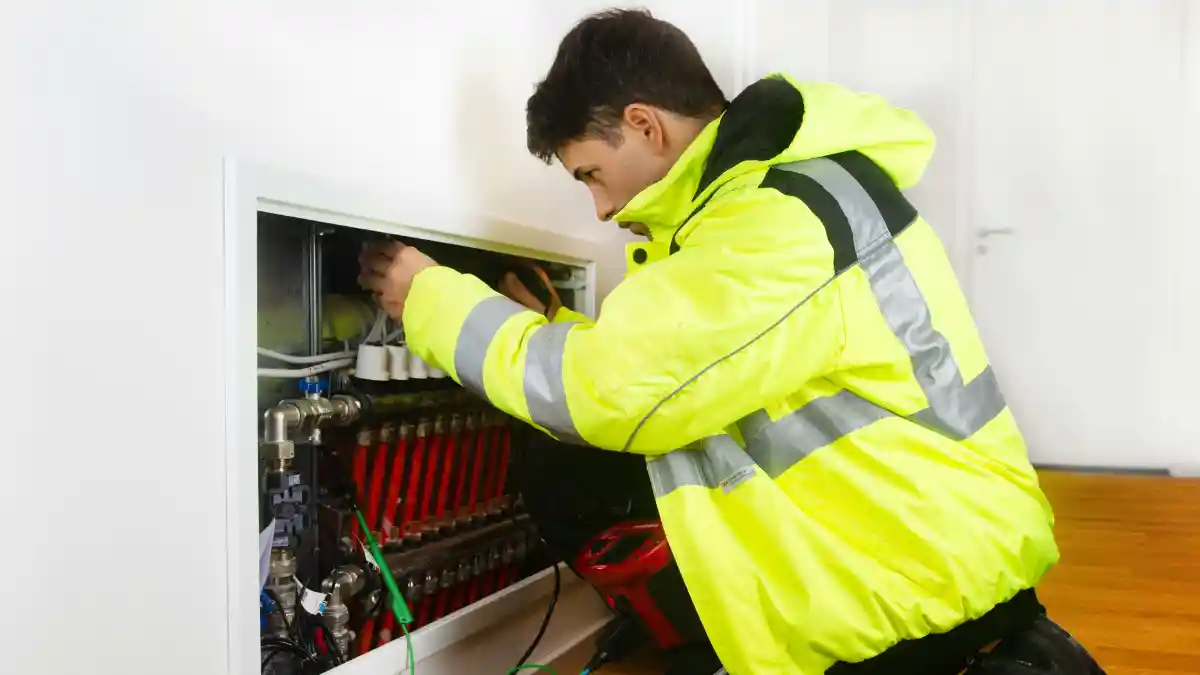
U.S. data-center installation and maintenance roles advertised a 42% median hourly pay premium over comparable non-data-center work in an analysis published on July 14, 2026, while postings that stated annual pay carried a smaller 12% premium.
Data-center construction is increasing trade demand
Data-center job postings more than doubled over the previous two years even as total U.S. job postings fell, the analysis found. Installation and maintenance roles accounted for about one-quarter of data-center openings, and hourly postings offered roughly $10 more per hour than comparable work elsewhere.
The AI workforce extends beyond researchers, software engineers, and chip designers. The facilities running those systems also require crews to pour foundations, install switchgear, connect fiber, assemble cooling systems, and commission equipment that must operate without interruption.
Google, Meta, and BlackRock announced skilled-trades commitments totaling at least $265 million in 2026, but the figures cover different periods. Meta described $115 million as a first-year investment, BlackRock committed $100 million over five years, and Google expanded its total support to $50 million.
Jensen Huang connected AI growth to physical infrastructure during a January 21 conversation with Larry Fink in Davos, Switzerland. The World Economic Forum's account describes AI as a five-layer system spanning energy, chips, cloud infrastructure, models, and applications. Huang called its expansion “the largest infrastructure build-out in human history.”
The labor requirement is concrete. Data centers need substations, transformers, backup power, switchgear, chillers, controls, cable trays, and fiber connections installed and tested by trained workers.
The labor bottleneck is therefore local even when the AI service is global. A project in central Ohio cannot solve an electrician shortage by drawing on an available crew in another region unless workers are willing and licensed to travel.
The Columbus-Central Ohio Building and Construction Trades Council said data centers accounted for about 40% of its members' work hours in spring 2026. The council also reported that an apprenticeship outreach event connected to IBEW Local 683 drew nearly 1,000 people, including more than 100 workers already employed by nonunion electrical contractors.
The investment boom creates a timing problem. Demand can rise quickly, while electrician and pipefitter apprenticeships commonly take four or five years. Training centers must expand without lowering safety standards or assuming every announced project will proceed.
The hourly premium is not a typical six-figure salary
The pay advantage in data-center work is measurable, but it does not mean most workers earn six figures. The same hiring analysis found a 42% premium for postings that quoted hourly pay and a 12% premium for postings that quoted annual compensation.
Federal occupational data show a wide gap between median earnings and the highest-paid workers in each field.
Occupation | Median annual pay | Highest-paid 10% | Projected growth, 2024–2034 | Average annual openings |
|---|---|---|---|---|
$62,350 | More than $106,030 | 9% | 81,000 | |
$62,970 | More than $105,150 | 4% | 44,000 | |
$46,050 | More than $75,560 | 7% | 149,400 | |
$106,980 | More than $176,990 | 9% | 46,800 |
BLS medians place electricians and pipefitters near $63,000, while the highest-paid 10% in both fields earn more than $105,000. Construction managers already have a six-figure national median. Six-figure pay is not the standard result for an apprentice, a helper, or a typical journey-level worker.
Advertised hourly rates also do not show what a worker earns over a full year. Annual income depends on location, licensing, union agreements, overtime, shift premiums, travel allowances, project duration, and the number of weeks worked.
A higher hourly rate may be less valuable if the assignment is short or workers must pay for travel and housing. Portable credentials, benefits, and follow-on projects can matter more over time.
Workers do not need computer science degrees for these roles, but they do need trade preparation. Most electricians learn through apprenticeships, and most states require licensing. Plumbers and pipefitters commonly complete four- or five-year apprenticeships. Construction laborers usually learn on the job, while construction managers typically need a bachelor's degree and field experience.
High-voltage equipment, critical power systems, industrial controls, pressurized piping, cooling machinery, and live commissioning create risks that make rushed preparation unsafe. The industry's need for more workers does not reduce the consequences of an installation or testing failure.
Training investments point to a credentialing bottleneck
The three major 2026 commitments show companies treating workforce capacity as part of the infrastructure problem.
On June 11, 2026, Google expanded its skilled-trades support to $50 million. The company said the funding was intended to help prepare more than 300,000 workers in more than 20 states through 14 labor unions and four trade and contractor associations, including programs for electricians, welders, and pipefitters.
On June 8, 2026, Meta announced America's Workforce Academy with a $115 million first-year investment. Meta said the free program would support trainees, provide portable credentials, and guarantee jobs for graduates. The 2026 pilot locations are in Louisiana, Ohio, Indiana, and Texas.
BlackRock launched Future Builders on March 11, 2026, committing $100 million over five years to connect 50,000 workers with training and support. The program covers trades including electricians, heating and cooling technicians, plumbers, and ironworkers, and links the workforce effort to energy, digital, and AI infrastructure.
The programs are broader than data centers. They also support manufacturing, energy, transportation, and other construction markets. Their design still identifies the constraint companies are trying to address: not simply attracting applicants, but moving people through training, supervised work, certification, and licensing.
Meta said its earlier Level-Up fiber program received 35,000 applications in seven days. The application surge arrived faster than the training system could produce qualified workers. Applicants do not become licensed electricians, pipefitters, or data technicians without instructors, equipment, paid work hours, and employers able to supervise trainees.
Training too few workers can delay projects. Expanding too quickly around a temporary cluster can leave workers with fewer local assignments after construction ends. Portable credentials and links to several industries reduce that risk.
Electrical contractors are becoming more valuable
Recent acquisitions show that companies are placing financial value on experienced electrical crews and project capacity.
On July 20, 2026, MasTec completed its approximately $1.65 billion acquisition of The Superior Group, a full-service electrical contractor focused on critical infrastructure. MasTec said the transaction added about 3,000 employees and expanded its ability to serve data centers and other mission-critical facilities.
The $1.65 billion price covered the contractor's operations, backlog, equipment, relationships, and expected earnings. Its workforce remained central because complex electrical systems require experienced teams to install and commission them at scale.
The market behind that acquisition is large. An April 2025 compute-demand model estimated that data centers would require $6.7 trillion in worldwide capital spending by 2030, including $5.2 trillion for AI workloads and $1.5 trillion for traditional computing. The model projected 156 gigawatts of AI-related capacity demand by 2030, with 125 gigawatts added between 2025 and 2030.
A March 2026 follow-up again described global data-center spending as potentially reaching $7 trillion by 2030. It identified long lead times for power and thermal equipment, along with shortages of skilled labor needed to install, test, and commission that equipment, as constraints capable of delaying entire projects.
The $6.7 trillion projection will not produce jobs evenly across regions or trades. Projects can be slowed by power availability, permitting, financing, equipment shortages, or community opposition. Approved facilities still require site preparation, electrical installation, mechanical work, commissioning, and operations that cannot be completed by software alone.
What workers should check before taking a data-center job
Workers considering data-center offers should examine the career path after the current project, not only the advertised hourly rate.
The difference between construction employment and permanent operations can be large. Meta's El Paso project is now expected to support more than 4,000 construction jobs at peak and more than 300 operational jobs after completion. The company had initially projected 1,800 peak construction jobs and about 100 operating roles before expanding the site to one gigawatt and increasing its investment to more than $10 billion.
At Meta's Tulsa project, the company expects more than 1,000 construction workers at peak and approximately 100 jobs once the facility is operating. Tulsa's projected drop from construction to operations shows why project duration and follow-on assignments belong in any pay comparison.
Workers comparing offers should separate base pay from overtime, confirm whether travel and lodging are covered, check the expected project end date, and ask what assignment follows commissioning. Union status, apprenticeship credit, licensing portability, safety training, and access to advanced electrical or cooling work may matter more than a temporary premium on one project.
Data-center installation jobs are advertising higher pay, apprenticeship systems are expanding, and experienced electrical contractors are attracting substantial investment. Six-figure earnings remain attainable in parts of the market, but most workers reach that level through specialization, overtime, management responsibility, or years of licensed experience. At El Paso, the current projection is more than 4,000 construction jobs at peak and more than 300 operating jobs after completion, a gap workers should understand before treating a project wage as a permanent salary.
- AI data-center jobs
- skilled trades
- electricians
- construction jobs
- workforce training
- AI infrastructure