Fed Decision Today: Rates Hold as Three Seek Hike
The Fed decision today held rates at 3.50%–3.75%, but three dissents and higher market yields revealed tighter conditions beneath the unchanged policy rate.

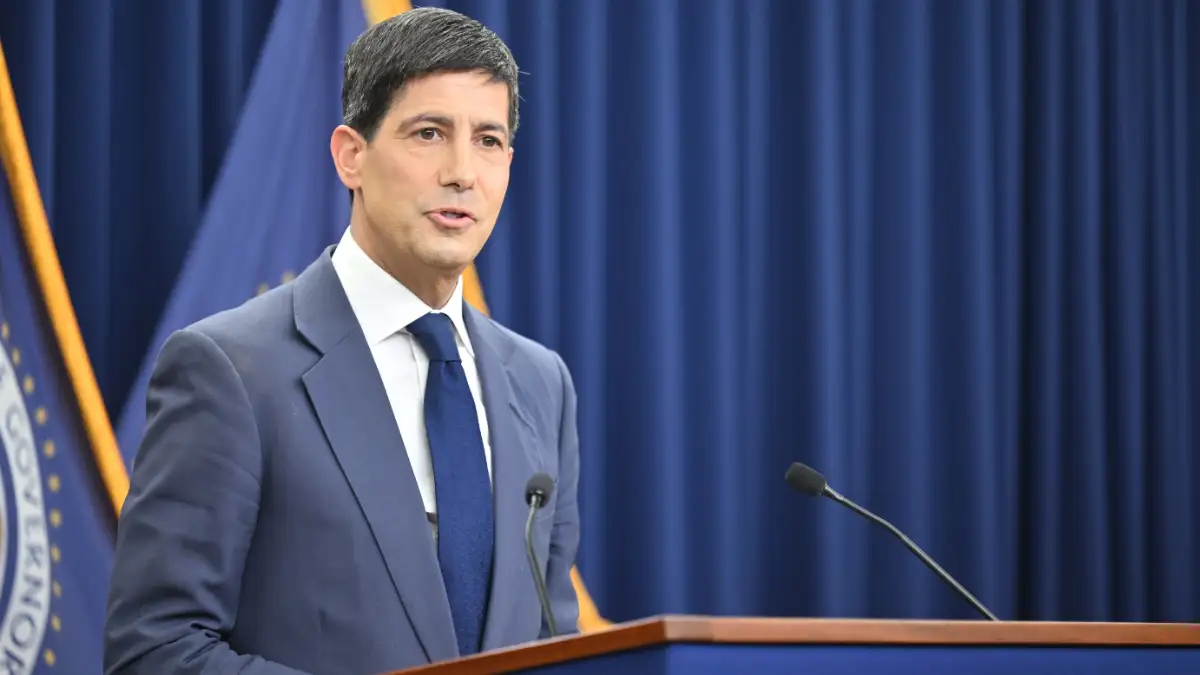
WASHINGTON The Federal Reserve kept its benchmark interest-rate target at 3.50% to 3.75% on July 29, 2026, but Chair Kevin Warsh said Treasury yields had risen materially since the June meeting and three officials voted for an immediate quarter-point increase. The policy rate did not move. The financial setting around it already had.
The Federal Open Market Committee’s statement was approved 9–3. Beth M. Hammack, Neel Kashkari and Lorie K. Logan dissented, each preferring to lift the target range by 0.25 percentage point. The statement also retained language that inflation was elevated relative to the 2% goal and linked part of the pressure to supply shocks, including energy.
A hold without a comfortable consensus
The current range dates to the Fed’s quarter-point cut in December 2025. It has now survived five scheduled policy decisions in 2026 without another change.
July’s disagreement was therefore about whether the existing setting remained restrictive enough, not whether it was time to ease. None of the 12 voters sought a cut. Three wanted to tighten immediately.
In June, Hammack said policy might not be sufficiently restrictive and warned that waiting for definitive evidence of embedded inflation could require a larger adjustment later. Logan was more explicit on July 16, arguing that modestly higher interest rates would better balance the risks because inflation remained too high while the labor market was solid.
Kashkari’s vote marked the clearest change. In May, he supported holding rates but objected to wording that markets could read as pointing toward a future cut. He wrote that the next move might need to be either a hike or a cut, depending on the economic damage from the Middle East conflict. By July, his conditional warning had become a vote for higher rates.
The 9–3 split also echoed September 2016, when three officials opposed a hold and favored a quarter-point increase. In both meetings, the majority held while three members wanted a quarter-point hike.
June’s CPI drop did not settle the argument
June’s Consumer Price Index gave the majority concrete evidence for patience. The Bureau of Labor Statistics reported a 0.4% monthly decline, the largest since April 2020. Annual CPI inflation slowed to 3.5% from 4.2% in May. Energy prices fell 5.7%, gasoline fell 9.7%, and core prices excluding food and energy were unchanged for the month.
Those figures were available to the FOMC. The latest reading of the measure it formally targets was not.
The Fed defines its 2% goal using the Personal Consumption Expenditures price index. Its July Monetary Policy Report showed PCE inflation at 4.1% over the year through May and core PCE inflation at 3.4%. The Bureau of Economic Analysis scheduled the June PCE release for July 30 at 8:30 a.m. EDT, one morning after the rate decision.
Policymakers had a June CPI report showing a sharp headline decline, but the Fed’s preferred gauge still ended in May and showed a larger miss from target. They had to decide whether one encouraging month justified waiting.
Energy data made the timing harder to interpret. Gasoline’s steep decline pulled June CPI lower, yet AAA said the national average for regular gasoline had climbed to about $4.09 by July 23, up 15 cents in one week. The dated pump-price update showed that some of June’s relief was already reversing before the FOMC met.
Warsh addressed the problem directly in his opening statement, saying more than five years of above-target inflation could not be repaired by a single month of modest price declines. The three dissenters reached the stronger conclusion that the available evidence already justified another hike.
What the decision means for households and businesses
The majority prevented an immediate quarter-point increase, but it provided neither a cut nor a promise that one is approaching. The federal funds rate is only the starting point for borrowing conditions. The Fed’s own monetary-policy explanation describes how its actions and communications influence wider interest rates, asset prices and spending decisions.
In his opening statement, Warsh said nominal and inflation-adjusted Treasury yields had risen materially across the curve during the 42 days between meetings. Some of those increases, he said, ranked near the top 10% of intermeeting moves over the past two decades. The policy target was unchanged, yet market rates used to price longer-term credit had moved higher.
For households, the hold avoided the added pressure of a July hike. It did not guarantee cheaper mortgages or lower variable-rate debt costs. For businesses, particularly those refinancing or funding investment, the relevant cost can rise before the FOMC changes its official target.
The Fed chose not to tighten through its policy rate, while financial markets tightened through higher yields.
Kevin Warsh’s early test as Fed chair
Warsh, 56, became Fed chair on May 22. July was his second FOMC meeting in the role and the first with three dissents from the action he supported.
Warsh is also changing how the Fed communicates. He said the committee’s statement was deliberately avoiding forecasts. He also suggested that reduced forward guidance may have contributed to the rise in Treasury yields because markets were responding more directly to incoming data.
He told market participants to “play the ball, not the referee”. He added that the committee “will not hesitate to act” when necessary. His approach reveals less about the likely next move, but less guidance can produce larger market adjustments before officials vote again.
The official statement described activity as expanding at a solid pace despite elevated uncertainty partly tied to the Middle East conflict. The same document described strong productivity and capital investment, stable unemployment and inflation pressure from supply shocks. No member voted for a cut. The dispute was whether the policy rate and higher market yields were restrictive enough.
September’s decision will require stronger evidence
June PCE data are scheduled for release on July 30, followed by more inflation and employment reports before the September 15–16 FOMC meeting. Updated economic projections are due with that decision.
Officials will be able to compare three signals that were not aligned in July: a sharp monthly CPI decline, an older PCE reading far above target and market yields that had already risen without a policy-rate increase.
Another hold would leave the majority explaining why existing rates and tighter market conditions are sufficient. A hike would show that more voters had joined the case Hammack, Kashkari and Logan made in July.
The next scheduled decision comes on September 16. The July vote puts an explicit alternative on the table: a quarter-point increase already supported by three members.
- fed decision today
- fed rate decision
- Kevin Warsh
- Federal Reserve
- FOMC
- inflation