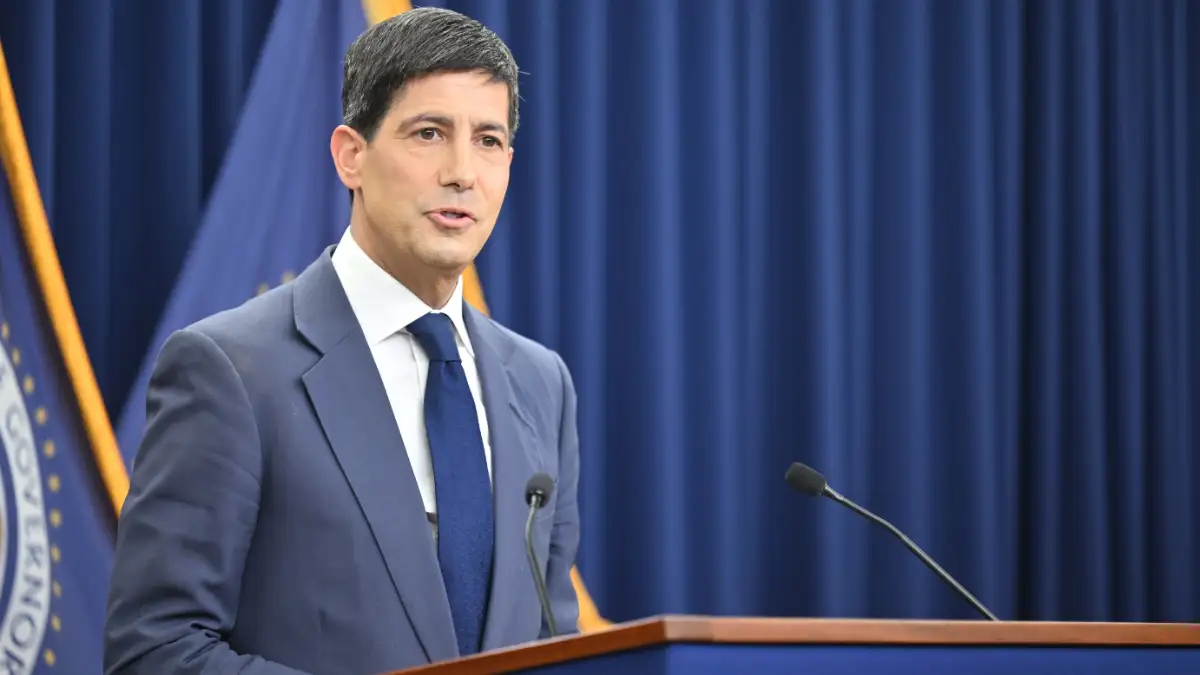
IBM Earnings Miss Sends Stock Down 23% on July 14, 2026
IBM shares fell roughly 23% on July 14 after second-quarter preliminary revenue came in at $17.2 billion, approximately $660 million below the $17.86 billion analyst consensus, as CEO Arvind Krishna said the company "faltered."

IBM shares fell roughly 23% on Tuesday, July 14, 2026 the stock's worst single-session decline since October 19, 1987 after the company released preliminary second-quarter results showing revenue of $17.2 billion, approximately $660 million below the analyst consensus of $17.86 billion. The drop pulled software and consulting stocks lower across the broader market.
Revenue Miss and Segment Results
CEO Arvind Krishna published a letter to IBM investors on July 14, releasing selected preliminary second-quarter 2026 figures ahead of the company's scheduled full earnings call on July 22. The preliminary numbers showed operating non-GAAP diluted earnings per share of $2.93, up 5% year over year but below analyst forecasts of approximately $3.01 to $3.02 per share, depending on the data provider. GAAP diluted EPS came in at $2.27, down 2%.
By segment software revenue rose 5% in the quarter, and Red Hat's growth within that segment accelerated sequentially to 11%. Consulting revenue was flat on a reported basis and up 1% at constant currency. Infrastructure revenue fell 7%.
The shortfall was concentrated rather than spread evenly across the business. IBM's own letter said the miss was driven by weakness in Z-system performance its mainframe business and the associated software stack, particularly Transaction Processing. Distributed Infrastructure bucked that trend, rising 37% with an exit backlog of approximately $500 million.
Year-to-date, IBM generated $7.8 billion in net cash from operating activities and $4.8 billion in free cash flow. Neither figure was at issue in Tuesday's sell-off.
What Krishna Said Drove the Miss
Krishna was direct about the cause.In the last few weeks of June, we saw clients shift their quarterly capex spend toward servers, storage, and memory purchases to secure supply-constrained infrastructure ahead of expected price increases," he wrote. "While we anticipated some supply chain-related impact in our expectations, we did not anticipate the magnitude of the capex reprioritization."
He added that large deals failed to close on expected timelines. "These conditions require our teams to execute perfectly, and this quarter we faltered," Krishna said.
Two forces collided in the final weeks of June. IBM had been wrapping on its z17 mainframe product cycle the strongest start to a mainframe program in the company's history with infrastructure revenue expected to soften beginning in Q2. At the same time, enterprise clients scrambled in late June to lock in server, storage, and memory capacity before prices rose further. That spending pull-forward consumed the same budget that would otherwise have gone toward IBM's software and Z-system licenses.
The late-quarter rush had support from conditions in the memory market itself. Micron's fiscal Q3 2026 prepared remarks confirmed supply-demand tightness in DRAM and NAND is expected to persist beyond calendar 2027. SK Hynix's chief executive told Reuters on July 10 that he expected demand to outstrip supply beyond 2030. IBM said it simply did not see the full magnitude of the client capex shift coming.
Software and Consulting Stocks Fall in Sympathy
IBM's premarket warning hit well beyond its own stock. The iShares Expanded Tech-Software Sector ETF fell more than 4% after the announcement. ServiceNow dropped nearly 7%, Salesforce fell around 5%, and consulting firms Accenture and Cognizant fell roughly 8% and 7%, respectively, according to GuruFocus data from Tuesday's session.
Dow Jones Industrial Average futures fell as much as 281 points before the open, dragged down largely by IBM's weighting in the price-weighted index, while the Nasdaq held steadier and moved higher after a June Consumer Price Index reading showed the CPI-U fell 0.4% on a seasonally adjusted basis its largest monthly drop since April 2020 with annual inflation easing to 3.5% and core CPI reaching 2.6%.
The divergence between a Dow weighed down by IBM and a Nasdaq lifted by the inflation reading illustrated what analysts noted on Tuesday the software sell-off was sector-specific and IBM-driven rather than a broad macro response.
The reaction reflected two readings investors placed on IBM's miss simultaneously. Part of the sell-off treated the result as an IBM execution problem specific to the z17 mainframe cycle. Another part read it as a signal about enterprise software budgets more broadly a concern that had been building as AI infrastructure spending has grown to claim a larger share of corporate technology budgets. IBM was the first major software company to report in the second-quarter season, and its acknowledgment that clients chose hardware over software in June gave the sector a concrete data point to fear: how much software spending is AI hardware displacing, and for how long?
Forward Investments Unchanged by the Quarter's Miss
Tuesday's sell-off arrived against a backdrop of significant commitments IBM had made in the months leading up to Q2.
In May 2026, IBM and Red Hat announced Project Lightwell, a $5 billion commitment backed by more than 20,000 engineers to build open source security infrastructure for the AI era, with early participants including Bank of America, Goldman Sachs, JPMorganChase, and Visa. The commercial Lightwell offerings Lightwell Network and Lightwell Clearinghouse Premier launched on July 8, 2026, six days before the earnings miss.
On June 22, IBM announced it had joined the OpenAI Daybreak Cyber Partner Program and launched an AI-powered application security service. On June 2, IBM announced a planned investment of more than $10 billion in quantum computing over five years, targeting the industry's first large-scale fault-tolerant quantum computer by 2029.
None of those commitments shielded the company from a quarter in which enterprise clients compressed their June spending into hardware rather than software. They do, however, frame what IBM's management has identified as the longer-term strategy beneath the quarterly result.
The July 22 Call and What Analysts Will Press
IBM's full second-quarter 2026 earnings conference call is scheduled for Wednesday, July 22, 2026, at 5:00 p.m. ET, per IBM's official announcement. Krishna said the call will include deeper detail on the quarter's results and IBM's full-year outlook, both of which remain open after the preliminary release. Final Q2 numbers could differ slightly from the figures IBM released on July 14.
The call will carry particular weight for the broader software sector given Tuesday's contagion. Analysts will press IBM on the capex reprioritization: was the late-June hardware rush a one-quarter event tied to the memory supply squeeze, or the early signal of a more durable shift in how enterprises allocate technology budgets?
IBM shares had already priced in strong first-quarter momentum, when the company reported revenue of $15.9 billion up 9% with software up 11% and infrastructure up 15%. The 23% single-session decline on July 14 erased a significant portion of those gains. The Dow had closed above 53,000 for the first time on July 6, driven by AI trade optimism IBM's preliminary results one week later showed a different outcome from that same AI spending trend inside individual enterprise accounts.
- IBM earnings
- IBM stock
- enterprise software
- AI hardware spending
- market sell-off
- Q2 2026