Mark Cuban: CEOs and Janitors Deserve Equal Stock Percentages
Mark Cuban argues every employee from CEO to janitor should receive company stock at the same percentage of their pay, backed by a tax-rate incentive.

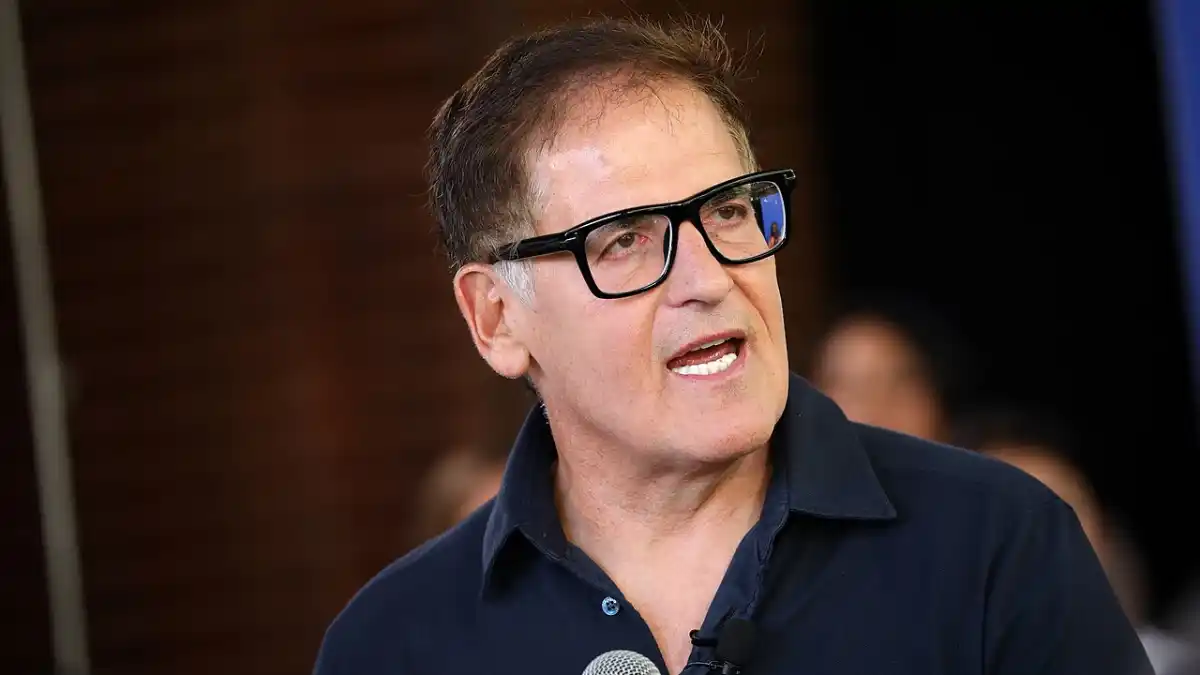
Billionaire entrepreneur Mark Cuban called on every CEO, founder, and business owner to give company stock to all employees including the lowest-paid workers at the same proportional rate applied to executive compensation. He made the argument in a July 2026 episode of the What It Takes podcast by Unmoderated News, hosted by Sarah McCammon.
The Proposal, in Cuban's Words
The core of Cuban's argument is proportion, not equality of dollar amounts. If a CEO earning $1 million in cash receives $100,000 in stock 10% of their pay then a janitor earning $50,000 should receive $5,000 in stock, the same 10% slice of their own wages.
"So if the CEO gets $100,000 worth of stock because they make $1 million in cash, and the janitor makes $50,000, then they deserve the same percentage in stock. That will change the game," Cuban said on the podcast, as quoted by Inc.
He went further than voluntary encouragement, tying the idea directly to the existing tax code. When McCammon noted that his own equity-sharing at past companies had been entirely voluntary, Cuban said the government could use corporate tax rates to push businesses toward wider distribution. His specific suggestion: companies that distribute equity proportionally to every employee could retain access to the current 21% flat corporate tax rate established under the Tax Cuts and Jobs Act. Those that do not would face a higher rate.
"You can give them incentives to say, 'Look, if you want that 21% tax rate, then you need to give every single employee the same percentage in stock warrants, options, whatever it may be, of their cash compensation that you give to the CEO,'" he said, as reported by Business Insider covering the episode.
Cuban's Track Record on Pay and Equity
Cuban's argument draws weight from two companies he built and sold, though the mechanisms differed from what he now proposes.
When he sold Broadcast.com the early internet audio and video streaming company he co-founded with Todd Wagner to Yahoo in 1999 for $5.7 billion in stock, he had given all 330 employees stock ahead of the deal. Around 300 of them became millionaires as a result, Cuban has said. That figure comes from Cuban's own account and secondary reporting, it has not been independently verified from company pay records.
Earlier, when Cuban sold his first company, MicroSolutions, to CompuServe for $6 million in 1990, he took 20% of the total sale price and distributed it among his 80 employees roughly $15,000 per person in bonuses, according to earlier reporting on his public statements.
Cuban has acknowledged that both instances involved cash bonuses rather than equity grants structured in the way he now proposes. The principle, he argues, remains the same workers who help build a company should share materially in the outcome.
The Pay Gap That Makes This Argument Sharper Now
The backdrop to Cuban's proposal is a widening executive-to-worker compensation gap that has accelerated significantly over the past decade.
The AFL-CIO's 2025 Executive Paywatch report drawing on pay-ratio disclosures that the SEC requires public companies to file found that the average S&P 500 CEO took home $18.9 million in total compensation in 2024. The median U.S. worker earned $49,500 in the same year. That produces a ratio of 285-to-1.
Contrast that with 21-to-1 in 1965, according to the Economic Policy Institute's long-run data on CEO pay. Cuban's position is that stock options are the mechanism that drove most of the divergence at the top and the same mechanism, applied downward, could reverse some of the damage.
"The way you're going to reduce income inequality for anybody who works with somebody is making sure they get shares of stock and then they benefit," he said on the podcast, as reported by Fortune.
One Welder's Outcome at SpaceX
The June 2026 SpaceX IPO offered a concrete, recent illustration of what non-executive equity can produce though it predates Cuban's podcast comments and was not part of his argument directly.
SpaceX priced its initial public offering at $135 per share on June 11, 2026, selling 555,555,555 shares of Class A common stock. The company closed the offering on June 15, 2026 after underwriters exercised their full overallotment option to purchase an additional 83,333,333 shares of Class A common stock, bringing the total to 638,888,888 shares and gross proceeds to approximately $85.7 billion. Shares trade under the ticker SPCX on the Nasdaq.
Juan Hernandez, a former SpaceX welder who joined the company in 2015, held approximately 6,500 shares when SPCX closed its first trading day at $160.95. That put the value of his stake at roughly $1,046,175 the direct result of an equity grant he received as a non-executive worker, as reported by CBS News.
Hernandez's outcome is not universal. Most private employers do not extend equity to hourly or manual-labour staff. That access gap is precisely what Cuban is arguing against.
What the Research Actually Shows
Two bodies of academic research broadly support the direction of Cuban's argument, though neither validates his specific tax-incentive design.
A 2021 working paper by Harvard Business School Associate Professor Ethan Rouen and Thomas Dudley found that if all private U.S. companies became 30% employee-owned, American household wealth could nearly double. A 2004 study by Rutgers University researchers Park, Kruse, and Sesil published in Employee Participation, Firm Performance and Survival found that public companies where employees owned at least a 5% stake were significantly less likely to fail than comparable non-employee-owned firms over the 1988–2001 study period, at only 76% as likely to disappear.
The National Center for Employee Ownership estimates that roughly 15.1 million Americans participate in 6,609 employee stock ownership plans, with more than $2.1 trillion in assets a figure based on 2023 plan-year data, as reported by NCEO. A 2023 NCEO study found median retirement balances for workers at S corporation ESOPs at $80,500 more than double the $30,000 median for workers at similar non-ESOP companies.
Critics raise a structural concern the research does not fully address if proportional equity became mandatory, some employers could reduce base wages to offset the added equity cost, trading guaranteed pay for an ownership stake that carries genuine risk. That concern helps explain why broad employee ownership has remained voluntary across most of the private sector, despite decades of advocacy.
Cuban's Pitch Is Not New But the Tax Mechanism Is
Cuban has made versions of this argument for years. In a June 13, 2026 post on X, before the podcast episode, he wrote that "a strong argument could and should be made that every employer should be required to offer all employees stock in the same manner the CEO receives annual stock awards or options, warrants, etc." In a 2020 appearance on the This is Working podcast, he said companies "will get more from your employees, and they will be more committed if you share equity immediately in a meaningful way, so that everybody rises."
What is new in the July 2026 podcast framing is the specific tax-rate mechanism the direct tie between equity distribution and the existing 21% corporate rate and the explicit janitor-to-CEO example that has made the argument more concrete and more searchable.
Cuban's proposal is not legislation. There is no bill, no regulatory proposal, and no political coalition currently advancing it in Congress. Whether the tax-code carrot he describes is viable depends on fiscal calculations and political will that remain entirely open questions.
What Cuban has done is give a dormant policy idea a sharper edge the same percentage of stock that goes to the person at the top of a company should go to the person cleaning its floors not the same dollar amount, but the same percentage.
- employee stock ownership
- CEO worker pay gap
- income inequality stock options
- employee equity tax incentive
- Mark Cuban business policy