Warren Buffett's 8-Word Stock Market Warning
Warren Buffett's 8-word stock market warning is turning heads. Here's what the Oracle of Omaha said, what it means, and what you should do next.

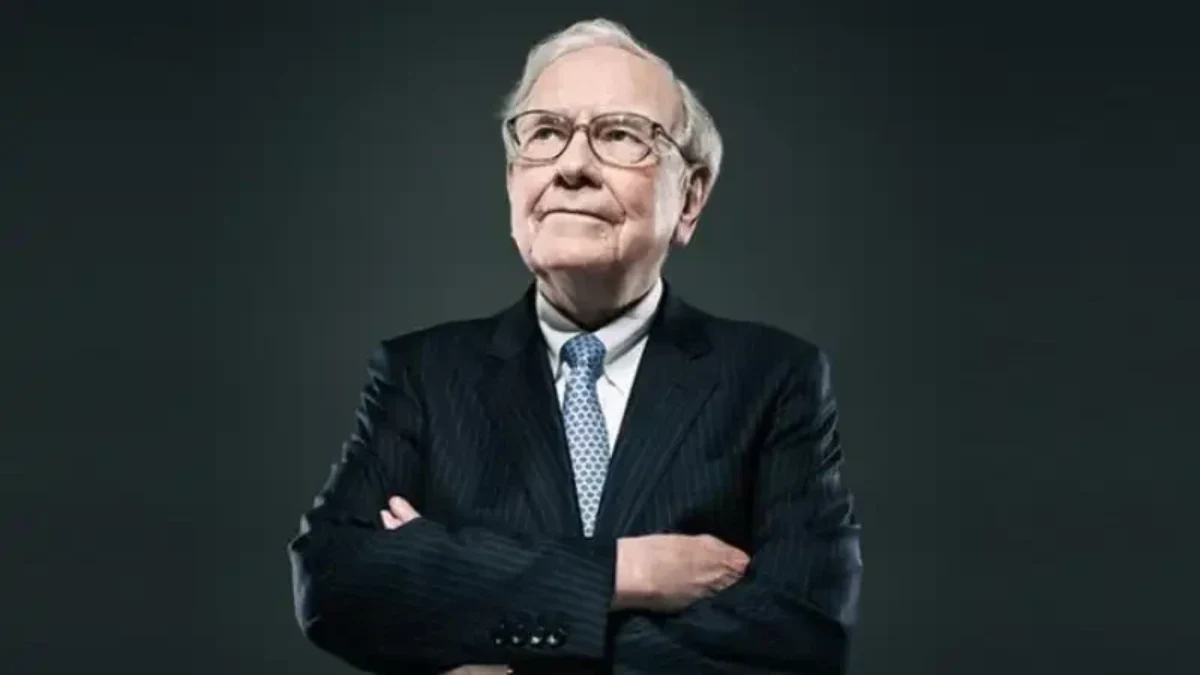
Eight words. That's all it took for Warren Buffett to rattle investors across Wall Street and beyond. Spoken at Berkshire Hathaway's annual meeting in Omaha, they landed with the quiet precision of someone who has watched markets boom, bust, and repeat for over six decades.
What Did Buffett Actually Say?
On May 2, 2026, during a live CNBC interview with Becky Quick at Berkshire Hathaway's annual shareholders meeting, Buffett delivered the line that set financial media on fire:
That's the eight-word warning. And while it may sound like a throwaway metaphor, Buffett was being surgically precise. He's long described financial markets as a church with a casino attached the church being patient, long-term investing, and the casino being speculative short-term trading. His point at the 2026 meeting: the casino floor is getting crowded.
He didn't stop there. "We've never had people in a more gambling mood than now," he told CNBC. And then, in the same breath, he clarified his position wasn't pure doom. "But that doesn't mean that investing is terrible. It does mean that prices for an awful lot of things will look very silly."
That last line is the one serious investors should sit with.
Why One-Day Options Have Buffett Worried
Buffett was particularly blunt about one specific behavior driving his concern: one-day options trading. These are contracts that expire within a single trading session, giving traders enormous leverage on short-term price moves. His verdict, delivered on live television, was unambiguous.
The volume of zero-day-to-expiry (0DTE) options has exploded in recent years. According to data tracked by major derivatives analysts, these contracts now account for a substantial portion of daily S&P 500 options volume something that simply did not exist in Buffett's early career. He's watched Wall Street evolve from ticker tape to algorithmic millisecond trading, and what he sees now concerns him in a way that feels personal.
At 95, still serving as Berkshire's chairman after stepping down as CEO at the end of 2025, Buffett noted that in his 60-plus years in business, truly "juicy" opportunities arrived only about five times. Right now, he sees none.
The $397 Billion Signal You Can't Ignore
Words are one thing. What Buffett does with money is another, and right now his actions are louder than any interview.
Berkshire Hathaway ended Q1 2026 with a consolidated record of $397.4 billion in cash and short-term Treasury bills a figure that includes cash across all segments including BNSF and BHE. Berkshire's official Q1 2026 10-Q filing with the SEC puts the insurance and other businesses segment specifically at $373.5 billion in cash, cash equivalents and U.S. Treasury Bills. Either way, it's a record by a wide margin, surpassing the prior consolidated peak of $381.7 billion set in Q3 2025. To put the scale in context: the $397.4 billion figure exceeds the GDP of Hong Kong or Norway, and dwarfs the cash held by Apple, Amazon, Alphabet, and Microsoft combined.
This isn't passive accumulation. Between Buffett and his successor Greg Abel, Berkshire has now been a net seller of stocks for 14 consecutive quarters the longest such streak in the company's history under Buffett's stewardship. Even the $9.7 billion acquisition of OxyChem from Occidental, completed on January 2, 2026, didn't slow the broader pattern of selling far more stock than buying. That tells you exactly how Berkshire reads the market right now.
Greg Abel, who formally took over as CEO in early 2026, continued the same approach in his first quarter at the helm. Cash grew from $373 billion at year-end 2025 to $397 billion by March. The strategy didn't change with the leadership. Which makes sense, because Buffett still influences the portfolio from his chairman seat.
Here's a quick picture of how that cash has grown:
Period | Berkshire Cash Position |
|---|---|
Q3 2025 | $381.7 billion |
Year-End 2025 | $373 billion |
Q1 2026 | $397.4 billion (record) |
You don't park nearly $400 billion in Treasury bills because you're optimistic. You do it because finding businesses trading at a price that offers a sufficient margin of safety has become, as Buffett himself has said, increasingly difficult.
The Valuation Data Behind the Warning
Buffett's concern isn't gut feeling it's grounded in numbers that have been flashing red for a while.
The Shiller CAPE ratio, which measures inflation-adjusted stock prices against a decade of earnings, sat at approximately 41.5 as of May 2026, according to Multpl.com which publishes Robert Shiller's official data series. That is the second-highest reading in over 140 years of US market history. The only time it has been higher was during the dot-com bubble, when it hit a peak of 44.19 in December 1999 just before the crash that wiped out trillions. The current level also sits well above the 1929 pre-crash reading of roughly 32 and the 2007 pre-financial-crisis peak near 27.
The S&P 500 and Nasdaq Composite have posted total returns of roughly 80% and 100%, respectively, since June 2023. That's exceptional performance. It's also exactly the kind of market environment where complacency tends to set in, and where the line between investing and speculation gets blurry.
The "Buffett Indicator" total US stock market capitalisation divided by GDP is sitting near 200%, a level that historically suggests the market is significantly overvalued relative to the underlying economy. Both gauges point in the same direction.
None of this means a crash is imminent. Buffett himself has been wrong on timing before, and markets can stay expensive for longer than most people expect. But the confluence of record valuations, peak speculative activity in derivatives markets, and Berkshire's unprecedented cash position isn't something to brush off.
What This Means for Regular Investors
Here's the practical question: should you be doing anything differently?
Buffett's actual advice both implicit in his behavior and explicit in interviews offers a clear framework.
First, don't panic-sell. Timing the market is notoriously unreliable, and missing even a handful of the market's best days can devastate long-term returns. According to BlackRock research, a $10,000 investment held fully invested over 20 years would have produced 58% more than the same investment that missed only the five best-performing days. The market's strongest sessions tend to cluster inside its worst periods, which means sitting in cash waiting for the perfect re-entry is its own serious risk.
Second, know what you actually own. Buffett's criticism isn't about the stock market as a whole it's about the behavior patterns he sees dominating it. If you're holding quality businesses with durable earnings over a multi-year horizon, you're still in the church. If you're trading 0DTE contracts on intraday momentum, you're at the roulette wheel.
Third, keep some dry powder. Not because a crash is guaranteed, but because the investors who can act decisively when others panic are the ones who generate real generational wealth. Berkshire has been building that capacity for years. Individual investors can apply the same logic at their own scale.
Buffett has recommended a simple default for most people: a low-cost S&P 500 index fund, held long term, beats the vast majority of active strategies. That advice doesn't change just because valuations are high.
What Happens Next
Berkshire's 2026 annual meeting was also the first without Buffett on stage as CEO. Greg Abel led the session, and the transition appeared smooth. But Buffett's voice and his warning still carries enormous weight, precisely because he's not trying to sell you anything.
The "Oracle of Omaha" remains Berkshire's chairman with no personal newsletter, no advisory firm, and no financial incentive to alarm markets. When someone with a 60-year track record and nearly $400 billion in uncommitted capital says the casino has gotten very attractive, it's worth asking yourself which side of that building you've been spending time in.
The market will keep moving. Prices will keep being set. But the difference between investing and gambling has never mattered more than it does right now.
- Warren Buffett
- Stock Market
- Berkshire Hathaway
- Investing
- Market Valuation
- Shiller CAPE
- Business