Luis García Jr. Contract Shapes Yankees Trade
Luis García Jr.'s $6.875 million salary and 2027 club control explain the Yankees' four-pitcher trade and the structure of Washington's unusual return.

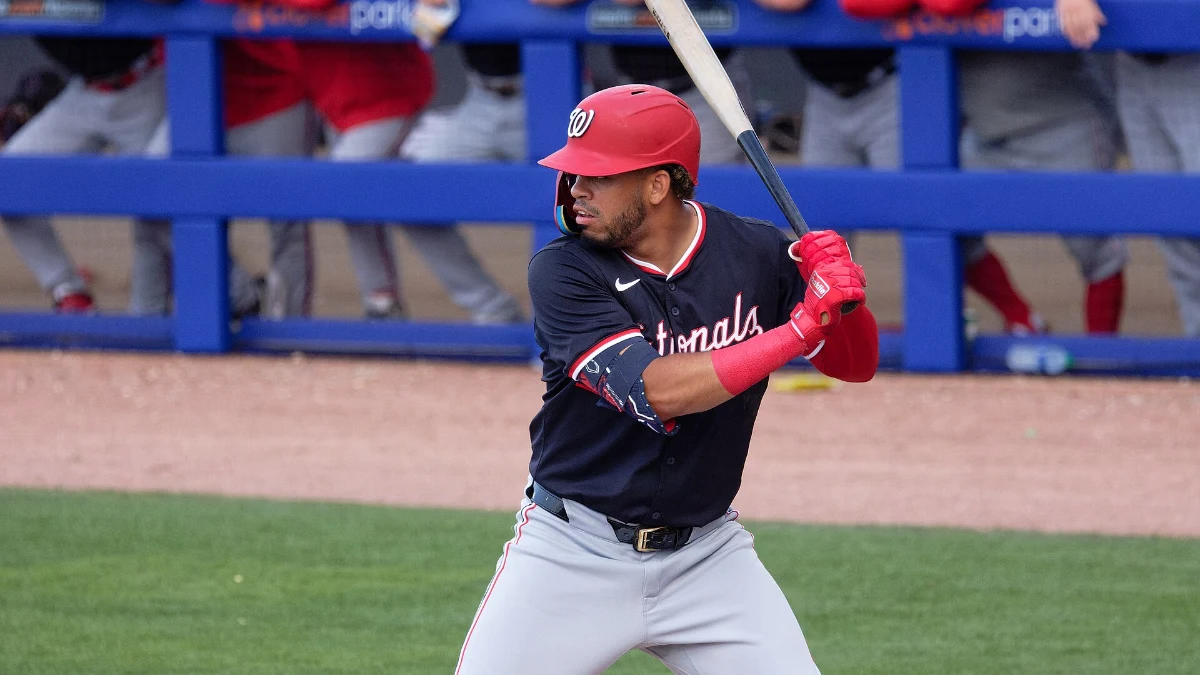
The New York Yankees acquired Washington Nationals first baseman Luis García Jr., 26, for four right-handed pitchers on Aug. 2, 2026, one day before the Major League Baseball trade deadline.
García's contract explains the four-pitcher return. García is earning $6.875 million this season, remains under club control through 2027, and will be eligible for another salary-arbitration decision before next year. New York bought immediate offense and a second season of control. Washington priced the return around both.
Yankees send four pitchers for García
Washington received Yovanny Cruz, 26, Jake Bird, 30, Jack Cebert, 24, and Ben Grable, 24. Bird and Cruz have pitched in the major leagues, while Cebert and Grable reached the upper levels of New York's farm system.
Cruz made his major-league debut on May 20 and had allowed one run in 5.1 innings across four appearances by the time of the trade. Bird had appeared in 227 major-league games and had worked 36 times for New York in 2026. Their current records are available on the official pages for Cruz and Bird.
Cebert had struck out 79 batters in 64.1 Double-A innings before being placed on the seven-day injured list on July 25. His Baseball Savant profile listed a 4.90 ERA and 1.38 WHIP in 13 games at that level.
García's 2026 salary and 2027 control
García agreed to a one-year, $6.875 million contract with Washington on Jan. 9, 2026, avoiding salary arbitration for the season. The amount appears in the Nationals' arbitration deadline update.
The agreement fixes his 2026 salary. After the trade, New York assumes the remaining portion of that contract and retains the right to tender him another deal for next season.
García remains under club control through the end of 2027. That gives the Yankees a route to keep him beyond the current pennant race without negotiating with him as a free agent this winter.
His 2027 salary still has to be settled. Under the salary-arbitration process, an eligible player and club may agree on a figure or exchange proposed salaries before a hearing. García's career-best 2026 production strengthens his case for a raise.
New York therefore knows the remaining 2026 cost but not the final price of the second season. The club controls whether to tender the contract. The arbitration process will determine what that control costs.
Control through 2027 shapes the return
García's extra season of control changes the value of the transaction. Washington was trading a productive regular who could remain with the acquiring club in 2027, rather than a pending free agent available for one postseason race.
That distinction helps account for a four-pitcher return without one player carrying the entire package. The Nationals distributed the value across an experienced reliever, a pitcher with limited major-league time, a Double-A starter, and another upper-level prospect.
New York also accepted the possibility of a higher arbitration salary next year. The control has value because García can remain on the roster, but the season will not necessarily be inexpensive if his current production holds.
Washington converted a hitter at peak value into pitching depth at several levels. New York acquired a bat for the present lineup while preserving a decision for 2027, when its injured hitters may be healthy and the roster may require a different arrangement at first base and designated hitter.
García hits career highs before deadline
García reached the trade batting .283 with 23 home runs, 76 RBIs, an .873 OPS, and a .560 slugging percentage in 104 games. His home-run and RBI totals were career highs, and the slugging percentage led the National League when he was removed from Washington's Aug. 2 lineup.
García bats left-handed and has played primarily first base in 2026. He spent most of his earlier major-league career at second base and also has experience at shortstop. Washington began testing him at first in September 2025, when his first major-league appearance at the position gave the club another way to keep his bat in the lineup.
The move to first base and the rise in power happened in the same season. It also changed how another club could use him. A left-handed hitter with career-best power, experience at three infield positions, and control through 2027 carries more roster options than a second baseman on an expiring deal.
Yankees injuries create an immediate opening
New York made the trade while three established hitters were unavailable. Cody Bellinger was expected to miss four to six weeks with a Grade 2 left hamstring strain, according to his injury update. Aaron Judge was still allowing a fractured right rib to heal, and Giancarlo Stanton was continuing a running progression after a second right calf strain.
García's handedness makes the deal more revealing. The Yankees had also identified a right-handed-hitting catcher as a deadline need, but García bats left-handed. New York chose available production and contract control over a perfect handedness match.
He can play first base immediately and cover second if required. His 2027 control also gives the Yankees time to evaluate how he fits alongside Paul Goldschmidt, Ben Rice, Judge, Stanton, and Bellinger after the injured lineup returns.
The current shortage is offensive. The later question is positional. García's contract gives New York until the winter to decide how first base and designated-hitter plate appearances should be divided in 2027.
Washington receives pitchers at four levels
Washington received four right-handers with different development timelines rather than one direct replacement for García.
Bird can be evaluated as an experienced major-league reliever. Cruz has reached the majors and offers a shorter path to a bullpen role. Cebert has worked as a starter at Double-A. Grable represented the Yankees in the 2026 Futures Game and remains a developmental arm.
Spreading the return across those stages lowers Washington's dependence on one prospect becoming a star. It also means the trade cannot be judged through one ranking.
García's control through 2027 gave the Nationals leverage to seek that volume. The Yankees were buying present production and another controlled season, while Washington was adding pitchers who could arrive on different schedules.
The risk remains substantial. Pitching development is volatile, and the package will be judged over several seasons. Bird and Cruz can contribute sooner. Cebert and Grable must continue progressing before Washington can measure the full return.
The deal extends beyond the deadline
The 2026 MLB trade deadline is Aug. 3 at 6 p.m. ET. The García deal was reached on Aug. 2, leaving both clubs time to process the transaction before the cutoff.
For New York, the immediate obligation is the remaining portion of García's $6.875 million salary. The longer decision arrives after the season, when the Yankees must tender him a 2027 contract and settle the salary through arbitration or negotiation.
For Washington, the return begins with four right-handed pitchers instead of one headline prospect. The success of the trade will depend on how quickly Bird and Cruz help the major-league staff and whether Cebert and Grable become durable options.
García's 2027 salary has not been set. That unresolved number is the contract detail the Yankees carried away with the hitter.
- Luis García Jr. contract
- Yankees trade
- Washington Nationals
- MLB trade deadline
- salary arbitration
- Jack Cebert