Rory McIlroy's Grip: The Clubface Control Behind a Career Grand Slam
Rory McIlroy uses a slightly strong left-hand grip and a cupped lead wrist to control his clubface, the same technical foundation that carried him to a career Grand Slam at Augusta in 2025.

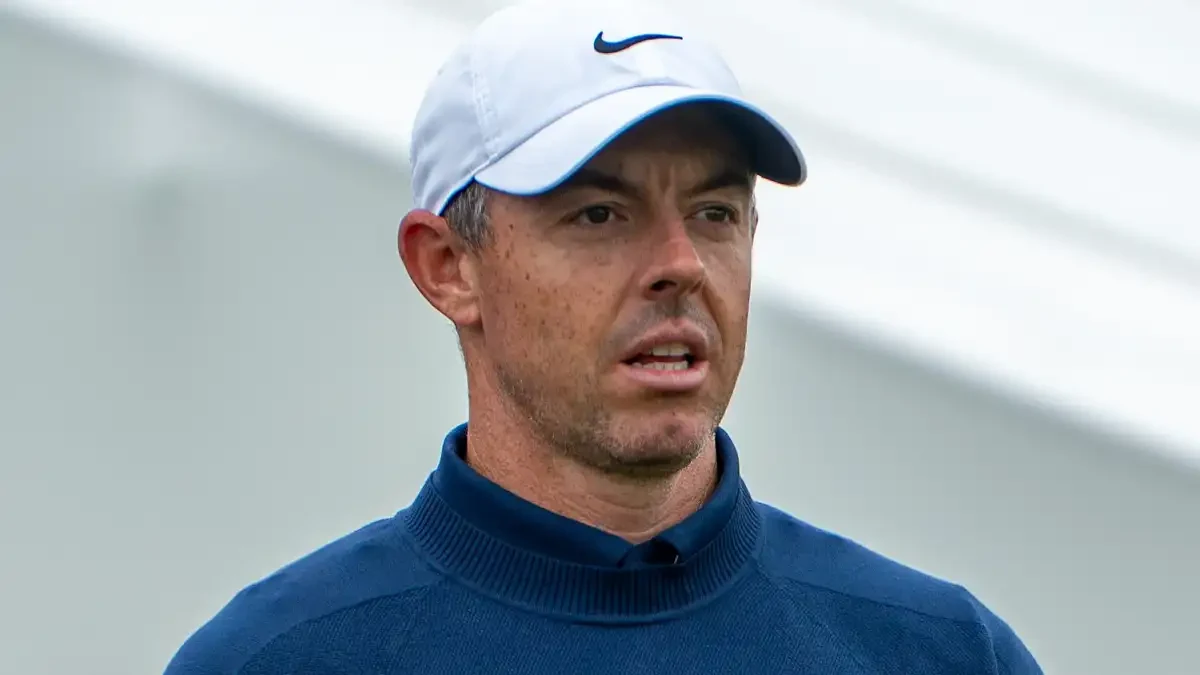
Rory McIlroy won the 2025 Masters Tournament at Augusta National on April 13, beating Justin Rose with a birdie on the first playoff hole to complete the career Grand Slam, and the club he held throughout that Sunday was gripped in precisely the same slightly strong left-hand position that swing analysts have been pointing to for years.
What Searches for "Rory McIlroy Grip" Are Actually Asking
The phrase pulls two separate threads. Some searchers want to know which grip model Rory uses on his clubs, the PGA TOUR's official equipment breakdown of his Masters-winning bag confirms the putter uses a SuperStroke Zenergy Pistol Tour grip, while his full-swing clubs use the Golf Pride Tour Velvet Cord. Others want to understand how his hands actually hold the club and what that does to the clubface through impact.
Both questions lead to the same answer the grip's job is clubface control, and McIlroy's setup is built around a slightly strong left-hand position that lets his lead wrist manage that face through every phase of the swing.
The Slightly Strong Grip and the Cupped Wrist, A Calibrated Match
Modern instruction generally advocates a flat lead wrist at the top of the backswing as the cleanest way to square the clubface. McIlroy operates slightly differently. Swing analysis from Golf.com notes that he holds the club with a relatively strong left-hand grip, the logo on his glove is clearly visible from a face-on view, indicating his left hand is rotated clockwise on the handle, while allowing his lead wrist to cup slightly at the top. The combination keeps the clubface surprisingly square despite the cupping, because the stronger grip compensates for what the cup would otherwise produce.
This is not an accident or a flaw he has failed to fix. It is a calibrated match. The strong-left-hand grip effectively pre-closes the face relative to where cupping would leave it, which means the slight cup produces a square result rather than an open one. The lead wrist position only makes sense in the context of the grip pressure and hand placement around it.
Biomechanical breakdowns of McIlroy's irons show a lead-wrist angle that moves from approximately 150 degrees at setup to around 161 degrees at impact, evidence of a natural release through the ball rather than a held-off, manipulated finish. The forward shaft lean increases from setup to impact, which means he is compressing the ball, not flipping at it.
Why Clubface Control Is the Governing Principle
The PGA's instructional resources are clear on this point: the clubface is the part of the club that contacts the ball, and that contact zone largely governs shot direction. The grip and the lead hand are the primary levers a golfer uses to position that face at impact.
Instruction dating back to a 2016 GolfWRX article by Dennis Clark, which has circulated widely as a reference for the lead wrist-clubface relationship, outlined three positions worth knowing. A neutral or flat lead wrist at the top tends to keep the face square. A cupped or dorsiflexed wrist generally opens the face relative to its starting position, adding loft and potentially steepening the swing path. A bowed or flexed wrist tends to close or strengthen the face position, flattening the swing and reducing dynamic loft.
McIlroy's technique threads between those positions, using grip strength to neutralise the effect of his cup. The output, one of the most consistent ball-striking records on the PGA TOUR across 29 career wins heading into the week at Augusta, validates the system.
The Masters Final Round and What It Revealed
In the 2025 Masters final round, McIlroy was paired with Bryson DeChambeau, setting up what many expected to be a direct sequel to the 2024 U.S. Open at Pinehurst, where DeChambeau had beaten him by one stroke. DeChambeau shot a final-round 75 and finished tied for fifth at 7-under 281. McIlroy closed at 73 before defeating Justin Rose in the playoff, having fallen from a five-shot lead mid-round before recovering with critical birdies on holes 15 and 17.
After the round, DeChambeau publicly stated McIlroy had not spoken to him throughout the day. Sports psychologist Bob Rotella confirmed on BBC Radio 4 that this was deliberate focus rather than personal animosity. "That didn't have anything to do with Bryson," Rotella said. "That was just the game plan all week, and we wanted to get lost in it. We didn't want to pay attention to what anyone else was scoring or shooting or swinging or how far they were hitting it we just wanted Rory to play his game."
The picture grew more specific ahead of the 2026 Masters, when a trailer for Rory McIlroy: The Masters Wait, Amazon Prime's documentary on the 2025 victory, revealed that the pair had at least one direct exchange during the final round. On the ninth hole, after both players hit approach shots close and couldn't agree on who was away, DeChambeau suggested flipping a tee to decide putting order. McIlroy refused. "No, this is the final round of the Masters, this isn't some game on a Tuesday afternoon somewhere," McIlroy said in the documentary. He called for a rules official to measure instead. DeChambeau told him to go ahead. McIlroy made the putt. DeChambeau missed.
Whatever the tension between them, McIlroy's wedge on the playoff hole finished 3 feet from the cup. He made birdie to win.
Scottie Scheffler's Presence on the Same Leaderboard
Searches pairing Rory McIlroy with Scottie Scheffler reflect the 2025 Masters leaderboard as much as any longer-term rivalry. Scheffler, ranked world number one on the PGA TOUR's official player profile, finished fourth that Sunday at 8-under 280, within range for most of the round before falling two shots short of the playoff.
Their contrast as ball-strikers is instructive. Scheffler operates with a more pronounced lead wrist bow at the top of his swing, a stronger face position that has become one of the most analysed techniques in modern instruction. McIlroy manages a cup with grip strength. Different mechanics, produced comparable results at Augusta. Both methods return the clubface to square at impact through different compensations, and neither approach works in isolation from the rest of the swing sequence.
What This Means for Amateur Golfers
The lesson from McIlroy's grip is not that amateurs should replicate his exact hand position. It is that grip and lead wrist position are interdependent variables, not independent choices. Changing one without adjusting the other shifts the clubface in ways that compound into the shot shape.
A slightly cupped wrist with a neutral grip will typically open the face and add loft, useful for bunker play, but problematic for full iron shots where compression and trajectory control matter. A bowed wrist with a strong grip closes the face and can produce a draw or reduce effective loft, which is why several Tour professionals, DeChambeau included, lean into that combination for power driving.
McIlroy's slightly strong grip with a managed cup is a middle path that requires a high degree of hand-speed control through impact to square the face. His lead-wrist angle measurements, taken at impact, confirm he achieves that squaring consistently.
Anyone working on this principle is best served by checking their grip first, verifying their wrist position at the top as a consequence of that grip, and using a mirror or video to see what the clubface actually does rather than guessing from feel alone.
Career Grand Slam: The Record That Gives the Swing Its Context
McIlroy completed the career Grand Slam with the 2025 Masters, becoming only the sixth man in the history of professional golf to win all four major championships, joining Gene Sarazen, Ben Hogan, Gary Player, Jack Nicklaus, and Tiger Woods. His five majors span the 2011 U.S. Open, the 2012 PGA Championship, the 2014 Open Championship, the 2014 PGA Championship, and the 2025 Masters, an 11-year gap between his third and fourth major titles that generated more column inches than almost any other open question in the sport.
"I started to wonder if it would ever be my time," McIlroy said in Butler Cabin after the win. "A moment like that makes all the years and all the close calls worth it."
He carried 29 PGA TOUR wins into the 2026 season, with that slightly strong grip and its managed lead wrist still at the centre of every round.
- rory mcilroy grip
- rory mcilroy grand slam
- rory mcilroy bryson dechambeau
- scottie scheffler
- golf swing technique
- 2025 Masters PGA TOUR