Argentina Risk FIFA Action Over Falklands Banner
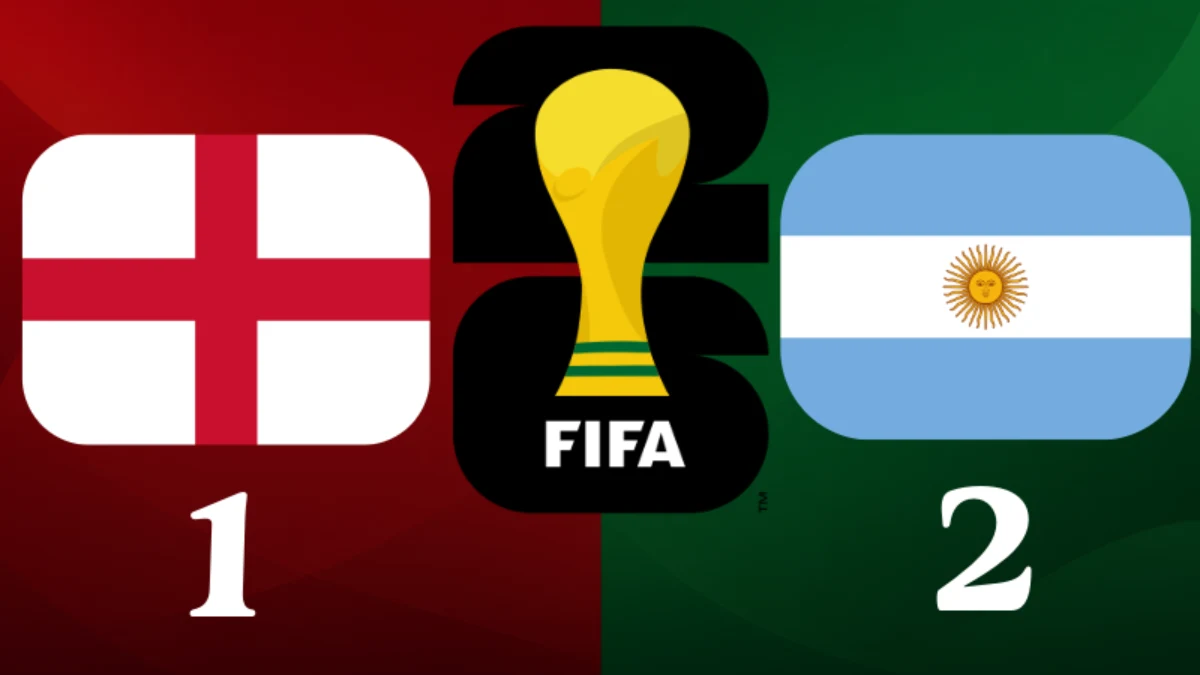
Argentina displayed a "Las Malvinas son Argentinas" banner after beating England 2-1. FIFA bans political messages, and a 2014 fine set the precedent.


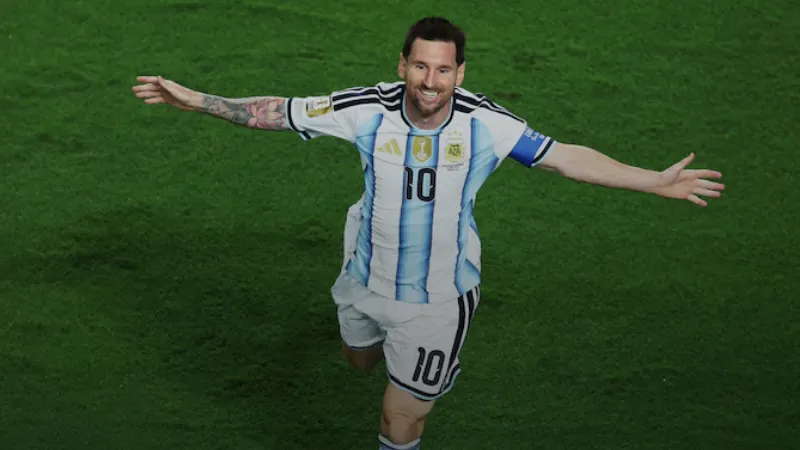
Argentina players unfurled a banner reading "Las Malvinas son Argentinas", "The Malvinas are Argentine", on the pitch in Atlanta on the night of 15 July 2026, minutes after beating England 2-1 in a FIFA World Cup semi-final. The banner appeared during post-match celebrations, with Lisandro Martínez and Giovani Lo Celso photographed holding it as they grinned and waved to fans in the stands, according to Reuters. Lo Celso was also identified by AP among those holding it. FIFA had not issued a public response at the time both wire agencies filed their reports.
Three Codes, One Clear Basis for Action
The FIFA World Cup 2026 Stadium Code of Conduct explicitly prohibits political, offensive, and discriminatory banners, flags, fliers, apparel, and similar materials inside stadiums. That prohibition applies to everyone inside the ground, players included.
The FIFA Disciplinary Code 2026, adopted by the FIFA Council on 28 April 2026 and in force from 1 May 2026, goes further. It makes national associations liable for conduct involving objects or messages that are not appropriate for a sporting event, particularly those of a political, ideological, religious, or offensive nature.
A separate layer of regulation comes from IFAB. Law 4.5 of the Laws of the Game prohibits political, religious, or personal slogans, statements, or images on player equipment and confirms that the player and/or team can be sanctioned by the competition organiser, the national association, or FIFA. The banner itself falls outside the strict technical definition of player equipment, meaning the Stadium Code and Disciplinary Code apply more directly here.
Together, the three rule sets give FIFA a clear basis to open a case against the Argentine Football Association (AFA).
The 2014 Precedent: 30,000 Swiss Francs
This is not the first time the AFA has faced scrutiny over this specific banner. Before a friendly against Slovenia in June 2014, Argentina players were photographed holding a "Las Malvinas son argentinas" banner. Reuters reported on 25 July 2014 that FIFA reprimanded the AFA and fined it 30,000 Swiss francs, roughly $33,200 at the time.
That fine establishes where FIFA's disciplinary machinery has already gone on this exact banner. A friendly before a tournament is one context. A semi-final inside the tournament itself, against England specifically, is another, and the 2026 Disciplinary Code, not the 2023 edition, now governs the case.
How Argentina Won, and Why the Opponent Matters
The match that prompted the banner was one of the most charged fixtures in international football. Anthony Gordon gave England the lead in the 55th minute at Atlanta's Mercedes-Benz Stadium. Enzo Fernández equalised in the 85th minute from outside the box, and Lautaro Martínez headed in Messi's cross in added time to send Argentina to the final, according to Reuters' match report.
Argentina and England have met at World Cups before under the direct shadow of the 1982 Falklands War. The most famous was the 1986 quarter-final in Mexico, when Diego Maradona scored twice, one with his fist, one with his feet, four years after a 74-day conflict that cost 907 lives: 649 Argentine servicemen, 255 British personnel, and 3 Falkland Islanders, according to the Imperial War Museums. No other first-round or knockout opponent carries that history, and the banner's appearance immediately after the final whistle made the connection explicit.
Reuters identified the banner holders, where the banner originated was not established. Reuters and The Guardian both reported its origin was unclear. AP reported that fans handed it to the players.
The Sovereignty Dispute Behind the Banner
The Falkland Islands, called Islas Malvinas in Argentina, lie about 500 km off the Argentine coast and have been under British control since 1833. The UK government's official position rests on the right to self-determination: in a March 2013 referendum, 1,513 islanders voted to retain British Overseas Territory status, with 3 voting against, on a 92% turnout from an electorate of 1,653.
Argentina's position is different. Its Foreign Ministry states that the country holds legitimate and inalienable sovereign rights over the Malvinas, South Georgia, and the South Sandwich Islands and calls for renewed negotiations. The UN General Assembly's Resolution 2065 (XX), adopted on 16 December 1965, established the question as a sovereignty dispute requiring a peaceful negotiated solution. It does not assign sovereignty to either side.
Those competing claims entered a World Cup semi-final in Atlanta, in a stadium in the United States, with the world watching, carried onto the pitch on a banner two Argentine players held above their heads at the final whistle.
UK Government Calls Display "Entirely Inappropriate"
UK Business Secretary Peter Kyle said the players' conduct was "entirely inappropriate" and that he expected FIFA to investigate, in remarks given to the BBC on 16 July. Argentina head coach Lionel Scaloni had said before the match that he did not want to mix football and politics.
The banner's appearance, regardless of those stated intentions, put the AFA in the position it occupied in 2014, waiting on FIFA's disciplinary process to determine whether a political message on a football pitch carries a formal consequence.
FIFA Has Not Acted. Yet.
FIFA had not confirmed any punishment, investigation, or disciplinary opening as of 15–16 July 2026, when AP and Reuters filed their reports. AP noted that FIFA was approached for comment, Reuters said FIFA did not immediately reply to a request.
Under the Stadium Code and the 2026 Disciplinary Code, the AFA's exposure is defined. The 2014 reprimand and 30,000 Swiss franc fine show how FIFA handled the same banner in a lower-stakes context. Whether the governing body imposes a heavier sanction for conduct inside its own flagship tournament, against England, on the biggest night of Argentina's title defence, is a decision for FIFA's disciplinary committee.
Argentina face Spain in the 2026 World Cup final on 19 July in New Jersey. The banner will follow them there whether or not the football does.
- Argentina
- Falkland Islands
- FIFA World Cup 2026
- Football
- FIFA disciplinary action
- Las Malvinas