Alaska Pilot's $95K Plane Faces Supreme Court Test
The Supreme Court agreed July 20 to decide if Alaska's seizure of a pilot's $95,000 Cessna over beer bound for a dry village violates the Eighth Amendment's excessive fines bar.

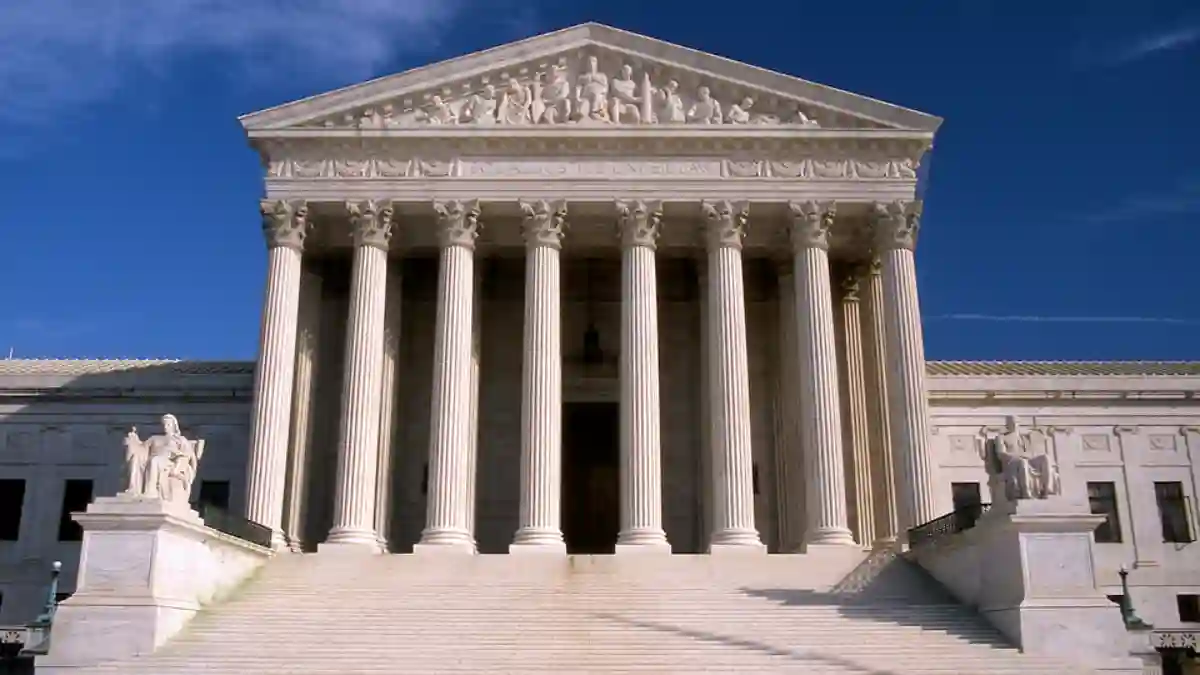
The U.S. Supreme Court agreed on July 20, 2026, to decide whether Alaska may seize a bush pilot's $95,000 airplane as punishment for a misdemeanor conviction tied to beer found aboard before a flight to a dry village a forfeiture the pilot's lawyers say is nearly ten times the maximum fine the law authorizes for the same offense.
Background: The 2012 Pre-Flight Stop That Started a 14-Year Legal Fight
On April 3, 2012, Kenneth J. Jouppi, an Alaska bush pilot operating an air-taxi service called KenAir using his 1969 Cessna U206D, was preparing to fly a passenger and her groceries roughly 110 miles from Fairbanks to Beaver, a small village that had voted under Alaska's local-option law in 2004 to ban the sale, importation, and possession of alcohol.
Before departure, a state trooper found beer in the passenger's luggage. Court records from the Alaska Supreme Court's Opinion No. 7762 put the quantity at approximately 72 cans of beer about three cases, two Budweiser and one Bud Light, intended as a gift for the passenger's husband, the local postmaster though one visible six-pack in a grocery bag became the shorthand in public descriptions of the case. Jouppi maintained he did not know the alcohol was on board. Alaska disputed Jouppi's claim that he did not know the alcohol was on board.
Jouppi and KenAir were convicted in 2013. His sentence 180 days in jail with 177 suspended, a $3,000 fine with $1,500 suspended, and three years' probation reflected the misdemeanor classification. Alaska also sought forfeiture of the plane under a statute that makes aircraft seizure mandatory when a conviction involves unlawful importation of alcohol into a local-option community.
The trial court found the forfeiture unconstitutional in 2018. An Alaska appellate court disagreed in 2022, vacating that ruling and ordering further review. The Alaska Supreme Court issued its final word on April 18, 2025, holding that the forfeiture did not violate the Eighth Amendment's Excessive Fines Clause because it was not "grossly disproportional" to the gravity of the offense.
The Constitutional Question Before the Justices
Jouppi, now 82, is represented at the Supreme Court level by the Institute for Justice, a civil liberties law firm whose counsel of record is Samuel B. Gedge. His petition for certiorari, filed August 29, 2025, and docketed as No. 25-246, presents a targeted legal question: when courts assess whether a punishment is "grossly disproportional" under the Excessive Fines Clause, must they measure the gravity of the offense based on the specific defendant's conduct or may they measure it against the offense in the abstract?
That distinction has direct bearing on Jouppi's situation. Alaska's maximum statutory fine for an individual convicted of a class A misdemeanor is $10,000. The trial court valued his plane at $95,000 nine-and-a-half times that ceiling. The Alaska Supreme Court found this proportional when it weighed the forfeiture against the broader offense category, which includes the state's interest in enforcing dry-village rules across remote communities accessible primarily by air.
Jouppi's lawyers argue the analysis should run differently courts must account for what this particular defendant actually did in his telling, fly a passenger who, he says, carried beer without his knowledge rather than the worst-case version of the offense type. Whether courts measure culpability by the defendant's conduct or by the offense category is the precise question the justices have now agreed to answer.
Alaska's Defense of the Forfeiture
The state's brief in opposition, filed November 17, 2025, frames this as criminal forfeiture tied to a criminal conviction, not the civil asset-forfeiture process that has drawn sustained national criticism in recent years. Alaska argues that aircraft are the realistic transport method into many remote communities where alcohol restrictions exist, and that forfeiture of the vehicle of transport directly corresponds to the violation committed.
The state also contests the framing of the penalty as disproportionate. A $95,000 plane, in Alaska's view, is an instrument whose removal from a licensed air-taxi operator's business has consequences because air travel is central to enforcement in bush Alaska not because the state is trying to bankrupt the individual.
A Proportionality Debate With National Implications
The Excessive Fines Clause of the Eighth Amendment bars the government from imposing fines that are grossly disproportional to the offense. The Supreme Court has applied the clause to civil asset forfeitures and, in more recent years, confirmed it applies to the states through the Fourteenth Amendment. What remains unsettled and what Jouppi v. Alaska will now address is the methodology courts must use when measuring proportionality in criminal forfeitures.
A ruling that requires analysis of the defendant's specific conduct could raise the bar for forfeitures in misdemeanor cases where the asset being seized far exceeds what the criminal sentence itself would authorize. Cases built on mandatory forfeiture statutes, like the one Alaska used here, would face closer constitutional scrutiny if the Court sides with Jouppi.
The case draws on the same area of constitutional law involved in Timbs v. Indiana, in which the Court confirmed the Excessive Fines Clause applies to the states a ruling that itself arose from a property forfeiture following a misdemeanor conviction. In Jouppi, the Court will be asked to clarify what that clause actually demands when courts calculate whether a fine is excessive.
Status and Next Steps
The Supreme Court granted certiorari through its official order list of July 20, 2026 with case docket No. 25-246 listing the lower court as the Supreme Court of Alaska. No oral argument date has been set in official court records as of publication.
Jouppi filed his petition about four months after the April 2025 Alaska ruling a case arc that began with a pre-flight luggage check in 2012 and has now reached the highest court in the country. The justices will consider whether Alaska's mandatory forfeiture of a $95,000 aircraft, imposed on a pilot convicted of a misdemeanor and sentenced to three days to serve and a $1,500 payable fine, crosses the constitutional line. "The Excessive Fines Clause of the Constitution was built for cases like this," said Sam Gedge, a senior attorney at the Institute for Justice.
- Supreme Court excessive fines clause
- Kenneth Jouppi Cessna forfeiture
- Alaska dry village alcohol law
- Eighth Amendment asset forfeiture
- criminal forfeiture misdemeanor