Karim Khan: ICC Prosecutor Faces Removal Vote on July 24
Khan's accuser spoke publicly on July 16 as 125 ICC member states prepare to vote on July 24 on removing the suspended prosecutor.

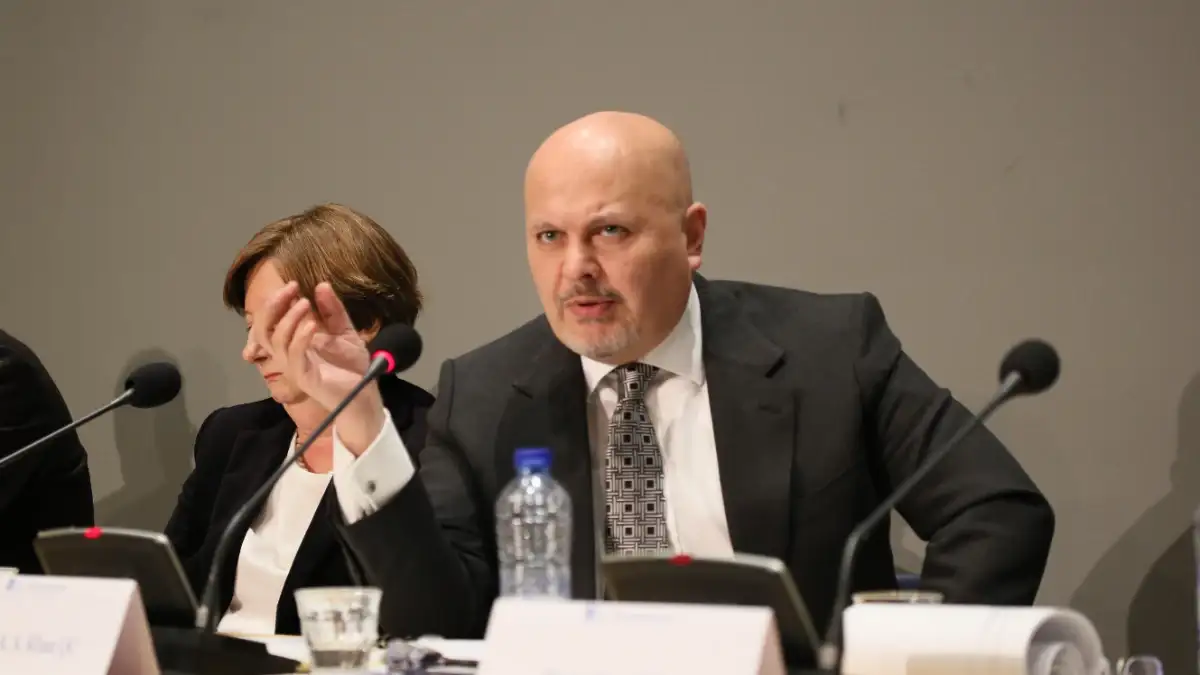
The woman at the centre of sexual misconduct allegations against International Criminal Court chief prosecutor Karim Khan went public for the first time on July 16, 2026, telling a television news network that there was no way the contact she described could be considered consensual eight days before 125 ICC member states are scheduled to vote on whether to remove him from office. Khan, 56, denies all allegations.
Karim Khan's Career at the ICC
Karim Asad Ahmad Khan KC, a British barrister called to the Bar in 1992, built a career in international criminal law before being elected ICC Prosecutor on February 12, 2021. Under Article 42 of the Rome Statute, the Prosecutor serves a single non-renewable nine-year term. Khan was sworn into office on June 16, 2021, placing the end of his term in June 2030.
Before the ICC, Khan led high-profile defence and prosecution work at the International Criminal Tribunal for the former Yugoslavia and the Special Tribunal for Lebanon. He was elected as Prosecutor with backing from a coalition of African and Asian states after a second round of voting in which he secured 72 ballots.
At the ICC, Khan applied for arrest warrants for Israeli Prime Minister Benjamin Netanyahu and then-Defence Minister Yoav Gallant on May 20, 2024, over the conduct of military operations in Gaza. The warrants were formally issued by ICC Pre-Trial Chamber I on November 21, 2024. Khan had also sought warrants for Hamas leaders, including Yahya Sinwar, for the October 7, 2023 attack on southern Israel.
That decision placed the court in direct tension with the United States and Israel, neither of which is a Rome Statute party. On February 13, 2025, the US Treasury's Office of Foreign Assets Control officially designated Karim Asad Ahmad Khan on the Specially Designated Nationals list under Executive Order 14203.
The Allegations
The allegations first surfaced internally in May 2024, weeks after Khan's warrant applications against Israeli officials. A junior lawyer at the ICC identified publicly only by her first name, Sarah alleged that Khan engaged in non-consensual sexual contact with her over an extended period at ICC offices in The Hague, at his home, and on overseas work trips. Khan has denied the allegations.
The UN's Office of Internal Oversight Services conducted an investigation and produced a report that found a factual basis for the allegations. However, an independent panel of three judges, selected by the ICC's executive oversight body to assess the findings, unanimously concluded in March 2026 that the facts presented did not establish misconduct or a breach of duty under the applicable legal framework. Khan's legal team cited that judicial finding as grounds to close the matter.
The ASP Bureau, the executive committee of the court's governing body, reached a different conclusion. It voted in early June 2026, by 14 in favour and four against with three abstentions from Bolivia, Bosnia, and South Africa to suspend Khan and refer the case to all 125 ICC member states for a formal disciplinary vote.
Sarah Speaks Publicly for the First Time
On July 16, 2026, Sarah gave her first on-camera interview. Speaking about the alleged incidents, she said there was "no way for something to be consensual when you have such a power disparity."
She directly addressed one of the central political arguments circulating around the case that her complaint was connected to, or motivated by, attempts to undermine Khan's pursuit of Israeli officials at the ICC. Sarah rejected that framing. "If ever there was even a hint of suspicion that I was a state agent of any kind, I would have been dismissed," she said, pointing to the security clearances required to work alongside the prosecutor.
Khan's lawyer, Sareta Ashraph, responded on his behalf, stating that he denies "any form of sexual contact, relationship, consensual or non-consensual" with the alleged victim.
The interview aired as the Netherlands announced it would vote in favour of Khan's removal. Foreign Minister Tom Berendsen and Justice Minister David van Weel wrote jointly to parliament on July 16, confirming that position.
Two Suspensions, One Vote
Khan is currently under two separate suspensions.
The ICC's Bureau of the Assembly of States Parties formally suspended him from his duties on June 8, 2026. Eleven days later, Britain's Bar Standards Board which regulates barristers in England and Wales imposed its own immediate interim suspension on June 19, barring Khan from practising as a barrister. An interim suspension panel hearing took place on July 10, and on July 13, the panel ordered that the suspension remains in effect until the BSB or a Disciplinary Tribunal resolves the matter. Khan appealed the BSB decision and lost.
The two processes are distinct. The BSB addresses Khan's standing as a barrister regulated under English law. The ICC process, governed by Article 46 of the Rome Statute, determines whether he can continue as Prosecutor.
The July 24 Vote and What It Takes to Remove Khan
Under Article 46 of the Rome Statute, the Prosecutor can be removed from office if found to have committed serious misconduct or a serious breach of duty, with the decision made by secret ballot and an absolute majority of States Parties. The UN Treaty Collection confirms 125 parties to the Rome Statute as of July 2026, placing the threshold for removal at 63 votes.
A Special Session of the Assembly of States Parties is scheduled for July 24, 2026, at UN Headquarters in New York. Multiple diplomatic sources have confirmed the date, though the formal meeting notice has not been made publicly available in the reporting to date.
A procedural dispute has emerged over how the vote will be structured. Sources familiar with the Bureau's internal deliberations told Middle East Eye that the Bureau altered the voting process from a two-stage format a first vote on whether misconduct occurred, a second on removal to a single combined vote. Khan's legal team argued that change lowers the threshold for dismissal and departs from the court's own written procedures dated March 6, 2026. The Bureau has not publicly commented on the dispute in detail.
The Political Dimension
Khan has maintained throughout the process that the misconduct probe is a politically motivated effort to neutralise him as prosecutor, given his pursuit of Israeli officials. His supporters point to the timing of the original allegations which emerged publicly within weeks of the warrant applications against Netanyahu and Gallant and to US sanctions imposed on the court.
Former EU foreign policy chief Josep Borrell, writing in Project Syndicate on July 17, argued that the push to remove Khan was tied to broader pressure on the ICC's independence. That remains a contested political assessment, not an established fact.
Women's rights organisations, including the Hague-based Women's Initiatives for Gender Justice, have argued that the misconduct allegations were serious and warranted action against Khan earlier in the process.
Sarah rejected the conflation directly in her interview. "I think many parties have, for their own agenda, conflated the two things," she said, referring to her allegations and the ICC's investigations into Israeli officials.
What Happens on July 24
The 125 member states of the Rome Statute will convene in New York on July 24, 2026, to vote on Khan's future. If the vote goes against him, Khan would become the first ICC Prosecutor removed from office since the court was established the Rome Statute was adopted on July 17, 1998, and entered into force on July 1, 2002.
If Khan survives the vote, both the BSB process in the UK and his suspension from ICC duties remain unresolved, with no confirmed timeline for either. His nine-year term, which began when he was sworn into office on June 16, 2021, would otherwise run to June 2030.
Khan's legal team has not indicated whether he would challenge a removal decision. He continues to deny all allegations.
- karim khan
- icc prosecutor
- international criminal court
- assembly of states parties
- rome statute
- sexual misconduct
- icc vote july 2026