Venezuela Quake Toll Hits 920 as Rescuers Race On
Venezuela earthquake death toll reaches 920 as 243 survivors are rescued and more than 1,600 foreign responders search La Guaira and Caracas for survivors.

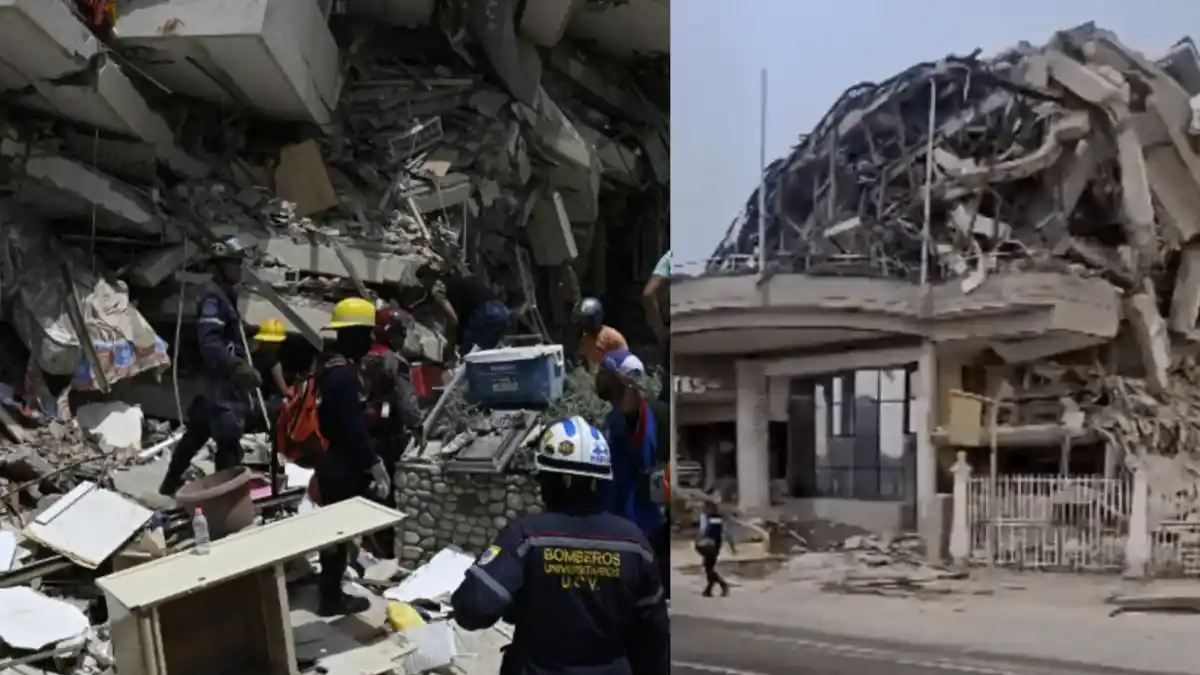
Venezuela's confirmed earthquake death toll reached 920 by June 27, three days after two major earthquakes struck north-central Venezuela within 39 seconds of each other, according to the USGS event page for the magnitude 7.2 foreshock. National Assembly President Jorge Rodríguez said more than 3,300 people were injured and 243 had been pulled from the rubble alive, even as rescue crews and residents kept digging through collapsed buildings in the hardest-hit state of La Guaira.
What Happened and Where
The first earthquake, magnitude 7.2, struck at 22:04:33 UTC on June 24, with its epicenter east-northeast of San Felipe in Yaracuy state, according to the USGS event page. A second, stronger magnitude 7.5 earthquake followed roughly 39 seconds later. The IFRC's initial statement on the back-to-back quakes described the sequence as a powerful pair of tremors that compounded the destruction in a single, narrow window of time.
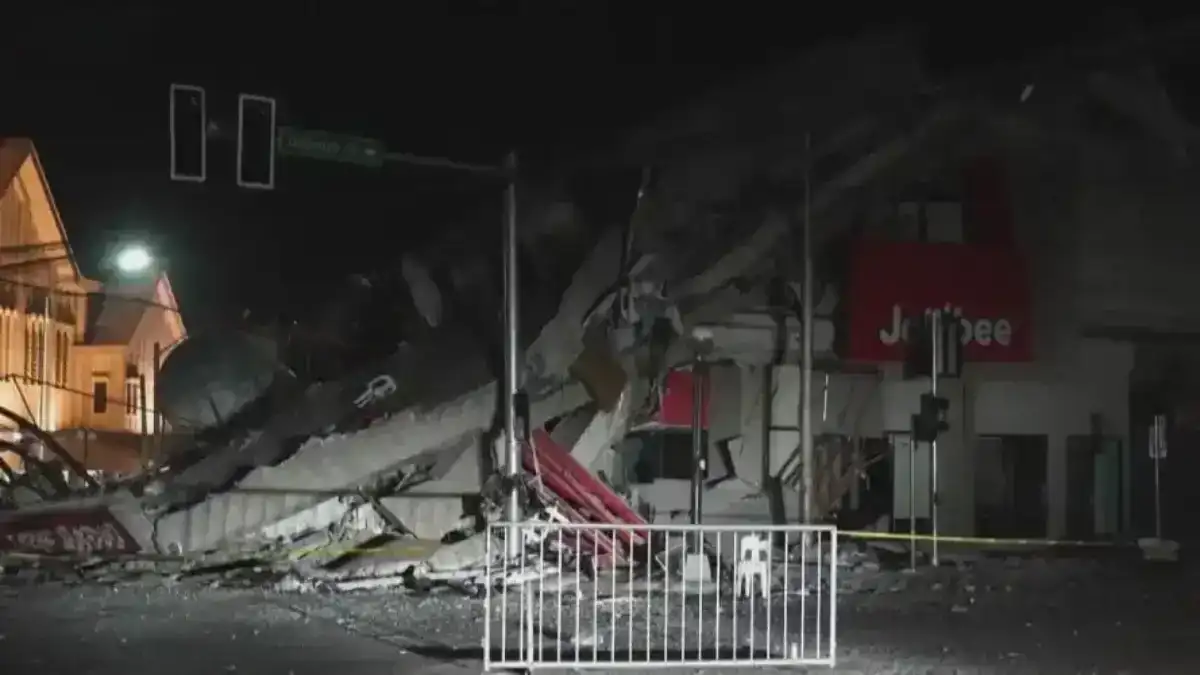
The damage concentrated in La Guaira, the coastal state just north of Caracas, and in parts of the capital itself. Acting President Delcy Rodríguez declared La Guaira a disaster zone within hours, and officials said between 100 and 250 large residential and commercial buildings had partially or fully collapsed there, including a 10-story building that came down so completely that Caracas metropolitan rescue chief José Luis Núñez compared it to a flattened pancake, as NBC Miami's coverage of the rescue effort reported. The International Organization for Migration's exposure estimate, cited in AP's reporting on the missing-person search put close to two million people in Caracas alone among those who could be affected by the disaster.
Reuters has described the second tremor as Venezuela's strongest earthquake in more than a century, a comparison that refers to magnitude rather than death toll. Much of Venezuela's building stock was constructed without strict seismic codes, leaving many structures vulnerable to a shock of this size.
The Death Toll, Injuries and Rescues
Venezuela's government raised its official death count steadily through the week: from 164 on June 25, the morning after the earthquakes, to 235 later that day, then to 920 by June 26, where it still stood as of the latest update on June 27. The AP report on the missing-person search put the injury count at more than 3,300 as of midday Friday, while a separate Reuters figure from the same day gave 3,360, a difference that reflects rounding rather than a factual dispute.
Authorities said 243 people had been rescued alive by June 27, the same figure confirmed in the AP report above, while a June 26 update from Rodríguez had put the number still trapped under rubble at 172, a count that had not been refreshed in subsequent reporting as of June 27. Search-and-rescue specialists widely treat the first 48 to 72 hours after a major earthquake as the period when survival chances are highest, though rescuers have continued to find people alive beyond that window in past disasters.
The single most disputed figure is the number of people still missing. The same AP report describes independent, opposition-linked databases listing more than 51,000 names, a figure Reuters separately put above 54,000, but Venezuelan officials have not endorsed those totals and instead referred to hundreds of people unaccounted for or trapped. Both wire services cautioned that the larger lists likely include duplicates and people who were simply unreachable after the quakes knocked out phone and internet service, not confirmed casualties.
The International and US Response
More than 1,600 foreign rescuers had arrived in Venezuela on 17 flights by June 27, with the government saying 25 more flights were expected in the next 24 hours, according to Reuters' June 27 report on the foreign rescue effort. That figure builds on an earlier government count from June 26, which put foreign deployment at 861 specialists supported by 73.2 metric tonnes of equipment and 33 trained rescue dogs. Venezuela also deployed more than 14,000 of its own military and police personnel to La Guaira, the same Reuters report said.
The United States response was led by the State Department, which said in its official release on the life-saving response that it was mobilizing $150 million in assistance, including $50 million in new bilateral awards. That release confirmed three urban search-and-rescue teams were deployed, from Fairfax County, Virginia, Los Angeles County, California, and Miami-Dade County, Florida, with a combined 233 personnel and 18 canines. SOUTHCOM's press release on the military airlift confirmed C-17 aircraft carried the teams, while naval vessels and helicopters were also involved.
Other countries moved quickly as well. According to a Reuters report carried by CBC News, Mexico sent 250 rescuers, El Salvador 188, and Spain nearly 100, while a Colombian air force plane carrying 63 rescue crew was en route. The IFRC's emergency appeal announcement confirmed the federation had launched a CHF 50 million appeal aimed at assisting 300,000 people, after releasing an initial CHF 2 million from its disaster response fund for immediate work in La Guaira and greater Caracas.
Access to the worst-hit areas of La Guaira was restricted starting Friday evening, with officials requiring credentials to enter so rescue convoys and heavy equipment could move without being slowed by crowds and private vehicles, the Reuters report on the rescuer count said. The same report documented residents clearing rubble by hand where heavy machinery had not yet reached, a shortfall officials attributed to the scale of simultaneous collapses across multiple towns.
Venezuelans Abroad Organize Aid
In Bogotá, hundreds of Venezuelans living in Colombia brought food, medical supplies and clothing to a community collection point in the days after the earthquakes, according to NPR's on-the-ground reporting from the donation center. Colombia hosts the largest Venezuelan migrant and refugee population of any country, a fact tracked by the UN's regional R4V coordination platform, and many in that community have relatives still in the affected region.
Isabel Mendoza, a street vendor who has lived in Colombia for five years, brought clothes along with gloves, face masks and rolls of toilet paper to the donation center, telling NPR her family in Maracaibo had not been directly affected but that seeing the destruction in Caracas and La Guaira broke her heart. Mariana Godoy, a logistics specialist, arrived with a shopping cart of bottled water, energy drinks, cookies and sanitary products, and said a relative who works as a doctor in Caracas could not return to his apartment after it was damaged and had been sleeping in his office with his wife and children. Gisella Serrano, a Venezuelan humanitarian worker quoted in the same report, said she expects the crisis to last for months and that her foundation is coordinating warehouse storage ahead of relief flights, though the exact scale of those flights and any import permits required has not been independently confirmed beyond her account.
Current Conditions
Power had been restored to about 60% of pre-quake levels by June 27, according to figures cited by acting President Rodríguez in the Reuters report on the rescuer count, and the government said food and water distribution was reaching saturation levels in some of the hardest-hit zones in La Guaira, even as residents in other areas said supplies still fell short of need. The IFRC's emergency appeal and parallel UN estimates put the number of people who could be affected by the disaster at close to 7 million.
Rescue operations were continuing in La Guaira and Caracas as of June 27, with at least 30 international teams working alongside Venezuelan crews, per the same Reuters update. Officials have said the death toll, injury count and missing-person figures are all likely to change as search teams reach areas still cut off by damaged roads and disrupted communications.
- death toll venezuela earthquakes
- Venezuela earthquake
- La Guaira
- Caracas
- Delcy Rodríguez
- disaster relief