Johnson Plans Fourth House Push for SAVE America Act Through Reconciliation
House Speaker Mike Johnson announces a fourth House attempt to pass the SAVE America Act via budget reconciliation, days after a procedural vote failed 198–224 when 13 Republican members voted against their own party's agenda.

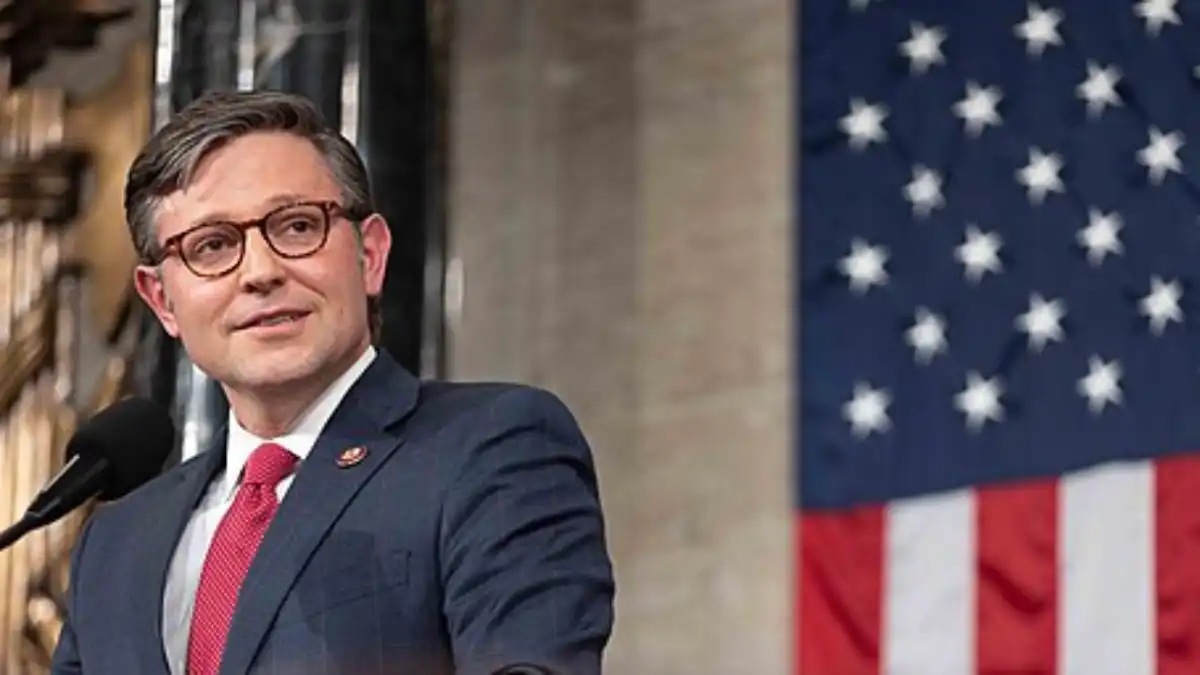
House Speaker Mike Johnson said on Sunday that he intends to advance President Donald Trump's election-integrity bill the SAVE America Act through a fourth House vote embedded in a budget reconciliation package, days after 13 Republican members voted down a key procedural rule and forced the chamber into an early July 4 recess.
The Procedural Defeat That Reset the Schedule
On June 30, a House procedural rule failed 198–224 after 14 Republicans joined Democrats in voting it down, according to Axios. The rule would have cleared floor debate on a package of legislation that included the National Defense Authorization Act. House Majority Leader Steve Scalise voted "no" as a procedural maneuver to preserve the option of bringing the rule back to the floor meaning 13 members cast substantive votes against the speaker's agenda. The floor came to a standstill, and Johnson sent members home two days ahead of schedule.
Rep. Anna Paulina Luna (R-Fla.) led the opposition. She had pledged to block any procedural vote that did not attach the SAVE America Act directly to the NDAA as amended base text, rather than bundle it alongside the defense bill in a way she described as a "procedural head fake." On X, she wrote: "1,000%, the rule will go down until you attach the SAVE America Act. I don't care who in this chamber hates me for it."
Johnson, speaking to Fox News anchor Shannon Bream on Fox News Sunday, described his decision to adjourn in measured terms. "I just decided it was best to send everybody home to go celebrate July 4th in their districts. We'll come back, gather everybody together," he said. "The big urgency is to get SAVE America passed. The president has that as a top priority, and so do I."
What Johnson Is Proposing
Johnson's stated plan differs from the three prior House votes in one key structural way. He is proposing a federal grant program that would pay states to implement the SAVE America Act's core requirements proof of U.S. citizenship to register for federal elections, and photo identification to cast a federal ballot. The grant-based structure is designed to survive the Senate's Byrd Rule, which bars non-budgetary provisions from reconciliation bills.
"We're going to try one more time on a budget reconciliation bill, and I think that will be the way to get it through the Senate, and finally, to the president's desk," Johnson told Bream, as reported by The Hill.
Johnson acknowledged that the Senate's 53-member Republican conference creates a concrete arithmetic obstacle. "There is zero chance, Shannon, that seven Democrats are going to help us on election integrity," he said, explaining why ordinary cloture which requires 60 votes is not viable.
Why the Senate Path Remains Contested
The House has already passed versions of the legislation three times: 221–198 in July 2024, 220–208 in April 2025, and 218–213 on February 11, 2026, according to House Clerk records. In March 2026, the Senate voted 51–48 to take up the House message, but a cloture vote on a photo-ID amendment failed 53–47 on March 26 seven votes short of the 60 required.
The reconciliation route Johnson is pursuing carries a specific procedural risk. Senate Parliamentarian Elizabeth MacDonough previously ruled that the SAVE America Act as written did not comply with the Byrd Rule, which limits reconciliation to provisions with a direct and more than merely incidental impact on the federal budget. Election administration requirements how states verify citizenship, how they collect identification documents do not clear that standard on their face.
Johnson's grant-fund approach ties federal dollars to state compliance with the voter-ID requirements, making the policy conditional on spending the structure he is using to argue that the bill has a direct budgetary effect sufficient to survive a Byrd Rule challenge. Budget experts told Roll Call the strategy is legally plausible but narrow. "They could probably provide money to states for voter fraud enforcement or creating or enhancing voter ID requirements, but the number of strings put on the money would have to be pretty minimal to pass muster," a former Senate Republican aide said.
Sen. Rick Scott (R-Fla.) was blunter. "I don't see any way that any part of the SAVE America Act, of any teeth, gets included in a reconciliation package," he told Roll Call. Sen. John Cornyn (R-Texas) separately described the reconciliation path as not "viable" at this stage, according to The Hill.
The Broader Pressure Campaign
Trump has withheld his signature from other legislation to press the Senate on voting rules. In late June, he called off the signing ceremony for a bipartisan housing bill that passed the Senate 85–5 and the House 358–32, according to Reuters, saying he would not sign it until the Senate moved on the SAVE America Act. He separately held up the confirmation process for Jay Clayton, his nominee for Director of National Intelligence, to pressure Senate action, Reuters reported.
At the Salute to America 250 celebration on the National Mall on July 4, Trump called for proof of citizenship, photo voter ID, and a near-elimination of mail-in ballots. Johnson told Bream that Trump understood limiting mail voting was a "bigger reach," and that the reconciliation bill would focus on citizenship proof and photo ID requirements rather than the mail-ballot restrictions and transgender provisions Trump has publicly championed.
Luna Is Not Satisfied
The gap between Johnson's reconciliation vehicle and the floor-text amendment Luna demanded is what the June 30 standoff was about. Luna's position has not shifted. She filed amendment 1388 to the NDAA, which would add voter ID and proof-of-citizenship requirements directly to the defense bill text. On June 29, she posted: "It is NOT possible to add the SAVE America Act to reconciliation. It would fail miserably with the Byrd Rule. House leadership has direct decision-making authority over whether or not this will be added to the NDAA."
Johnson told Bream he had spoken with Luna and did not view her as an obstacle. "Nobody's mad at Anna we all want the same thing," he said. "She's a team player. She's a dear friend of mine." He said he reminded her the House has passed the bill three times and will do so again. Luna's public posts through July 6 continued to call for the amendment to be added directly to the NDAA, with no indication she has accepted the reconciliation route.
Senate Majority Leader John Thune (R-S.D.) has resisted Trump's calls to remove MacDonough and has indicated he will respect any future parliamentarian ruling on reconciliation eligibility. Overturning a Byrd Rule ruling whether through a waiver motion or an appeal of the presiding officer's ruling requires 60 votes under Senate budget rules, not a simple majority. That threshold gives the minority the same blocking power in a Byrd Rule fight as it holds in a cloture vote, which is exactly the constraint Johnson's grant-fund design is intended to avoid rather than override.
The Reconciliation Timeline Johnson Has Set
The House is expected to return the week of July 13. Johnson has said he wants a reconciliation framework approved that month. As of July 6, no bill text for the new package has been formally introduced, and no Senate vote schedule has been confirmed.
House Appropriations Committee Chair Tom Cole (R-Okla.) was direct about the floor-paralysis approach. "The idea you're going to make the Senate do something by doing nothing in the House is ridiculous," Cole told Politico. "You make the Senate move by putting pressure on them by passing bills, not by having a self-inflicted shutdown."
The Senate Budget Committee's published guidance on budget points of order will govern what survives a floor challenge when the package reaches the Senate. Whether the grant-program design clears MacDonough's office and whether it can satisfy Luna, the conservative holdouts, and the skeptical Senate Republican conference simultaneously are the specific questions Johnson has not yet answered.
- SAVE America Act
- budget reconciliation
- Anna Paulina Luna
- Mike Johnson
- Byrd Rule
- voter ID
- House Republicans