Honda Recalls 880,000 Vehicles Over Rear Suspension Risk
Honda recalls 880,514 U.S. Pilot, Ridgeline, Passport and Acura MDX vehicles over rear subframe corrosion, suspension failure and crash risk.

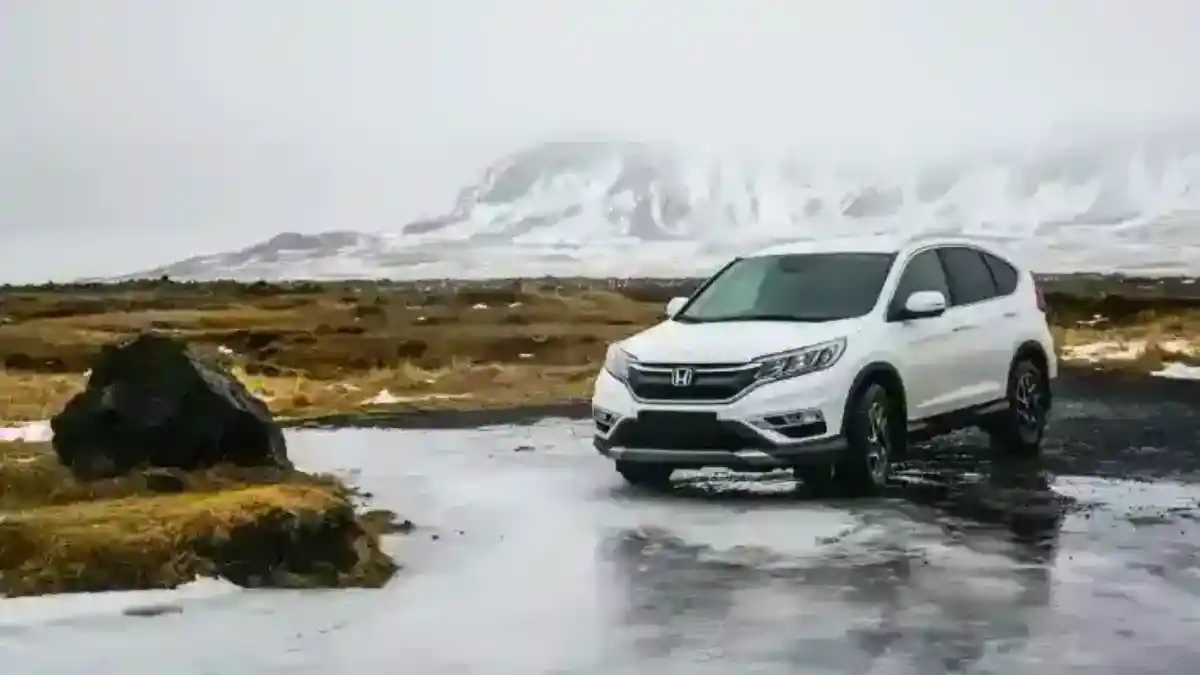
If you own a Honda Pilot, Ridgeline, Passport, or an Acura MDX built as far back as 2013, this is one recall you cannot afford to ignore. Honda has issued a major safety recall covering 880,514 U.S. vehicles over a corrosion problem that could make your rear suspension fail while you're on the road.
What's Actually Going On
The issue starts with the rear subframe a structural component that holds your suspension together at the back of the vehicle. In salt-heavy states where road crews use de-icing agents heavily during winter, that subframe can corrode prematurely at the suspension mounting points.
Honda traced the root cause to improper coating specifications at supplier F&P Georgia, based in Rome, Georgia. The coating was prone to poor adhesion near the arm bracket weld area, meaning paint peeled early and left bare metal exposed. Once that metal meets years of road salt, corrosion sets in and material thinning begins and when the mounting points for the rear control arm or lower arm corrode far enough, those mounting areas can fracture and fail.
According to NHTSA's Part 573 Safety Recall Report (Campaign 26V365), if those mounting points fail, the rear wheels may become misaligned or inadequately retained directly affecting handling, stability, and braking. The result is an increased risk of a crash or injury.
Which Vehicles Are Affected
Honda filed the recall report with NHTSA on June 4, 2026, covering four models sold in 22 U.S. states and Washington, D.C. specifically states where de-icing salt use is heaviest.
Model | Affected Years | Units Potentially Involved |
|---|---|---|
Honda Pilot | 2016–2022 | 463,253 |
Acura MDX | 2014–2020 | 217,517 |
Honda Ridgeline | 2017–2023 | 110,070 |
Honda Passport | 2019–2023 | 89,674 |
Total | 880,514 |
Source: NHTSA Part 573 Safety Recall Report 26V365
The Pilot accounts for more than half the recall at 463,253 units. The Acura MDX adds another 217,517. Together, those two models make up nearly 77% of all vehicles involved.
Honda estimates only about 1% of the 880,514 listed vehicles actually have the defect present. That puts roughly 8,800 potentially defective vehicles among those sold in the covered salt-belt states enough for Honda to determine the risk was too significant to monitor further.
How Honda Found the Problem
The timeline stretches back further than the recall announcement suggests. Honda first noticed a difference in paint quality between supplier test conditions and Honda's own standards back in December 2021. What followed was years of monitoring.
Between November 2022 and February 2023, Honda surveyed vehicles in both U.S. and Canadian markets. The supplier improved its pre-paint treatment process in August 2022, and Honda increased coating thickness in January 2023 as part of a product improvement initiative.
But the situation didn't resolve neatly. Honda continued monitoring through 2025. Then, in September 2025, Honda Canada received the first field report of the issue. Investigation resumed. By May 28, 2026, Honda formally determined a motor vehicle safety defect existed and decided to act.
As of that date, Honda had received no warranty claims and no reports of injury or death in the U.S. related to this defect a period covering January 10, 2013 through May 21, 2026. Honda's decision to act on the defect before field incidents accumulated reflects the standard safety recall process under federal law.
What the Fix Looks Like
The remedy is a dealer inspection followed by installation of a rear subframe reinforcement kit. If the rear subframe or components show damage beyond what the kit can address, dealers will repair or replace those parts as necessary. All of it is free of charge to owners.
You can already check your vehicle right now. Honda made VINs searchable on NHTSA's recall lookup tool beginning June 10, 2026. Just enter your VIN and the site will tell you if your vehicle is included.
Owner notification letters are expected to arrive by July 7, 2026. If you don't want to wait for the letter, calling Honda's customer service at 1-888-234-2138 gets you there faster. You can also reach NHTSA's Vehicle Safety Hotline at 1-888-327-4236 (TTY: 1-888-275-9171) if you want to report a safety concern directly to the regulator.
The official NHTSA campaign number for this recall is 26V365 also referenced as 26V365000. Honda's internal recall codes are AOU and AOT. Keep these handy if you're talking to a dealership or want to pull up official documentation yourself.
The Bigger Picture
Honda isn't alone in navigating large-scale safety actions. Across the border in Canada, a cluster of recalls in late 2025 covered more than 81,000 vehicles across three major automakers in just one week.
Transport Canada records show Ford's recall (2025-691) covered 50,037 vehicles including 2022-2026 F-150s, 2025-2026 Mavericks, 2024-2026 Mustang Mach-Es, 2026 Ford Escapes, and 2026 Lincoln Corsairs over an integrated park module issue where the park pawl could fail to engage. Honda's Canadian recall (2025-685) pulled 10,572 Acura ILX vehicles from model years 2016 to 2020 over a brake master cylinder seal problem that reduces braking effectiveness. General Motors' recall (2025-697) covered 20,824 Chevrolet Equinox EVs from 2025 and 2026 model years due to a software glitch affecting the pedestrian warning system.
None of these are the kind of stories any automaker wants to headline. But the willingness to issue proactive recalls before injuries stack up is exactly what a functioning safety system looks like.
What You Should Do Now
If you own any of the four affected models in the covered model years, check your VIN at nhtsa.gov/recalls today. The lookup is live. If your vehicle is flagged, contact your nearest Honda or Acura dealer to schedule the inspection. The fix is free, the risk is real, and waiting until July for the letter gains you nothing.
Rear suspension failures aren't like a faulty sensor or a glitchy infotainment screen. They affect your ability to control the car. That's worth one trip to the dealer.
- Honda recall
- rear subframe corrosion
- NHTSA 26V365
- Honda Pilot recall
- Acura MDX recall
- automotive safety