How a Bipartisan Housing Bill Became Law Without Trump's Signature
President Trump refused to sign the 21st Century ROAD to Housing Act, H.R. 6644, citing Senate inaction on voter-ID legislation. After the 10-day constitutional window closed on July 10, 2026, the bill became law without him.

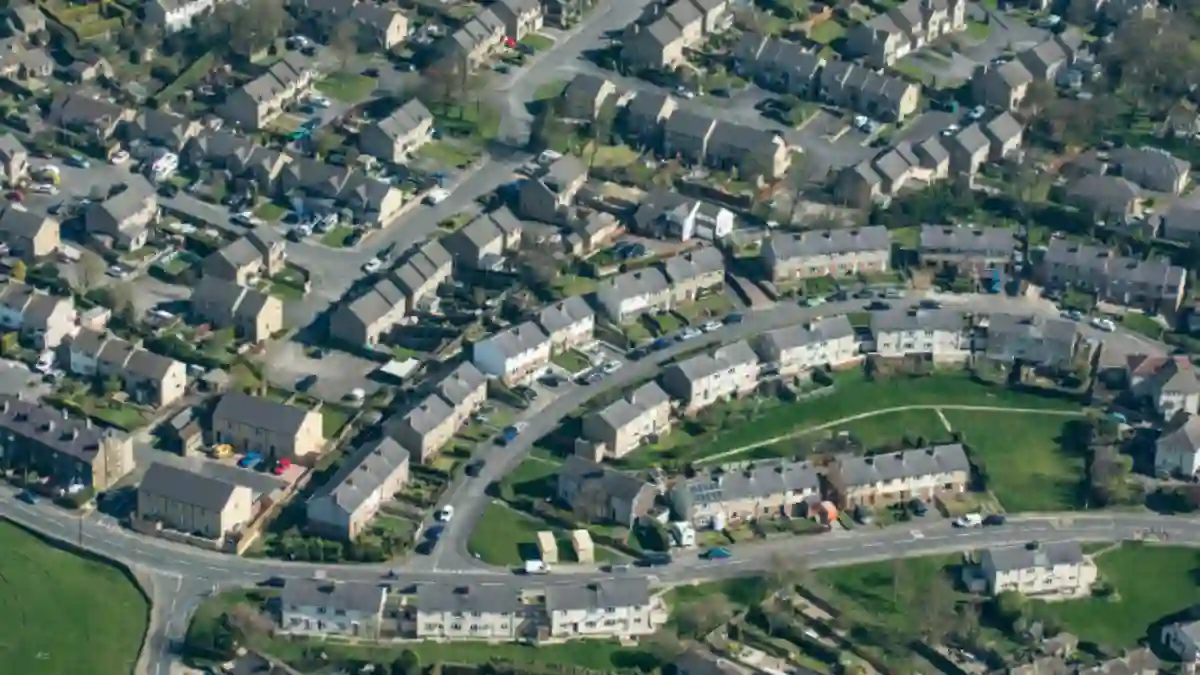
President Donald Trump let the 21st Century ROAD to Housing Act, H.R. 6644, take effect without his signature at the close of July 10, 2026, after the 10-day constitutional deadline for action expired and he neither signed nor vetoed the legislation. Both chambers had passed the bipartisan bill in June by margins well above the two-thirds threshold required to override a presidential veto.
On the morning of July 10, Trump posted on Truth Social: "I will not sign the Housing Bill, which has been fully approved by Congress and sent to the White House, in PROTEST over the fact that the United States Senate is not capable of passing THE SAVE AMERICA ACT." He made no mention of a veto. Asked by multiple news organizations, including CNBC and NPR, whether a veto was coming, the White House referred reporters to that same post.
The Constitutional Mechanism That Enacted the Bill
Article I, Section 7 of the Constitution sets out the Presentment Clause: when a president neither signs nor returns a bill within 10 days, Sundays excluded, and Congress remains in session and able to receive a return, the legislation becomes law without a signature.
The official House legislative-history calendar records that the enrolled bill was presented to Trump on June 29, 2026. June 30 was day one. July 1 through 4 were days two through five. Sunday, July 5, was excluded from the count. July 6 through 10 completed the period on day ten, closing the window at the end of July 10.
This result is not a pocket veto. A pocket veto occurs when an adjournment prevents the president from returning a bill to Congress, blocking enactment. Congress was in session throughout this period and could receive a return, making this an ordinary unsigned enactment under the Presentment Clause.
The Congressional Margins
Both chambers passed the measure well above the two-thirds threshold a veto override would require. Senate Roll Call 182 on June 22 produced an 85–5 result, with 10 members not voting. House Roll Call 224 on June 23 recorded a 358–32 vote, with 41 not voting.
Among votes actually cast, the Senate result was 94.4% in favor and the House result was 91.8%. A future override vote would not have been legally bound by those margins, members can vote differently across separate proceedings, but the numerical buffer was substantial.
Senate Banking Committee Chairman Tim Scott and Ranking Member Elizabeth Warren led the Senate effort. House Financial Services Committee Chairman French Hill and Ranking Member Maxine Waters brought the package to the floor in the lower chamber.
The White House had initially backed the bill. White House Press Secretary Karoline Leavitt posted on X after the House vote that the legislation represented "one of the most significant pieces of housing affordability legislation in American history." A signing ceremony was scheduled for noon on June 24 in Statuary Hall at the Capitol, with flags arranged and a table bearing the presidential seal set on a red-carpeted stage. Trump canceled the ceremony hours before it was to begin.
What the ROAD Act Does, and What It Does Not
The enrolled final text spans 12 titles and 59 substantive sections, addressing housing counseling reform, small-dollar mortgage access, veterans' housing, HOME Investment Partnerships program updates, disaster-relief block grants, and streamlined environmental reviews for qualifying infill and rehabilitation projects. It does not create a universal waiver of environmental requirements.
Restricting Large Institutional Investors
Section 1001 prohibits covered for-profit entities that directly or indirectly control at least 350 qualifying single-family homes from making new covered purchases. The restriction does not take effect immediately a 180-day delay puts the earliest operational date at around January 2027, and the provision is repealed entirely 15 years after that effective date. Manufactured homes are explicitly excluded from the definition of a single-family home in this section.
The law contains no divestment mandate. Covered investors are not required to sell homes acquired before enactment, the provision governs future purchases, not existing portfolios. Violations can draw a civil penalty of up to the greater of $1 million per violation or three times the purchase price.
Manufactured Housing and Additional Provisions
Section 301 rewrites the federal definition of a manufactured home to cover structures built "with or without a permanent chassis," removing a limitation that had constrained how these homes could be financed and placed on land. Federal loan limits under Section 303 are revised upward, setting new ceilings of $106,405 for single-section manufactured homes and $195,322 for multi-section units. Policy analysts at the Niskanen Center have projected savings of $5,000 to $10,000 per manufactured unit from these definitional and financing changes, an outside estimate, not a guarantee written into the statute.
Title XI bars the Federal Reserve from establishing a central bank digital currency, a prohibition that expires December 31, 2030.
On funding, Section 1202 specifies that no additional appropriations are authorized to implement the act. Programs requiring new money, including the Whole-Home Repairs pilot and the Innovation Fund, will not launch unless Congress separately appropriates funds in a future spending bill. The no-new-appropriations clause does not legally compel HUD to redirect existing resources, it simply bars the act itself from authorizing new spending.
Why Trump Refused to Sign
Trump has described the Safeguard American Voter Eligibility Act, the SAVE America Act, as his top legislative priority heading into the 2026 midterms. The House-passed version requires documentary proof of U.S. citizenship to register for federal elections and establishes photo-identification requirements for federal voting, with specified exceptions for military and accessibility voters.
Senate Majority Leader John Thune told Fox News that his conference does not have "anywhere close to the votes" needed to end debate on the legislation, which requires 60 votes to clear cloture under standard procedure. Republicans hold a 53-47 majority in the Senate, leaving them seven votes short of that threshold with Democrats uniformly opposed. Thune has repeatedly declined to bring a vote to eliminate the filibuster, saying that option also lacks the 51 votes needed.
In his July 10 Truth Social post, Trump called on Senate Republicans to terminate the filibuster and pass the SAVE America Act alongside "every other Bill that true Republicans have ever dreamt of." According to reporting by AP and Reuters, the administration had previously urged Congress to pass the housing package, including a June White House proclamation on homeownership that explicitly called for the bill's enactment.
Trump's refusal to sign came one day after the National Association of Realtors reported that the June 2026 median existing-home price reached $440,600, a 1.8% rise from June 2025 and the 36th consecutive year-over-year increase, according to NAR's July 9 data release.
What Comes Next for Implementation
A formal Public Law number had not been assigned in GovInfo databases as of publication. That publication lag does not affect the bill's legal enactment under Article I, Section 7. The GovInfo enrolled-bill record is live.
HUD now faces the task of standing up at least 35 new or revised programs, regulations, and studies identified in the act, according to analysis by the Urban Institute. The department entered this period with its salary and operations budget reflecting a 24% reduction in staffing for fiscal year 2026, per the enacted appropriations bill, and Section 1202's no-new-appropriations clause means the agency cannot draw on this law alone to fund that workload. The Urban Institute noted that HUD will have to reallocate existing resources and staff time to begin implementation, with no guarantee those resources will be sufficient.
The 180-day delay on the investor restriction means covered entities face no new purchase limits until around January 2027. After 15 years of operation, that provision is automatically repealed. The CBDC prohibition lapses at the end of 2030. Both timelines are fixed in the statutory text and are not contingent on future congressional action. Grant programs that require separate appropriations, however, will need Congress to act before they can launch.
- 21st Century ROAD to Housing Act
- H.R. 6644
- Trump housing bill unsigned
- SAVE America Act
- Article I Section 7
- bipartisan housing legislation 2026
- HUD implementation