Chicago Air Quality: Canadian Wildfire Smoke Hits Region
The Illinois EPA issued a Red Air Pollution Action Day on July 16 as Canadian wildfire smoke and ozone pushed Chicago air quality into the unhealthy range.

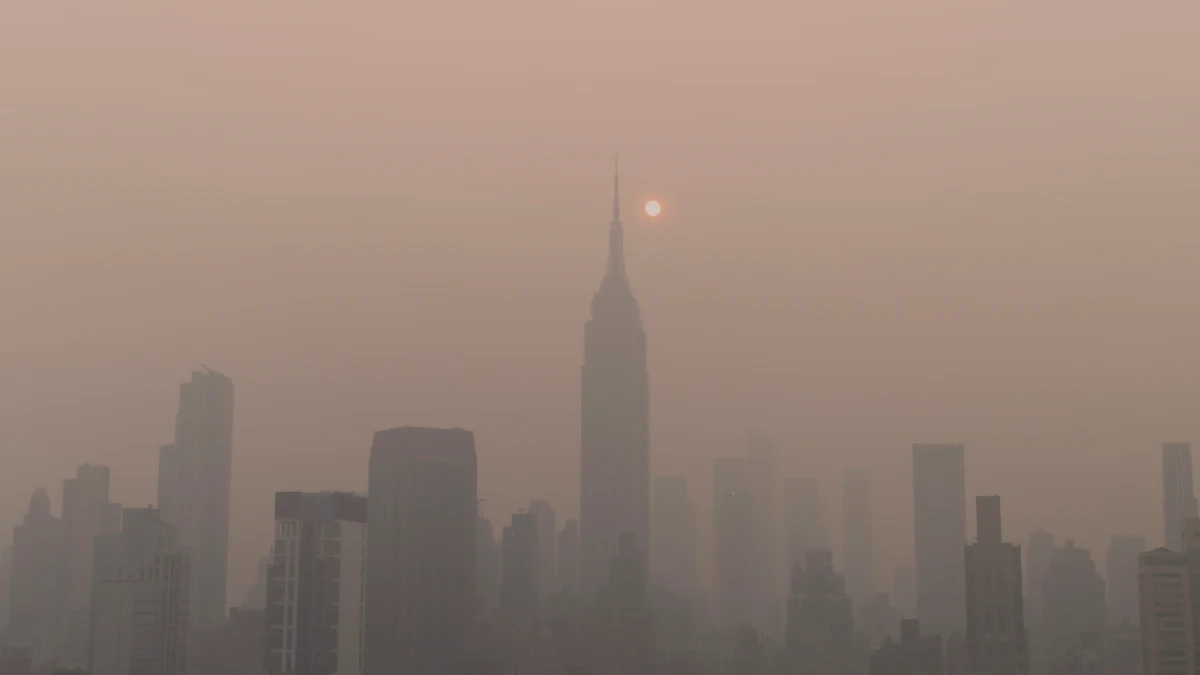
The Illinois Environmental Protection Agency declared Thursday a Red Forecast Air Pollution Action Day for Chicago and most of northern Illinois. A thick plume of smoke from Canadian wildfires moved into the region overnight, combining with elevated ozone levels and heat indices approaching 100°F.
The alert, issued jointly by the National Weather Service in Chicago and the Illinois EPA, covers Cook County and at least 13 other northern Illinois counties, including Lake, Kane, DuPage, Will, McHenry, Winnebago, Boone, DeKalb, Ogle, Lee, La Salle, Kendall, and Grundy, and remains in effect through midnight CDT Thursday. The Northwest Indiana counties of Lake, Porter, Newton, and Jasper are also under an Air Quality Action Day, declared by the Indiana Department of Environmental Management.
What Is Driving the Poor Air Quality?
Two separate pollution problems combined Thursday. The region had already been under an air quality alert for ground-level ozone before the wildfire smoke arrived. Ozone forms when vehicle and industrial emissions react with sunlight, and this week's heat wave across Chicagoland accelerated that process. Fine particulate matter, known as PM2.5, from the Canadian fires added a second layer of pollution.
Kim Biggs, public information officer for the Illinois EPA, recommended that residents download the EPA's AirNow mobile app to track hourly changes. "We just recommend that the individuals who are susceptible stay indoors, monitor breathing, especially if they have pre-existing conditions," she said. The Illinois Department of Public Health also recommends using high-efficiency filters for air conditioning systems where possible, and avoiding activities that create additional particulate matter indoors, such as smoking or burning candles.
In its Thursday morning forecast discussion, the National Weather Service said smoke-related visibility reductions were expected throughout the day, particularly along and northeast of Interstate 90. Forecasters expected visibility to improve by Friday morning as winds shift to the southwest, though the exact timing remained uncertain.
Where Chicago's Air Sits on the AQI Scale
The Air Quality Index uses six color-coded categories: Good (0–50), Moderate (51–100), Unhealthy for Sensitive Groups (101–150), Unhealthy (151–200), Very Unhealthy (201–300), and Hazardous (301 and above). Chicago's Air Quality Index stood at 182, in the Unhealthy range, early Thursday morning. Just north of the city, Waukegan measured 256, in the Very Unhealthy range, while Valparaiso, Indiana, hit 323, placing it in the Hazardous category.
Those readings were point-in-time figures from local monitoring stations. Because AQI values change hourly, residents should check current conditions directly at AirNow.gov rather than relying on any single published number.
Chicago has recorded unhealthy air quality on two other occasions in recent years: an AQI of 175 on June 27, 2023, and 174 on July 31, 2025. Thursday's early readings were already well above both of those marks.
The Source: Canada's Ongoing Fire Season
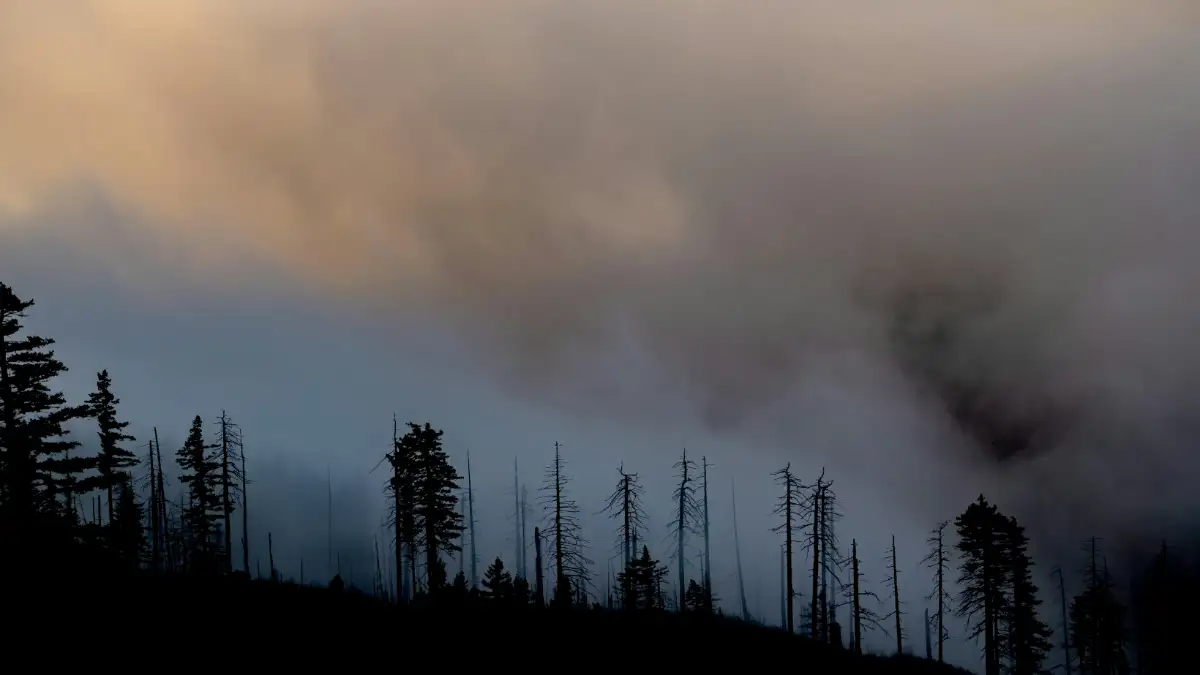
The smoke reaching Chicago originates primarily from wildfires burning across northwestern Ontario and, to a lesser extent, in northern Minnesota. As of Wednesday, Canadian wildfire officials counted 835 active fires nationwide, with 112 classified as out of control and roughly 1.9 million hectares, about 4.7 million acres, burned so far this year. More than 180 of those fires were burning in Ontario alone. NASA's Earth Observatory showed smoke moving southeast over Ontario and Quebec into the U.S. Midwest on July 14, carried by winds from a heat dome parked over the region.
The scale of this year's season has not reached the record-breaking totals of 2023, when more than 6,000 fires burned roughly 15 million hectares, about 37 million acres, across Canada, according to Natural Resources Canada, making it the worst wildfire season in the country's recorded history. Still, the location of the Ontario fires, combined with the current weather pattern, has concentrated smoke directly over the Great Lakes corridor. The heat dome driving temperatures across the Midwest this week sits directly over northern Minnesota and southern Ontario, the same region where the largest fires are burning, with winds funneling smoke south and east into densely populated areas.
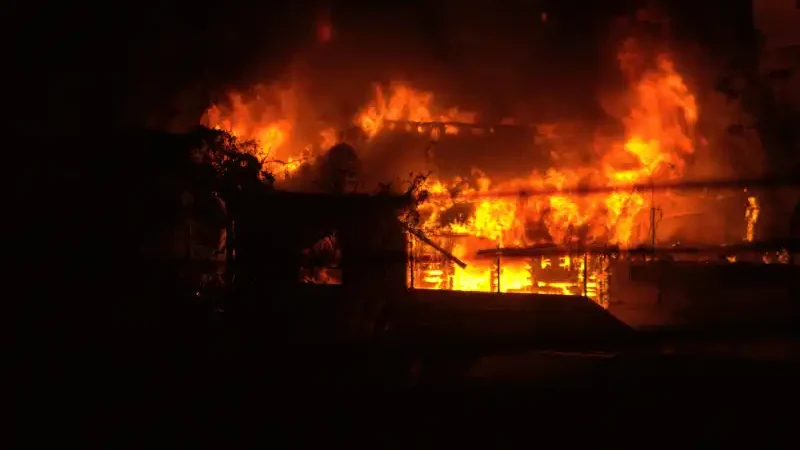
A Canadian National Railway crew was surrounded by fire near Armstrong, Ontario, on July 13. The company said it temporarily suspended rail operations in the area as a precaution, and employees and nearby residents were evacuated overnight.
Who Is Most at Risk?
The City of Chicago's official alert specifically calls out older adults, children, and people with compromised immune systems as the most vulnerable groups. The CDC also includes people with lung disease, heart disease, diabetes, and chronic kidney disease, along with pregnant individuals, among those who should take extra precautions during smoke events.
Symptoms from smoke exposure can include coughing, wheezing, chest tightness, difficulty breathing, headaches, and irritated eyes and sinuses. The NWS advises that anyone experiencing shortness of breath or chest pain should stop outdoor activity immediately and move indoors.
For those who must go outside, AirNow recommends a properly fitted N95 respirator as the appropriate protection against PM2.5 particles. Cloth masks and standard surgical masks do not filter the tiny particles in wildfire smoke. Windows should be kept closed, and air conditioners or portable air purifiers with high-efficiency filters can help maintain cleaner indoor air.
What Officials and City Services Are Doing
The Chicago Park District confirmed that summer programs would move indoors, limit outdoor time, or be canceled Thursday. The district's official air quality page was updated with the Red category alert, directing residents to check with local parks about individual program status.
The City of Chicago also extended hours at several Department of Family and Support Services (DFSS) centers, including the Garfield Center at 10 S. Kedzie Avenue, through 8 p.m. on both July 16 and July 17. Chicago Park District fieldhouses, Chicago Public Library locations, and City Colleges of Chicago campuses are also available during operating hours as clean indoor spaces. Residents can contact 3-1-1 to locate the nearest cooling and clean-air center.
When Will Chicago Air Quality Improve?
Forecasters expect gradual improvement as winds turn southwest and conditions change heading into the weekend. Showers and thunderstorms forecast for Friday afternoon are expected to help clear the air, though the exact timing remains uncertain. Smoke should begin clearing by Friday afternoon as the weather system moves through.
The air quality alert is in effect through midnight CDT Thursday night. Residents are encouraged to monitor AirNow.gov for real-time conditions and to follow updates from the Illinois EPA and the National Weather Service.
- Chicago air quality
- Canadian wildfire smoke
- Illinois air quality alert
- AQI Chicago
- wildfire smoke 2026