Ellen Read's 107 mph Stop: A Constitutional Dispute Over Legislative Privilege and a Sheriff's Office Without Cameras
New Hampshire Rep. Ellen Read's 107 mph traffic stop on I-93 has raised unresolved questions about the scope of legislative privilege and left a bodycam funding gap in full view.

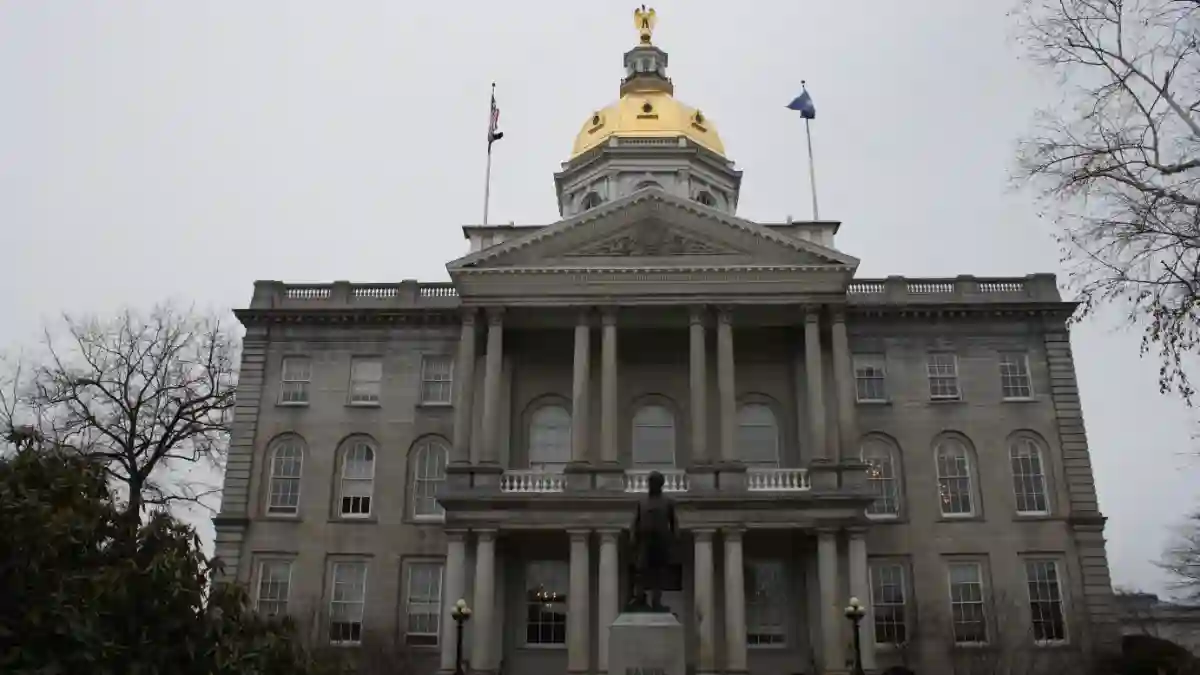
New Hampshire state Rep. Ellen Read, a Democrat from Newmarket, was found guilty of negligent driving in August 2025 after a Rockingham County sheriff's deputy alleged she was travelling 107 mph in a 65 mph zone on Interstate 93 in Windham on December 2, 2024 a stop that has since prompted an unresolved constitutional dispute over legislative privilege and a separate, pointed question about why the Rockingham County Sheriff's Office still has no body cameras.
Two Stops, One Constitutional Claim
The December 2024 stop was not Read's first encounter with Rockingham County deputies on that stretch of highway. On June 5, 2025, a second deputy pulled her over on I-93 southbound in Londonderry and alleged she was travelling 92 mph in the same 65 mph zone, according to court records reviewed and reported by the Boston Globe. Both stops occurred on the same highway corridor, and Read has fought to dismiss the charges in both cases.
Her legal argument rests on Part II, Article 21 of the New Hampshire Constitution, a privilege clause adopted in 1784 that shields lawmakers from being arrested or held to bail while attending, travelling to, or returning from the General Court. Read's position, as framed in her court filings, is that the deputies had no authority to detain her at all. She contends the resulting charges should be dismissed entirely because the stops themselves were unconstitutional.
The New Hampshire Supreme Court declined to hear her petition in June 2026, without prejudice meaning she may raise the constitutional arguments again in a future appeal that complies with court rules and without ruling on the clause's merits. A motion for reconsideration filed on June 24 was rejected on July 2.
What the Court Found and What Read Disputes
At the August 2025 bench trial in the first case, a judge rejected the legislative-privilege argument and found Read guilty of negligent driving under RSA 265:79-b, a non-criminal violation. Her sentence included a $1,240 fine, with half that amount deferred. She was permitted to keep her licence on the condition that she complete a safe-driving course, avoid additional moving violations, and maintain good behaviour for two years.
Prosecutors had originally charged her under RSA 265:79, the reckless-driving statute, which treats speeds of 100 mph or above as a distinct, more serious violation carrying mandatory penalties including licence revocation. The negligent-driving finding represented a lower threshold.
Read disputes the 107 mph figure directly. Through spokesperson Gracie Gato, her office stated that her 2009 Toyota Yaris a vehicle the office claims has logged more than 440,000 miles is physically incapable of reaching that speed. She told court reporters and her legal representatives said she admitted to travelling approximately 85 mph, and that the deputy did not use radar, estimating her speed while accelerating to catch up. A State House employee who was on the phone with Read during the stop later testified, according to Read's office, with an account that differed from the deputy's version.
No Cameras, No Footage, No Resolution on the Facts
Because the Rockingham County Sheriff's Office uses neither body-worn cameras nor dashboard cameras, the competing accounts of both stops exist only in testimony and written records with no footage to corroborate either side. Rockingham County Sheriff's Office Major Christopher Bashaw confirmed to reporters that the agency lacks the funding to purchase cameras.
New Hampshire established a Body-Worn and Dashboard Camera Fund in 2021 through HB 2, appropriating $1 million in fiscal year 2022 to offer matching grants to local law enforcement agencies for camera purchases, maintenance, replacement, and data storage. RSA 105-D governs how agencies that choose to deploy cameras must operate them, including rules on when officers must record traffic stops. The framework is opt-in, the state does not mandate that every agency participate.
Read has said she has "consistently supported legislation governing body-worn cameras, as well as funding to help law enforcement agencies purchase them." She also said she is investing in a dashcam herself. "The officers conveniently not wearing/using body cams are the reason that I'm investing in a dash cam," she said.
Without footage, the central factual dispute how fast the car was actually moving will be resolved entirely through testimony, citations, and procedural records.
Political Reaction
The case drew criticism from within Read's own party. New Hampshire House Minority Leader Alexis Simpson issued a public statement after the initial reporting, saying: "No one is above the law, whether it is a president claiming executive immunity or a state representative claiming a special privilege to break the rules and recklessly endanger the lives of others."
Simpson added she had full confidence the court would handle the facts of the case appropriately.
Republican House Deputy Majority Leader Joe Sweeney said the legislative-privilege clause exists to ensure lawmakers can fulfil their duties without undue interference not to provide cover from ordinary traffic enforcement.
Lawrence Friedman, a professor at New England Law, told the Globe that the privilege as historically understood almost certainly does not extend to routine traffic stops. The constitutional language, he said, was written for a different era, designed to prevent political arrests that could block a lawmaker from attending session not to shield a legislator from a speed violation on a public highway.
A Constitutional Clause That Has Never Been Tested
Read's court filings acknowledge the legal ground is uncharted. Her petition to the state Supreme Court noted that the question of how Article 21 applies to a modern traffic stop is "a constitutional question of first impression" that the court has never addressed in the 242 years since ratification.
According to the National Conference of State Legislatures, most U.S. states include legislative privilege or immunity provisions in their constitutions, but the precise scope varies considerably. New Hampshire's version uses procedural language "arrested, or held to bail on mesne process" that courts across the country have rarely applied to traffic enforcement.
Read, who represents Rockingham District 10 on the official New Hampshire House member page and serves Newmarket and Newfields, is running for reelection. Her spokesperson's statement described the cases as "a closed matter," a characterisation that contradicts Read's own active court filings, as reported by the Globe.
The second case the June 2025 stop in Londonderry still has no scheduled bench trial date after the presiding judge recused himself in April 2026.