Roberts Court Expands and Limits Presidential Power in the Same Term
Roberts expanded Trump's firing power over the FTC, then blocked him on the Fed, birthright citizenship, and tariffs. Gallup puts Supreme Court approval at a record-low 33%.

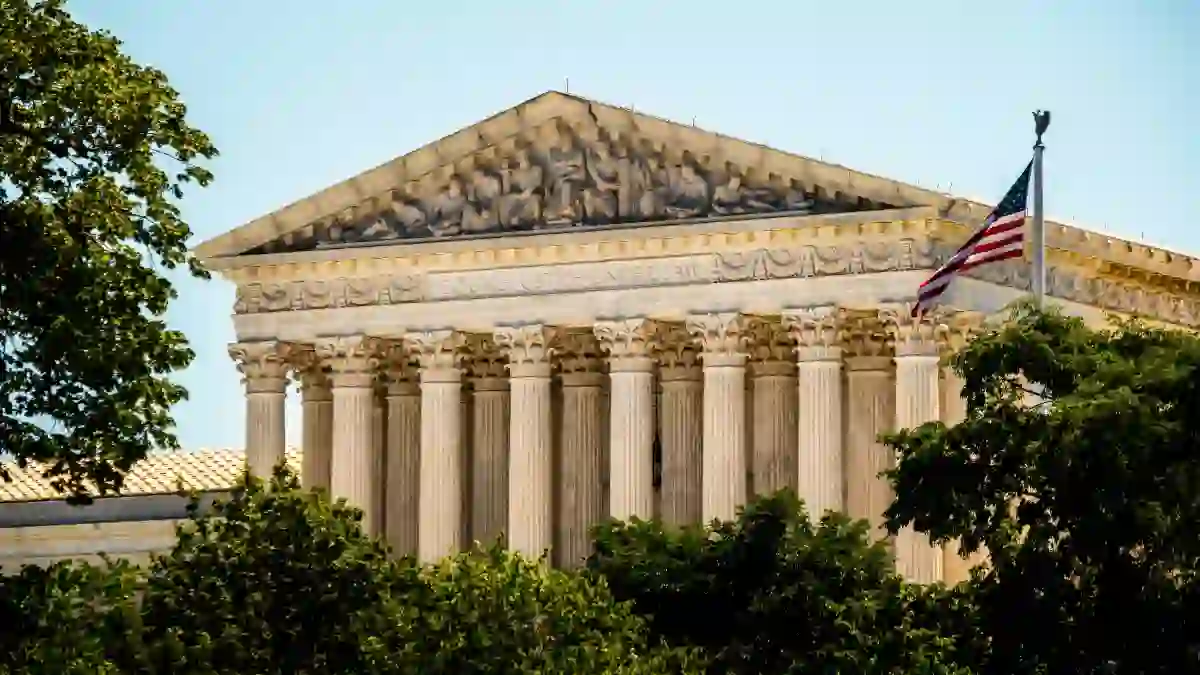
On June 29, 2026, the Supreme Court handed President Donald Trump the most sweeping expansion of presidential removal power in nearly a century, and, the same day, told him he could not fire a Federal Reserve governor. That one-day sequence illustrates how the Roberts Court operates it is building a more powerful presidency, but on its own terms.
What the Court Decided, and What It Didn't
In Trump v. Slaughter, Chief Justice John Roberts, writing for a 6–3 majority, held that the Federal Trade Commission's statutory "for cause" removal protection violated the Constitution's separation of powers. The ruling effectively overruled Humphrey's Executor v. United States, the 1935 precedent that had for nine decades shielded commissioners of independent agencies from at-will presidential dismissal. FTC Commissioner Rebecca Slaughter, a Democratic appointee fired by Trump in March 2025, had no legal claim to her seat.
Hours later, in Trump v. Cook, the same court ruled 5–4 in the opposite direction. Federal Reserve Governor Lisa Cook, the first governor fired in the central bank's 111-year history, was allowed to remain in office pending the resolution of her lawsuit. Roberts again wrote for the majority, joined this time by Justices Kavanaugh, Sotomayor, Kagan, and Jackson. The Federal Reserve's unique role in monetary policy, the court held, places it in a distinct constitutional category that the Slaughter ruling did not reach.
The picture that emerges is not one of Trump triumphant. It is a court drawing new constitutional lines, selectively, case by case.
A Term of Structural Shifts
The June 29 decisions did not arrive in isolation. The 2025–2026 term produced a cluster of rulings that individually expanded presidential authority, and then limited it at specific pressure points.
On June 30, Trump v. Barbara reached the same 6–3 outcome, but squarely against the administration. Chief Justice Roberts, joined by Justices Sotomayor, Kagan, Barrett, and Jackson, held that children born in the United States to parents unlawfully or temporarily present are citizens at birth under the Fourteenth Amendment. Trump's Executive Order 14160, signed on his first day back in office in January 2025, was unconstitutional. Every lower court that had considered the question had reached the same conclusion. (Justice Kavanaugh concurred in the judgment on statutory grounds without joining the constitutional holding.)
On February 20, the court ruled 6–3 in Learning Resources, Inc. v. Trump that the International Emergency Economic Powers Act does not authorise the president to impose the specific tariffs the administration had imposed. That ruling checked a sweeping theory of executive trade power the administration had pressed since taking office.
Earlier in the term, on June 27, 2025, the court decided Trump v. CASA, a 6–3 decision limiting universal injunctions, the nationwide court orders that had repeatedly blocked Trump policies during his first term. Justice Amy Coney Barrett wrote the majority opinion, holding that the Judiciary Act of 1789 does not authorise injunctions extending beyond the parties to each case. That ruling constrained the judiciary's own reach, benefiting the executive branch by narrowing the tool used most aggressively against that branch.
And in July 2024, Trump v. United States had already established that former presidents hold at least presumptive immunity from criminal prosecution for official acts. That ruling, which stood before the current term began, provided the structural foundation on which subsequent executive-power arguments were built.
The Federal Reserve Exception, and Why It Held
The Cook ruling is the clearest example of the court's line-drawing. Roberts's majority opinion acknowledged the Slaughter precedent directly, then distinguished the Federal Reserve on historical grounds: the central bank was built, after the financial panics of the early twentieth century, to insulate monetary policy from day-to-day political interference. That history, the court held, supports a constitutional exception unavailable to the FTC.
Justice Kavanaugh wrote separately to concur in full, emphasising that the case leaves open whether Trump may ultimately remove Cook if cause is proven, the injunction keeps her in office during litigation, not permanently. The court did not rule on the merits of the underlying removal claim.
What the court ruled decisively was that the Federal Reserve's 111-year insulation from presidential removal is not merely statutory. It carries constitutional weight the FTC's protections did not.
A Public Losing Confidence in the Court
Gallup's poll conducted July 1–19, 2026 found that just 33 percent of Americans approve of the Supreme Court's job performance, a record low in the 26 years Gallup has tracked the question. Disapproval stands at 61 percent, also a record. The prior floor was 39 percent, measured in July 2025.
What is new is the drop in Republican support, which fell to 58 percent, down from 79 percent in September 2025. Democratic approval, at 12 percent, has been low since the court's 6–3 conservative majority took shape. Gallup's analysis attributes part of the Republican decline to rulings that blocked Trump's tariff authority and upheld birthright citizenship, outcomes many Republicans found unwelcome. The poll interviewed 1,200 adults and carries a margin of error of four percentage points.
The Pattern Roberts Has Built
The court's record across these cases does not fit the "rubber stamp" characterisation some critics apply, nor the "obstructionist" label Trump has occasionally used when rulings went against him.
The Roberts Court expanded presidential removal power in Slaughter, curtailed the reach of nationwide injunctions in CASA, and preserved at least presumptive immunity for official acts in Trump v. United States. Those are durable shifts in constitutional structure.
At the same time, the court preserved Federal Reserve independence in Cook, rejected IEEPA as tariff authority in Learning Resources, and upheld birthright citizenship in Barbara. Each of those holdings applied a constitutional limit the administration had pressed the court to remove.
Across the term, Roberts wrote major opinions on both sides of that line, often in the same week. The court has concentrated power in the executive branch while retaining for itself the authority to define exactly where that power stops.
Peter Navarro's experience illustrates the same dynamic at a different level: claims of presidential protection could not shield him from congressional process, demonstrating that the judiciary continues to weigh executive power claims against specific constitutional standards rather than accepting them wholesale.
The term is over. The court's next full term begins in October 2026, with a pending emergency application in Trump v. California, No. 26A124, concerning mail-voting rules for the November 3, 2026, election, a response from 23 states and the District of Columbia was due by August 3, 2026.
- John Roberts Supreme Court Trump power
- Supreme Court Trump executive power rulings 2026
- Roberts Court checks and empowers Trump
- Trump v. Slaughter Humphrey's Executor
- Supreme Court 2026 term rulings