Congress Ceded Authority. The Constitution Didn't.
House committee staff has fallen 38 percent since 1977, while the executive branch has grown to more than 2 million civilian employees. Here is how Congress ceded its Article I authority to the presidency.

House committee staff has fallen by more than 38 percent since 1977, according to Congressional Research Service data, while the president now controls over 2 million federal civilian employees. Article I of the Constitution still grants Congress the power to tax, borrow, appropriate, and legislate. The gap between that written authority and Congress's practical capacity to exercise it has never been wider.
What Article I Says, and What Congress Has Let Slide
The Constitution is not ambiguous about where lawmaking power is meant to sit. Article I vests all legislative powers in Congress and, through the Appropriations Clause, makes clear that no federal money may be drawn from the Treasury except through laws Congress itself passes. That is the power of the purse, the single most direct lever the First Branch holds over the executive.
Congress reinforced that position in 1974. After President Nixon refused to spend billions in congressionally appropriated funds for programs he opposed, lawmakers enacted the Impoundment Control Act, which made clear the president must obligate funds Congress has appropriated unless he follows a specific statutory process. Any presidential attempt to permanently cancel enacted funding requires a rescission message, Congress then has 45 days to respond before the funds must be released. The Government Accountability Office describes its own role in that framework as supporting "Congress's exercise of its constitutional power of the purse."
The framework is built to preserve congressional primacy. The problem is the institution that is supposed to inhabit it.
The Staffing Freeze Behind the Power Shift
A House member's office is legally limited to 18 permanent employees, funded through each member's representational allowance. That limit has been unchanged since 1975. The districts those offices serve have grown substantially: after the 2020 Census, each House seat represented an average of 761,169 people, up from roughly 490,000 in 1975.
The disproportion becomes more pronounced at the committee level, where the actual drafting and scrutiny of legislation takes place. CRS data shows that total House staff grew just 4.71 percent between 1977 and 2023. Member office staff rose 1.89 percent over that same 46-year period. House committee staff, which handles the detailed analytical and investigatory work that makes oversight credible, declined by 38.13 percent.
The executive branch did not sit still during those decades. The Office of Personnel Management reports more than 2 million federal civilian employees across the executive branch, a workforce with dedicated policy shops, legal departments, regulatory expertise, and institutional memory that congressional committees are supposed to scrutinize. That resource gap is not incidental to how negotiations between the branches unfold, it gives the executive branch a durable information advantage in nearly every legislative exchange.
Meanwhile, congressional member pay has been frozen at $174,000 since 2009, as CRS salary records confirm. The average Capitol Hill staffer stays less than two years in a congressional office, a pace that destroys institutional knowledge faster than it can be rebuilt.
The Gingrich Ratchet
The staffing numbers capture the magnitude. The political decisions that produced them explain the direction.
When Newt Gingrich became Speaker of the House in January 1995, he moved deliberately to centralize information inside the leadership rather than distribute it across committees. He cut committee staff by roughly a third, fulfilling a promise made in the Contract with America, eliminated the Congressional Office of Technology Assessment outright, and reduced resources flowing to the Congressional Research Service. As Brookings has documented, the principal driver of Congress's expertise decline in recent decades is precisely this erosion of the committee system as party leadership gained power at its expense.
The consequences have compounded over time. SoRelle W. Gaynor, an assistant professor at the University of Virginia's Frank Batten School of Leadership and Public Policy, wrote in the Democracy Project on July 16, 2026, that the modern Congress "has become centered around party goals, leaving even the most qualified and ambitious rank-and-file members reliant on party leaders and complicit in increasing partisanship." The legislation Congress produces reflects that dynamic: large omnibus packages assembled by leadership, often bypassing the committee markup process that once forced detailed scrutiny of executive branch proposals.
Regular order, the committee hearing, the markup, the floor debate, and the conference between chambers, functions as Congress's quality-control mechanism. When it is circumvented, the executive branch fills the vacuum with rulemaking authority delegated by broad statutes that rank-and-file members did not have the staff capacity to narrow.
The Courts Add Pressure From a Third Direction
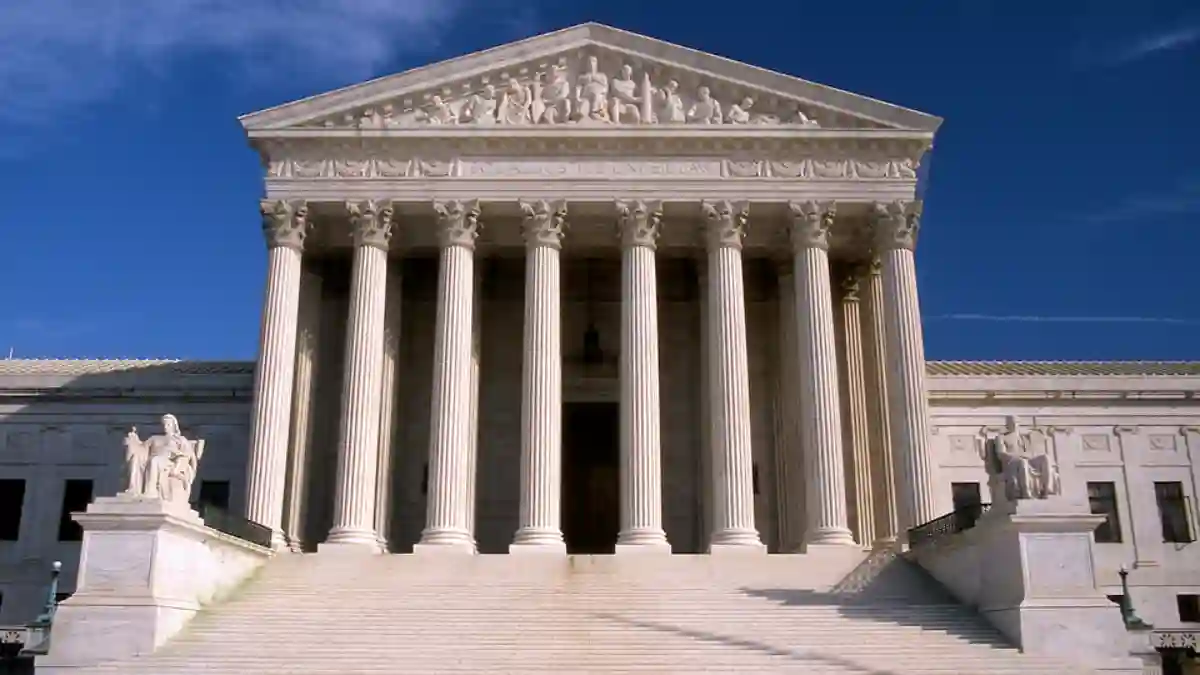
The congressional capacity problem met a new complication on June 29, 2026, when the Supreme Court issued its 6-3 decision in Trump v. Slaughter. The ruling, confirmed by the Court's own opinion, overturned the 1935 precedent in Humphrey's Executor v. United States and held that the FTC's statutory "for-cause" removal protections are unconstitutional. In practical terms: Congress cannot insulate the heads of executive agencies from presidential removal by writing removal restrictions into statute, the power to fire them belongs to the president under Article II.
The decision directly erodes one of the tools Congress had used to maintain a degree of independence in regulatory agencies it created. A 6-3 majority found that Congress could not possess more power than the Constitution actually grants. The ruling's logic may extend to NLRB members, MSPB officials, and other commissioners whose statutory for-cause protections now face fresh legal uncertainty.
The Federal Reserve was treated differently. In the companion case Trump v. Cook, a 5-4 majority declined to allow the president to remove a Federal Reserve governor without following the statutory pretermination process, deciding the case on statutory rather than constitutional grounds and signaling the Fed's structure warrants distinct analysis. For agencies without that distinction, the legal terrain has shifted materially.
What Congress Can Still Do, If It Chooses
None of the developments described above have stripped Congress of its core constitutional authority. Congress retains the power of the purse. The Impoundment Control Act remains law, GAO documented an ICA violation by FEMA as recently as September 2025, showing the framework still has enforcement teeth when Congress presses the case. The FY2026 legislative branch budget request, as CRS has reported, came in at 17.9 percent above the prior year's enacted level, an indication that some appetite for institutional investment exists.
The reform pathway Gaynor and other analysts identify is specific rather than abstract: raise committee staff ratios, decouple those resources from partisan control, peg congressional staff cost-of-living adjustments to the rest of the federal workforce, and rebuild the support agencies whose capacity has atrophied since 1995. These changes do not require a constitutional amendment. They require appropriations, the one tool Congress controls without asking any other branch for permission.
The Bipartisan Policy Center's implementation tracker notes that the House's Select Committee on the Modernization of Congress generated more than 200 recommendations, roughly two-thirds have been begun or completed. Progress is real, but, as Gaynor wrote, it is "reliant on wobbly norms and ultimately marginal."
The next concrete test arrives with the FY2027 legislative branch appropriations process, where members will have the chance to fund the institutional capacity they say they want, or defer again on the grounds that a pay and staffing increase will be politically costly at the polls.
- congress article i powers president
- congress underfunded staff article i
- congressional capacity reform
- impoundment control act
- trump v slaughter