Trump Economy Polls Hand Democrats a 2026 Midterm Edge
A CBS/YouGov poll of 2,193 adults finds 35% approve of Trump's economy handling as he visits Michigan. A Fox News survey shows Democrats leading on the economy for the first time since 2006.


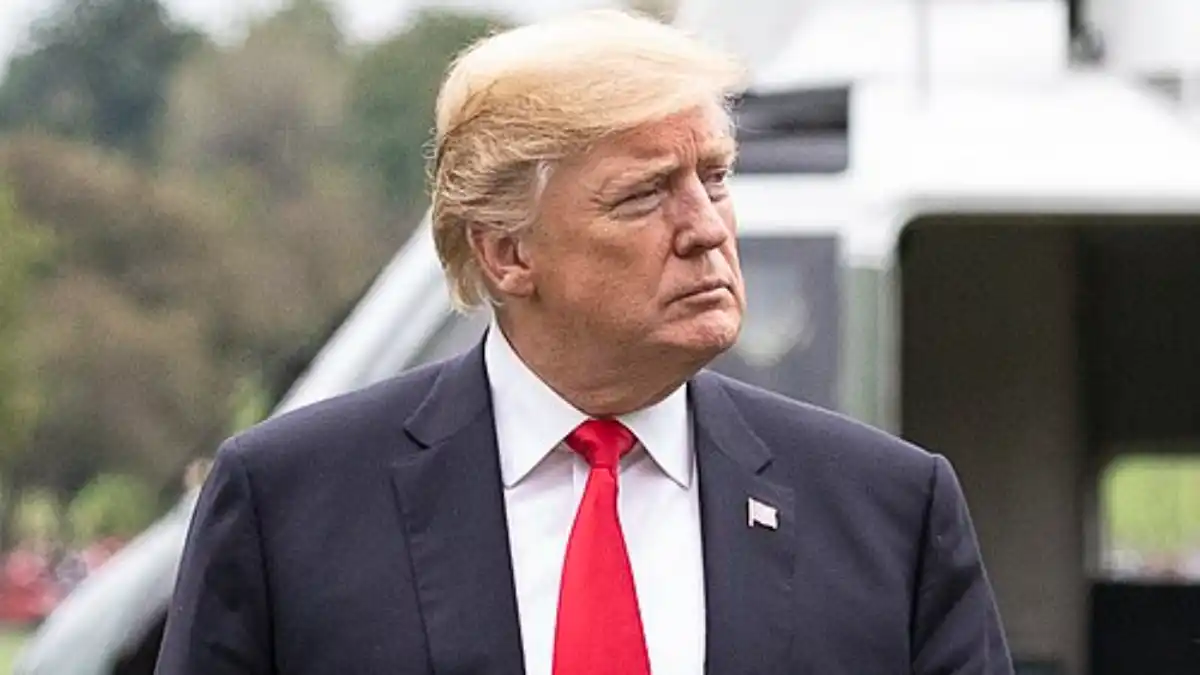
President Donald Trump travelled to General Motors' Milford Proving Ground in Michigan on July 27, 2026, to promote his trade and auto-manufacturing agenda the same week a CBS News/YouGov poll showed only 35% of Americans approve of his handling of the economy, with 65% disapproving.
Michigan Visit, Washington Numbers
The White House said Trump returned to Michigan to make the case for his economic record at the world's oldest dedicated vehicle testing facility a 4,000-acre campus with nearly 150 miles of test roads that opened in September 1924. General Motors confirmed the visit and welcomed the president to Milford.
The backdrop was chosen deliberately. Michigan is auto-manufacturing country, and the administration has staked significant political capital on tariff policy as a mechanism for protecting domestic production. White House spokesperson Kush Desai framed the choice in stark terms, telling Axios in an emailed statement that Trump's agenda had driven "historic job, wage, and economic growth during his first term" a direct contrast, the spokesperson argued, with the inflation era under President Biden.
Voters, according to the polling released the same week, see things differently.
What the CBS/YouGov Poll Shows
The CBS News/YouGov poll, conducted July 22–24, 2026, among 2,193 U.S. adults with a margin of error of ±2.7 percentage points, is one of the most detailed snapshots of public economic sentiment released this month.
On inflation specifically, the picture is starker: 29% approve of Trump's handling and 71% disapprove the sharpest gap of any issue tested in the survey.
Seventy-eight percent of respondents said the administration is not focused enough on lowering prices. That figure cut across party lines: 85% of independents agreed, and so did 58% of Republicans a level of dissent that stands out within the president's own coalition.
Fifty-eight percent said Trump's policies have made them financially worse off. Only 13% said they are better off. Twenty-nine percent reported no change.
On the broader question of where the economy is heading, 59% said conditions are getting worse. Thirty-three percent rated the national economy as good; 64% called it bad. Three in four respondents 75% said their income is not keeping up with inflation.
The Fox Numbers Add a Second Data Point
A separate Fox News poll, conducted July 17–20 among 1,003 registered voters with a ±3-percentage-point margin of error, found Trump's economic approval at 33% and inflation approval at 27% figures consistent with the CBS results.
Three-quarters of voters in that survey rated the economy negatively, a figure the pollsters noted has held roughly steady for six consecutive months. Among those who said inflation had caused them financial hardship, 34% called it "serious" up from 26% the previous year.
The Fox survey also found the share of voters rating the economy as excellent or good stood at 24% down eight percentage points from 32% in the equivalent Fox poll a year earlier, in July 2025.
On the generic House ballot, Democrats led Republicans by 7 points in the Fox survey the widest margin either party has posted in Fox News polling since 1996. Democratic voter enthusiasm outpaced Republican: 68% of Democratic voters said they were motivated to vote, against 57% of Republicans.
On the question of which party voters trust more to handle the economy, Democrats led 54% to 45% their widest economy-trust advantage in Fox News polling since July 2006, according to Newsweek's analysis of the data. Pew Research Center data, reported by Axios, found 29% of voters said they want House candidates in their district to focus more on the economy than any other issue heading into November and on the question of which party they trust more on economic issues, voters split almost evenly, with 37% favouring Democrats and 36% Republicans.
The Economic Numbers Behind the Sentiment
The inflation figures voters are reacting to come with official data that requires careful reading.
The Bureau of Labor Statistics' June 2026 Consumer Price Index release showed headline CPI fell 0.4% on a monthly basis the largest single-month decline since April 2020, driven by a 5.7% drop in energy prices. That monthly decline was real. But on a 12-month basis, prices were still 3.5% higher than a year earlier, and food costs rose 0.2% for the month. Year-over-year inflation above 3% is the figure voters feel at the grocery store and the gas pump, not the monthly direction.
On employment, the BLS jobs report for June showed nonfarm payrolls expanded by 57,000 well below the 115,000 Dow Jones consensus forecast and modest by historical standards. Unemployment dipped to 4.2%. The report also revised the combined April and May figures downward by 74,000 jobs April down 31,000 to 148,000, and May down 43,000 to 129,000 reducing the apparent strength of the prior two months.
Those were the numbers Trump went to Michigan to reframe. The Milford Proving Ground visit was built around tariffs as a jobs mechanism the argument that protecting domestic auto manufacturing through trade barriers keeps employment in communities like this one. The CBS poll found 60% of respondents believe the administration focuses too much on tariffs, and 63% said gas prices in their area have been going up.
The Midterm Map This Creates
Presidential approval ratings below 40% have historically created difficult conditions for the incumbent party in midterm elections. The Economist/YouGov poll conducted July 25–27 among 1,559 adults found Trump's approval at 34% a record low for either of his terms with that pollster, with a margin of error of ±3.3 points.
The parallel from Trump's own political history is direct. At the equivalent point in his first term, in late July 2018, his approval stood at 40% according to Gallup six points higher than where it stands now with that pollster. Democrats flipped 40 House seats that November.
Republicans currently hold narrow majorities in both chambers. Fox News polling found Democrats leading the generic congressional ballot by their widest margin since 1996. None of that translates automatically into seat gains redistricting, candidate quality, and late-breaking events all reshape individual races but the structural advantage in the polling is real and documented as November approaches.
Trump has previously dismissed concerns about economic perception, arguing that falling monthly inflation figures and job creation validate his approach. His July 27 trip to Milford was the latest attempt to make that case directly to manufacturing workers in a competitive state. The CBS poll found that most voters are not absorbing that message: 58% say his policies have made them worse off financially, and 75% say their income is not keeping up with prices.
The next major economic indicator to watch is the July jobs report, due August 12, 2026. If payroll growth comes in soft again, or if year-over-year inflation remains above 3%, the numbers Trump flew to Michigan to reframe will not have moved and the midterm calculus will remain largely what the polls already show.
- Trump economy poll 2026
- Trump inflation approval
- CBS YouGov economy poll July 2026
- Democrats midterms economy lead
- Trump Michigan Milford Proving Ground