US Walks Out on France at UN Over Rights Row
US diplomats walked out on France at the UN Security Council on July 27, after Paris compared Washington's human rights record to North Korea's.

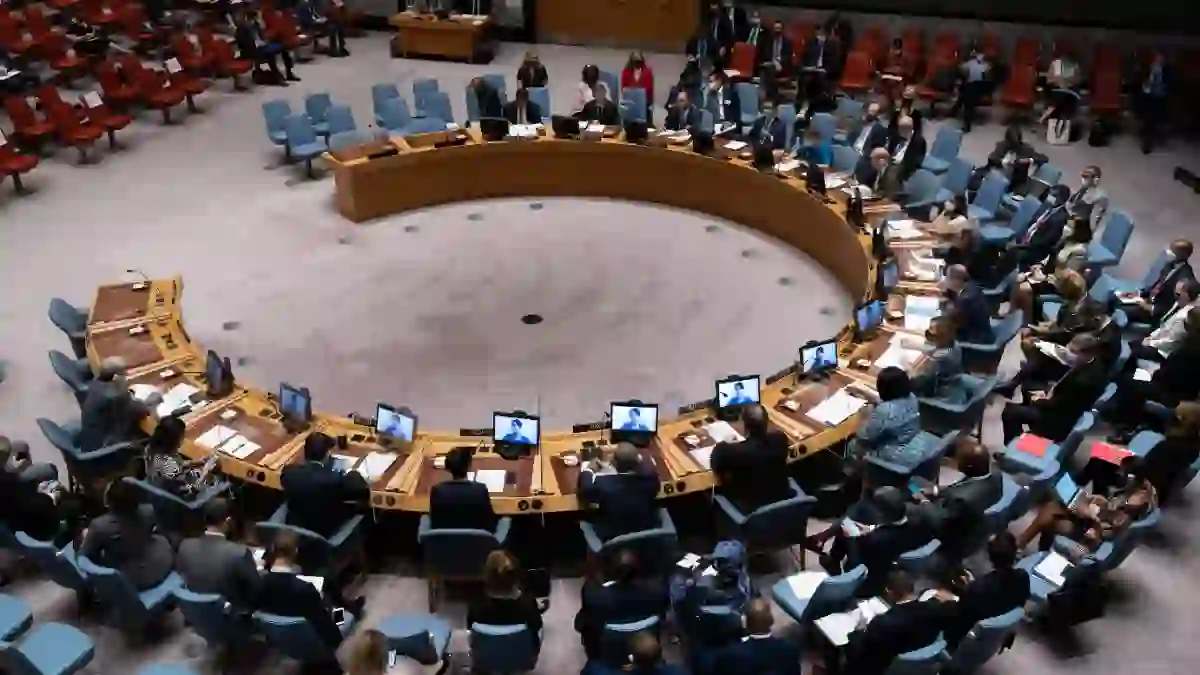
US diplomats stood up and left the UN Security Council chamber in New York on Monday, July 27, 2026, walking out mid-session as France's ambassador began speaking a rare public rupture between two of the council's five permanent members, triggered by a run of sharply worded exchanges over Washington's vote against renewing the term of UN human rights chief Volker Türk.
What Sparked the Walkout
The immediate dispute began three days earlier. On July 24, the UN General Assembly voted 144 in favour, 10 against, and 13 abstentions to grant Türk an Austrian lawyer who has held the role since October 2022 a second four-year term running from October 12, 2026, to October 11, 2030, as confirmed in the official UN General Assembly transcript.
The US had sought to postpone the vote by a week, arguing delegations had insufficient time to consult. That motion failed, 27–63–47. Russia separately pushed a draft resolution that would have limited Türk's extension to just December 31, 2026 allowing the incoming UN Secretary-General to make his own appointment but that too was rejected before the full renewal vote proceeded.
Washington was among the ten countries voting against. France voted in favour.
The same day, France's UN Mission in Geneva posted publicly on social media that the United States was no longer a "beacon of human rights" and stood alongside North Korea, Nicaragua, Mali, and Russia in opposing the renewal. US Ambassador to the UN Mike Waltz fired back, accusing France of backing a human rights official who criticises democratic nations while "cozying up to the world's worst oppressors," according to reporting from Reuters. The exchange continued into the weekend.
By Monday, when the Security Council convened to discuss Russia's war in Ukraine a separate, scheduled session the US delegation made its protest visible.
What Happened Inside the Chamber
US diplomats left their seats the moment France's Ambassador Jérôme Bonnafont took the floor. Alternate US Representative Dan Negrea later addressed the council directly on why they had done so.
"This disingenuous grandstanding is tiresome, but we have tolerated it out of a sense of camaraderie and mutual respect as P5 members," Negrea said, referring to the five permanent council members. "We will not be affording them the benefit of listening to their politicized drivel until they renounce their condescending and disrespectful rhetoric and behave in a manner commensurate with their seat on this council."
Negrea also accused France of feigning "moral outrage" and pretending to lecture the world on human rights while France's own record warranted scrutiny.
Bonnafont did not directly acknowledge the walkout when he responded. He noted that France which aided the United States during the American War of Independence had attended the July 4 celebration of America's 250th anniversary, and that France's purpose at the United Nations remained the same as always advancing international peace, security, human rights, and development.
France's Assertive Turn at the United Nations
The walkout did not occur in isolation. France has been willing to wield its permanent-member status publicly in recent months across different dossiers. When French Foreign Minister Jean-Noël Barrot went public in June with France's intent to block any lifting of UN sanctions on Iran without Paris's approval, the message echoed Monday's dispute: France holds a Security Council veto and intends to use it as leverage, whether on Iran sanctions or on questions Washington would prefer to handle differently.
It is worth noting a structural distinction: Türk's reappointment was decided by a General Assembly vote, not a Security Council resolution, so a P5 veto did not directly apply to that appointment. What the two situations share is France's increasing willingness to use its standing in whatever forum is relevant to apply public pressure on Washington.
The Broader US-Europe Fault Line
Behind the specific dispute over Türk's reappointment sits a wider set of fractures. The dispute over Türk's reappointment also fits wider US-Europe tensions, including differences over Washington's commitment to NATO, possible changes to American troop deployments in Europe, and Trump's repeated references to occupying Greenland a territory of NATO member Denmark. The human rights vote turned those tensions public.
Türk himself has been a polarising figure. He has publicly criticised Russia's conduct in Ukraine and Israel's military campaign in Gaza, and separately called for investigations into deaths in US immigration custody. His willingness to confront all three governments simultaneously while still winning 144 votes in a 193-member assembly made the vote a test of support for the UN human rights office's independence.
US Representative for UN Management and Reform Jeff Bartos had warned the General Assembly before the vote that Washington would reassess its engagement, participation, and funding depending on the outcome, according to reporting from Reuters. Türk's renewal showed most member states rejected that pressure.
What Comes Next
No Security Council rules were broken by the walkout it was a deliberate political signal, not a procedural violation. Negrea's explicit statement that the US would continue walking out until France changed its rhetoric leaves a visible diplomatic dispute at a venue where both countries must function as permanent members on issues ranging from Ukraine to the Middle East.
Türk's new term begins October 12, 2026. His office said he was "deeply grateful" for the renewal and committed to defending human rights "everywhere." The US has not indicated it will soften its assessment of his record, and no meetings between US and French officials to resolve the dispute had been announced as of July 27.
- US-France diplomatic row
- UN Security Council
- Volker Türk
- Dan Negrea
- Jérôme Bonnafont