Charles Stays at Clarence House After Buckingham Palace Refit
King Charles won't live at Buckingham Palace after the £369m refit ends in March 2027, the Royal Household confirmed on 25 June 2026, alongside his first publicly disclosed tax bill of £12.9m.

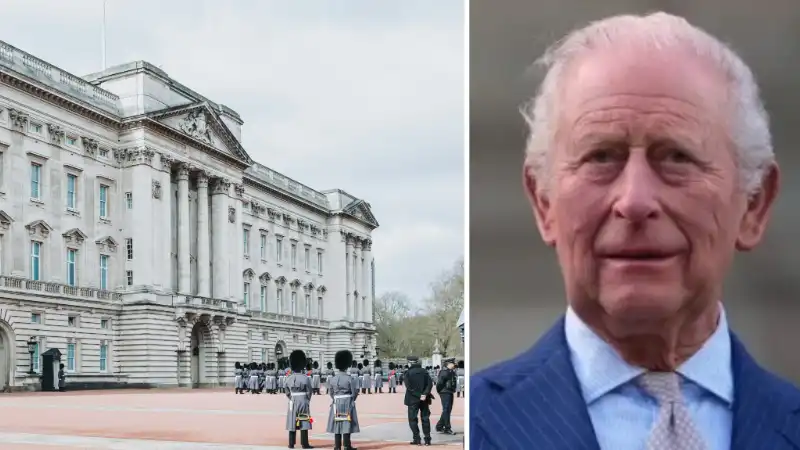
King Charles III and Queen Camilla will not move into Buckingham Palace when the building's £369 million renovation programme finishes in March 2027, the Royal Household confirmed on 25 June 2026. The couple will remain at Clarence House, their established London home, while the palace continues to serve as the monarchy's ceremonial centre, primary workplace and main venue for state occasions.
The Decision on the Palace
The announcement came alongside the Royal Household's 2025–26 financial reports. James Chalmers, the King's Treasurer and Keeper of the Privy Purse, described Buckingham Palace as continuing to function as the monarchy's operational and ceremonial headquarters.
The palace itself remains the official London residence of the Sovereign. What changes is personal occupancy. Charles and Camilla will not use it as their principal private home, maintaining the same arrangement that has been in place throughout the refurbishment years. The Royal Household's 2025–26 financial release confirms the couple's continued residence at Clarence House, corroborated by Reuters and the Associated Press reporting from the royal briefing.
Reuters, citing royal officials, reported the King and Queen had not stayed overnight at the palace since 2019. The Royal Household's public financial papers do not specify the last occupancy date.
The £369 Million Refurbishment
The Buckingham Palace Reservicing Programme began in 2017 and is scheduled to complete in March 2027. The 10-year project replaces ageing electrical wiring, plumbing systems and heating infrastructure to reduce serious fire and flood risks across a listed heritage building containing 775 rooms, including 19 State Rooms, 92 offices, 188 staff bedrooms and 78 bathrooms.
The National Audit Office assessed the programme in July 2024 and found it had been managed well, with strong focus on staying within the approved budget despite the complexity of working in a continuously operational royal residence.
Public spending on the programme runs through the Sovereign Grant. The 2025–26 accounts record £39.3 million in property maintenance expenditure and £3.5 million in capital expenditure for palace work that year, including two lifts.
The Royal Household has said the completed palace will offer greater public access than it did before the programme. The specific rooms, visitor capacity and opening schedule have not yet been announced. According to officials cited by Reuters and the Associated Press, roughly 700,000 people visit the building each year.
The King's Tax Disclosure
Alongside the residence announcement, the Royal Household published for the first time the personal tax amount paid by the Sovereign. The official Royal Finances Paper records £12.9 million in tax payable for the 2024–25 financial year, up from £11.7 million in 2023–24. The total since Charles's accession in September 2022 exceeds £30 million.
The figures are reviewed by independent tax accountants. The underlying tax returns, deductions and category-by-category calculations have not been made public.
The Sovereign is not legally required to pay income tax, capital gains tax or inheritance tax under the ordinary enactments, which do not apply to the Crown. Voluntary arrangements, governed by a Memorandum of Understanding with HM Treasury in effect since 6 April 1993, seek to produce broadly equivalent tax treatment on relevant private income and gains. Charles continued those arrangements after his accession.
The King's private income derives from the Duchy of Lancaster, a royal estate associated with the sovereign since 1399, alongside personal investments and other private estates. The Duchy's adjusted net surplus for the year ended 31 March 2026 was £25.2 million, against net assets of £687.3 million.
Reuters, the Associated Press and The Guardian each noted that £12.9 million would place the King among the country's largest individual taxpayers based on media comparisons. HMRC does not publish a formal ranked list of individual taxpayers, and the characterisation belongs to the outlets that made it rather than to any official HMRC classification.
How the Sovereign Grant Is Changing
The Sovereign Grant, which funds Royal Household staff, official travel, property maintenance and the costs of official royal duties, stood at £132.1 million in 2025–26. That breaks into £72.1 million for core operations and £60 million dedicated to the palace reservicing.
For 2026–27, the final year of dedicated refurbishment funding, the Royal Trustees have set the Grant at £137.9 million, comprising £97.6 million in core funding and £40.3 million in final reservicing allocation.
Once the programme ends, the Grant is proposed to reset to £99.9 million per year from 2027–28 through 2031–32, subject to parliamentary legislation. That figure remains £57.1 million above the £42.8 million Grant recorded for 2016–17, the year the refurbishment budget was originally approved. A new review is expected around 2031.
The Sovereign Grant is institutional income, not a personal salary. It is separate from Duchy revenues and private income.
Prince William, the Duchy of Cornwall and HMP Dartmoor
Prince William's office disclosed income and capital-gains taxes of £7.76 million for 2024–25, a figure reported by Reuters, the Associated Press and The Guardian. As Prince of Wales, William receives the Duchy of Cornwall's net income to fund official duties, charitable activity and private expenditure, with voluntary tax applying under the same framework as the King.
On 26 June 2026, the Duchy of Cornwall published its 2026 Integrated Impact Report and announced a new arrangement for HMP Dartmoor. The Ministry of Justice holds a lease on the prison from the Duchy, generating £1.5 million in annual rent. With the prison no longer holding prisoners following a complete decant after high radon readings were recorded, the Duchy will redirect that annual rental income into the local community, including through a community-led regeneration fund for Princetown and the surrounding area.
The Ministry of Justice's annual report and accounts confirm the prison is held under a finance lease from the Duchy of Cornwall. The decant is recorded in official Ministry of Justice documentation. A formal permanent closure order had not been located in public records at the time of publication.
The Duchy has faced scrutiny over rents charged to public bodies including the military, the health service and educational institutions. Investigative reporting by The Times documented specific lease arrangements and the associated public costs. The £1.5 million Dartmoor redirection was described by the Duchy as a direct response to the community impact of the prison ceasing to hold prisoners.
What Comes Next
The most immediate fixed deadline in this story is March 2027, when the reservicing programme is due to close. The Royal Household has committed to greater public access to the building after that point but has not set a date or format for expanded visits.
The Sovereign Grant will require new legislation before it can formally reset to £99.9 million from 2027–28. Parliamentary approval has not yet been obtained.
For the communities around HMP Dartmoor, the design of the community-led regeneration fund will be developed with local residents. The Duchy has not specified a completion date for that process.
- buckingham palace
- hmp dartmoor
- king charles
- sovereign grant
- royal finances