Andy Burnham's Politics: What Party Is He, and Where Does He Stand?
Andy Burnham became UK prime minister on 20 July 2026. Here is which party he belongs to, where he sits on the political spectrum, and what he has actually committed to doing.

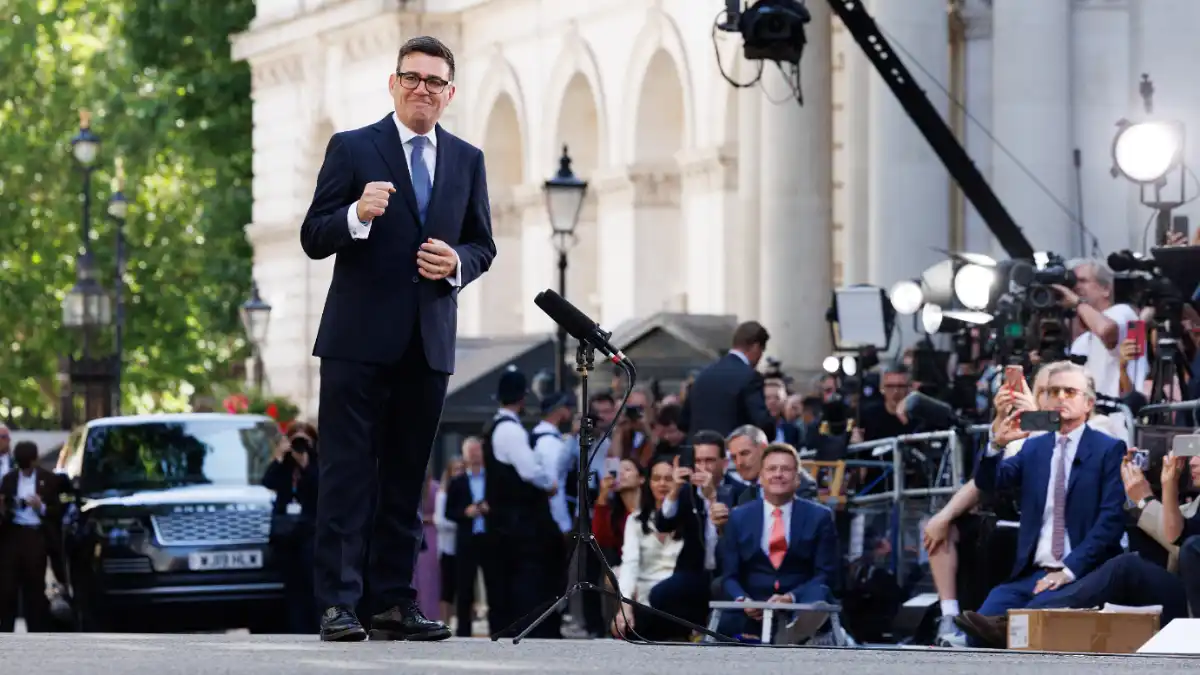
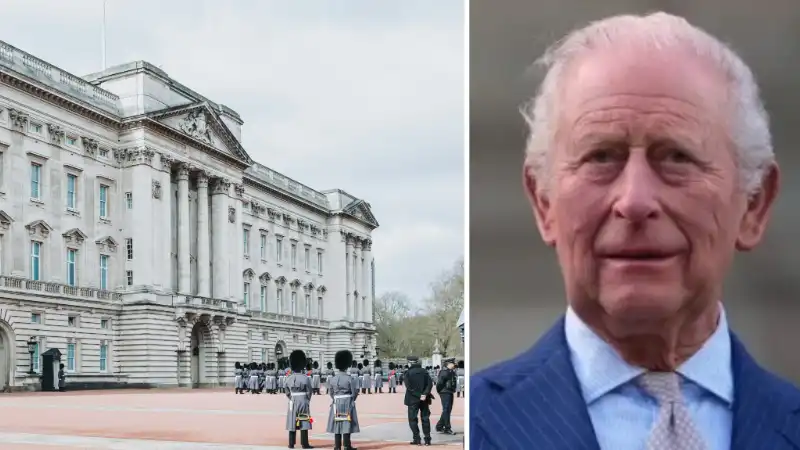
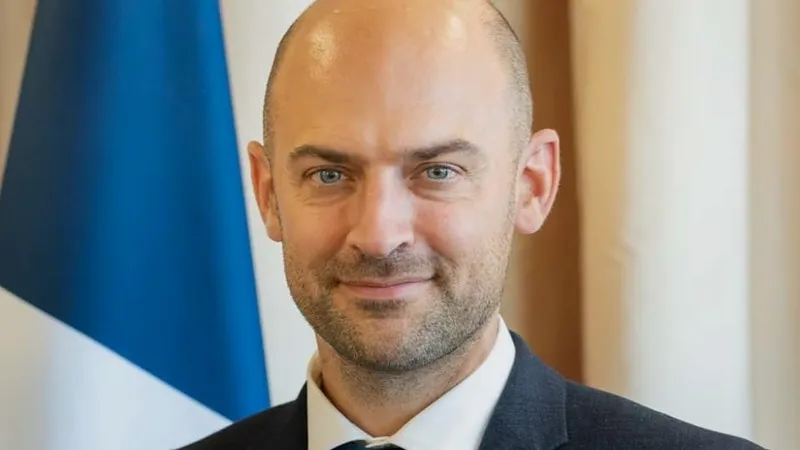
Andy Burnham was formally appointed the United Kingdom's prime minister on 20 July 2026, travelling to Buckingham Palace where King Charles III invited him to form a government, before addressing the country from 10 Downing Street without a lectern, a deliberate break with the formal conventions of his predecessors. He is Labour, centre-left, and the 59th person to hold the office, the seventh since 2016, in his own words, making it "a moment for reflection and new resolution."
What Party Is Andy Burnham?
Burnham is a member of the Labour Party, listed on UK Parliament records as Labour (Co-operative), which reflects a formal electoral arrangement between Labour and the Co-operative Party. He has been a Labour politician since his first election to Parliament in 2001 and was confirmed as party leader on 17 July 2026, having received the backing of 379 of Labour's 403 MPs along with 23 affiliate organisations, confirmed by the Labour Party's official announcement.
That was not a narrow mandate. Burnham ran effectively unopposed, the only viable candidate after Keir Starmer announced his resignation following Labour's difficult showing in the May local elections. He was nominated by over 94% of all Labour MPs, a scale of parliamentary backing that reflected a party that had already made its choice before voting formally opened.
Is Andy Burnham Left or Right?
Burnham sits to the left of centre on the British political spectrum, but not at its edge, and the label requires some precision.
He describes his own economic philosophy as "business-friendly socialism." That phrasing is deliberate. He is not making a case for anti-capitalism or wholesale state ownership in the way the word "socialist" sometimes implies internationally. His programme is closer to social democracy strong public institutions, regulated markets, higher investment in northern and regional economies, and a specific hostility to what he describes as the consequences of 1980s privatisation.
In his first speech as Labour leader on 17 July 2026, Burnham was direct about that framing. He told supporters that Britain had taken "a series of wrong turns in the 1980s" when "political power was centralised and economic power was privatised", language he then repeated and expanded in his Downing Street address three days later. On 20 July he promised what he called "the biggest changes in the last 40 years: a new political model and a new economic model," framing his government as a "circuit breaker for Britain."
He is broadly regarded as sitting to the left of Keir Starmer within Labour's internal debates, but he has also backed some of the centre-ground positions associated with Home Secretary Shabana Mahmood on immigration, and his economic plan explicitly commits to the current fiscal rules for the duration of this parliament. Critics on the left of Labour have noted that combination.
What Is 'Manchesterism'?
The clearest window into Burnham's political thinking is a concept he developed during his nine years as Mayor of Greater Manchester: Manchesterism.
Speaking at the Centre for Cities in March 2026, Burnham described it as an approach that aims to deliver "economic progress alongside social progress" across a city-region. The core argument is that growth and fairness are not in competition, they require each other, and both require a serious transfer of power away from Westminster.
In practice, that meant bringing Greater Manchester's fragmented private bus network back under public control through the Bee Network, capping fares at £2, and running services at roughly a third less cost per kilometre than the privatised system it replaced. Analysis from the University of Cambridge's Bennett Institute for Public Policy treated the Bee Network as the primary proof of concept for his broader national ambitions: that public control over essential services, energy, water, housing, transport, is not an ideological end-goal but a practical mechanism for lowering costs and driving growth.
Burnham has been explicit that Manchesterism is not simply about Manchester. In public addresses since returning to Parliament, he has placed universities "at the heart of local economies," backed innovation through start-ups and scale-ups, and emphasised infrastructure investment outside London. His first statement as Labour leader vowed to bring about the "biggest rebalancing of power our country has seen," with devolution to regional mayors and city authorities at the centre of his economic plan.
What Does He Actually Want to Do?
Several policy commitments are now confirmed, though the full detail of his legislative programme is expected in a 10-year plan he has said will follow later in 2026.
Burnham has pledged to scrap the previous government's plans for digital ID cards. He intends to reverse further privatisation of public transport and utilities, and has specifically called for water companies including Thames Water to come under public ownership. He has said he will use the Bee Network model as a template for bus reform across England.
On devolution, his government will push to extend the powers held by mayors and combined authorities, including powers over tax-raising, borrowing, housing, and skills, closer to the German model of regional fiscal autonomy.
He has also proposed structural reforms to Parliament itself: proportional representation, changes to the whipping system, and replacing the House of Lords with an elected senate.
Is Andy Burnham a Socialist?
That depends on how the word is being used and in which political tradition.
Burnham has used the term "business-friendly socialism" to describe his economic platform. Measured against European political traditions, that places him in social-democratic territory, the tradition of Scandinavian Labour parties, the post-war British welfare state, and public ownership of core infrastructure. He is not proposing wholesale nationalisation of private industry, and his stated programme commits to fiscal discipline alongside public investment.
Parts of the right-wing press have described him in stronger terms, parts of the Labour left have argued the opposite, that his centre positioning on immigration and fiscal rules makes him Starmerism with a different accent. The most substantive way to assess the label is through his record as mayor and his stated policy platform: centre-left Labour, social-democratic, pro-devolution, and committed to public control of essential services.
He has consistently argued that the market alone cannot deliver fair growth, but he has also consistently emphasised partnership between public, private, and community sectors. His commitment to the current fiscal rules is explicit.
The Record Behind the Politics
Burnham's political positioning is grounded in a specific career.
He was first elected as MP for Leigh in 2001 and went on to hold senior Cabinet roles under both Tony Blair and Gordon Brown, including Chief Secretary to the Treasury (2007–2008), Secretary of State for Culture, Media and Sport (2008–2009), and Secretary of State for Health (2009–2010). As Health Secretary, he championed the NHS Constitution and has since proposed replacing inheritance tax with a "national care levy" to fund free social care.
He left Westminster in 2017 to become Mayor of Greater Manchester, a role he held through three elections until June 2026. That nine-year period produced the most visible elements of his policy record: the Bee Network, a major homelessness reduction programme called A Bed Every Night, and a confrontation with the Conservative government during the COVID-19 pandemic that saw him publicly condemn a last-minute £22 million local lockdown support package as "brutal and frankly disgraceful", an episode that gave him the informal title "King of the North."
He also played a central role in securing justice for the families of the 97 Liverpool fans who died in the 1989 Hillsborough stadium disaster. As Culture Secretary in 2009, he was heckled at the disaster's 20th anniversary at Anfield, and used the Cabinet meeting the following day to ask Prime Minister Gordon Brown for permission to raise the matter in Parliament. That intervention directly led to the establishment of the Hillsborough Independent Panel. The panel's 2012 report exonerated all 96 victims who had died at the time and exposed decades of police cover-up, Andrew Devine, who suffered life-changing injuries in the crush, became the 97th victim recognised when he died in 2021.
What Burnham Said on His First Day
In his Downing Street address on 20 July 2026, Burnham acknowledged the public's frustration without deflecting it. "I want to be honest with you: we have not been good enough and we need to be better. We will be," he told the country, adding that the moment "requires my generation of politicians to raise our game."
He framed the task ahead as structural, not merely political: decentralising power, rebuilding trust, and delivering measurable improvements to living standards. The cost-of-living crisis, he said, would sit "front and centre of government," with concrete measures beginning "starting tomorrow." His first stated instruction to civil servants was to work towards ending rough sleeping.
A Greater Manchester mayoral by-election to fill his former role is scheduled for 30 July 2026.
- Andy Burnham politics
- Andy Burnham Labour Party
- Andy Burnham political views
- Andy Burnham prime minister
- Manchesterism
- UK prime minister 2026