Cyclospora Parasite Tops 300 Cases in Michigan
Michigan's cyclosporiasis outbreak passed 300 cases by July 2 as CDC monitors 145 infections across 17 states. No food source has been identified.

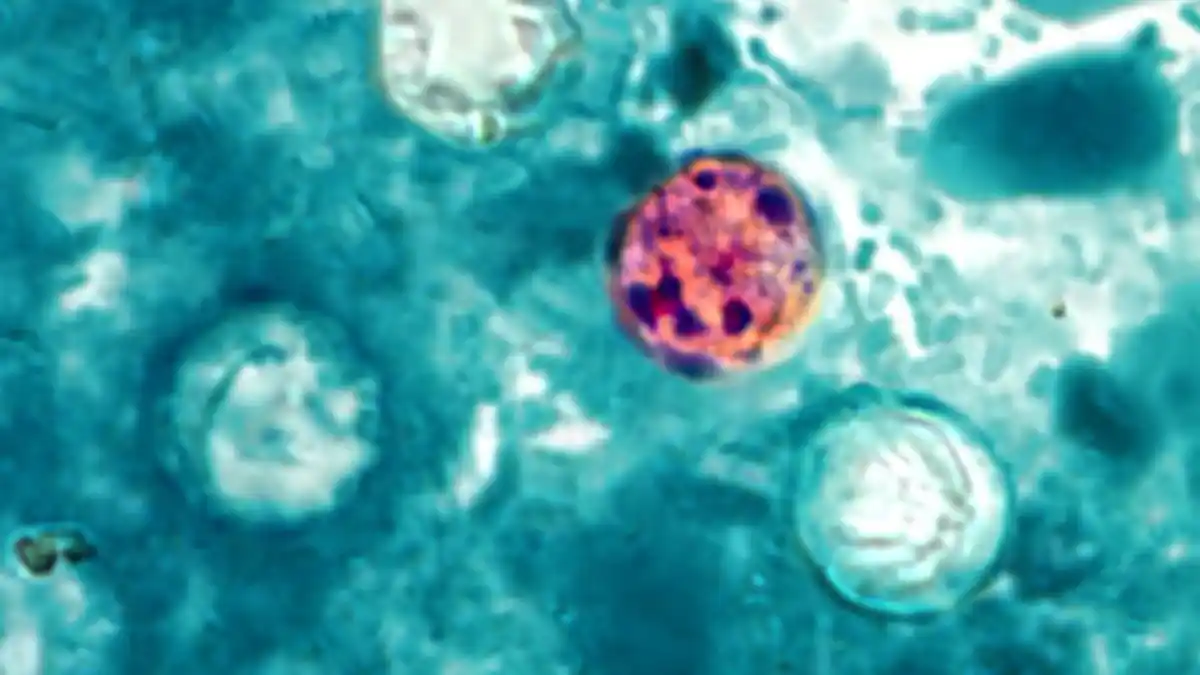
Michigan's cyclosporiasis case count surpassed 300 on July 2, 2026, according to the Michigan Department of Health and Human Services, after the state identified more than 170 reported cases in the nine days from June 22 through June 30. No food source has been identified. Investigators from MDHHS and the Michigan Department of Agriculture and Rural Development are working with the CDC and FDA to find the origin of what state officials called a large and growing outbreak, while cautioning that not all recently identified cases may be epidemiologically connected.
Michigan's Case Totals by Date
Michigan went from 174 reported cases on Tuesday, June 30, to 228 by the afternoon of Wednesday, July 1, to more than 300 by Thursday, July 2, according to a sequence of MDHHS updates reported by CBS Detroit and ABC News. Michigan typically records around 50 cyclosporiasis cases per year. The state recorded 56 in 2022, 43 in 2023, 41 in 2024, and 54 in 2025, according to the Michigan Disease Surveillance System's most recent weekly disease report, as cited by the Detroit News.
The official MDHHS county table, dated June 30, listed 174 represented cases: 70 in Monroe County, 33 in Lenawee, 21 in Washtenaw, 12 in Wayne, 7 in Jackson, 7 in Shiawassee, with 24 further cases in 11 other counties and the city of Detroit, according to CBS Detroit's reproduction of the official table. By the July 1 MDHHS update, the county distribution had shifted Monroe County had reached 92 cases, Lenawee 36, Washtenaw 28, Wayne 17, Jackson 11, Shiawassee 9, with 35 further cases across 15 other counties and Detroit, according to the Detroit News, which attributed those figures to MDHHS. MDHHS spokeswoman Lynn Sutfin confirmed on Wednesday that cases had spread across 21 counties in total.
Dr. Natasha Bagdasarian, Michigan's chief medical executive, said in the July 1 state release: "Based on the unusual number of cases we have identified in a little over a week, we anticipate additional cases of illness being reported." MDHHS separately noted that not all cases identified during that period may be connected to the outbreak, and that the investigation was ongoing.
Just across the state line, the Toledo-Lucas County Health Department in Ohio also reported a recent rise in cases, according to 13ABC Toledo.
What the CDC's National Data Shows
Michigan's outbreak is a separate and newer dataset from the CDC's national count. According to CDC's surveillance page, as of June 16, 2026, the agency had received reports of 145 domestically acquired cyclosporiasis cases across 17 states, among people whose illness began between May 1 and June 6. Of those with information available, 20 were hospitalized and none died. The states included Alaska, Colorado, Connecticut, Florida, Georgia, Illinois, Louisiana, Massachusetts, New Jersey, New York, North Carolina, Ohio, Pennsylvania, Tennessee, Texas, Virginia, and Wisconsin. New York recorded the highest grouped case range among them.
Domestic patients ranged in age from 5 to 86, with a median age of 42, and 61% were female. The CDC was explicit in how to read the figure: "There is currently no evidence of a single, multistate Cyclospora outbreak linking all cases. Rather, this is a surveillance count of cases across the United States," including several clusters still under FDA traceback investigation and cases without any common source yet identified.
An additional 45 cases involved people who had traveled internationally in the two weeks before falling ill, tracked separately from the 145 domestic count. Three of those were hospitalized, none died, according to the CDC's surveillance page.
What Cyclosporiasis Is and How It Spreads
Cyclosporiasis is an intestinal illness caused by the microscopic parasite Cyclospora cayetanensis. According to CDC's clinical overview, infected people shed oocysts in their feces. Those oocysts generally require at least one to two weeks in the environment before becoming capable of causing infection, which is why direct person-to-person transmission is considered unlikely. The primary documented route is ingestion of food or water contaminated with fecal matter carrying the parasite.
Because Cyclospora is not routinely included in standard laboratory stool panels in most U.S. facilities, healthcare providers may need to specifically request testing for it, the CDC notes. Not all gastrointestinal PCR panels include a Cyclospora target.
Past U.S. foodborne outbreaks have been linked to various fresh produce items, including raspberries, basil, snow peas, mesclun lettuce, and cilantro, according to the FDA. No specific food product, supplier, or water source had been publicly identified for the current Michigan cluster or the broader national cases as of July 3.
Symptoms: Patient and Clinician Accounts
For those who develop symptoms, the most common presentation is frequent watery diarrhea, which clinicians sometimes describe as explosive. Dr. Zoe Weiss, director of clinical microbiology at Tufts Medical Center, told ABC News that the most common symptom is "explosive watery diarrhea." Other symptoms include loss of appetite, abdominal cramping, bloating, nausea, fatigue, body aches, headache, and a low-grade fever.
According to CDC's symptoms page, the incubation period averages about one week and can range from two days to two weeks or more. Without treatment, the illness can last from a few days to a month or longer, and symptoms may appear to go away before returning.
One Monroe County resident, Stephanie Shaughnessy, described her experience to WXYZ Detroit after testing positive. "I could not function on Thursday or Friday. I mean, there was no getting out of bed. I mean, I slept all day on Thursday and Friday," she said, adding that she was recovering with antibiotics but still regaining her appetite and strength. Another Monroe County patient, Lisa Vanhoose, told WXYZ she was hospitalized. "I started getting really sick, where I was lethargic and couldn't pick my head up," she said. "I felt like I was dying."
Dr. Bagdasarian told CBS Detroit that "the cases that are being reported today are from people who could have been exposed one to two weeks ago," meaning the full case count from recent exposures had not yet fully materialized by July 2.
Testing and Treatment
Anyone experiencing persistent, watery diarrhea should contact a healthcare provider promptly. Because Cyclospora is not automatically included in all standard gastrointestinal stool panels, patients and providers should ask specifically for Cyclospora testing if this illness is a concern.
According to CDC's clinical care guidance, trimethoprim-sulfamethoxazole (TMP-SMX), sold as Bactrim, Septra, or Cotrim, is the treatment of choice. The standard adult regimen is TMP 160 mg plus SMX 800 mg taken orally twice a day for 7 to 10 days. Patients with HIV infection may need longer courses. Most people with healthy immune systems will eventually recover without treatment, though the illness may be prolonged.
Not every antibiotic is effective against this parasite. Treatment should be directed by a clinician following CDC guidance.
Prevention Steps Officials Are Recommending
While the source investigation continues, state and federal health officials have issued the following guidance. Wash all fresh fruits and vegetables under running water before cutting, cooking, or eating. Scrub firm produce such as melons and cucumbers with a produce brush. Cut away damaged or bruised areas before eating. Refrigerate pre-cut or pre-prepared produce within two hours.
The FDA has noted that rinsing or washing is not guaranteed to fully remove Cyclospora from produce, according to FDA's Cyclospora page.
University of Michigan microbiology professor Vern Carruthers told CBS Detroit that pool transmission is "entirely possible" because the parasite is resistant to chlorine, a person in a pool who sheds the oocysts could expose others who ingest the water. CDC notes, however, that freshly shed oocysts require at least one to two weeks in the environment to become infectious. No official source had publicly linked the current Michigan cases to a pool by July 3.
Historical Context
The current cluster is not the first time Cyclospora has spread through U.S. food supply chains. In summer 2018, an outbreak linked to a Fresh Express salad mix at McDonald's resulted in 511 illnesses across 16 states, according to an FDA Commissioner statement. The salad mix was produced domestically. In June 2020, the FDA investigated another cluster tied to Fresh Express bagged salads, the source of contamination in that case was not conclusively determined. A 2019 investigation traced a separate multistate cluster to imported fresh basil from Mexico, according to FDA outbreak advisories.
Those prior investigations show that Cyclospora has reached consumers through both domestic and imported produce. None of those historical sources has been linked to the 2026 cases.
MDHHS and MDARD have asked anyone with symptoms in Michigan to contact their healthcare provider and inform their local health department if additional household members develop the same illness. The investigation into source and spread remained open as of July 3.
- cyclosporiasis
- Cyclospora cayetanensis
- Michigan outbreak 2026
- cyclosporiasis symptoms
- explosive diarrhea parasite outbreak
- CDC cyclosporiasis surveillance