Habeas Corpus Explained What's Actually at Stake
A secret White House memo, an 800-year-old legal right, and a constitutional debate that touches every American. Here's what habeas corpus really means.

A secret memo. A Harvard-trained White House lawyer quietly pushing back on a powerful colleague's proposal. And a constitutional protection that has stood for 800 years suddenly placed at the center of a very modern power struggle.
That's the scene laid out in Regime Change: Inside the Imperial Presidency of Donald Trump, a forthcoming book by New York Times journalists Maggie Haberman and Jonathan Swan, set for publication on June 23, 2026. Among its revelations: that the Trump administration in early 2025 seriously weighed suspending habeas corpus one of the oldest legal safeguards in American law to accelerate mass deportations of undocumented immigrants. The pushback, remarkably, came from inside the White House itself.
What Is Habeas Corpus?
Translated directly from Latin, habeas corpus means "you shall have the body." It is a legal writ a court order that compels any government holding a person in custody to bring that individual before a judge and justify the legal basis for the detention.
In practical terms, it is a check against arbitrary imprisonment. If someone is arrested and held, that person or anyone acting on their behalf can file a habeas corpus petition with a federal court. The court then demands that the government explain why. If it cannot, the person must be released.
Think of it as the law's most basic promise: no government can make a person disappear without answering to a judge.
A Protection Older Than the United States
The right traces back to England's Magna Carta in 1215, which established that no free person could be imprisoned without lawful judgment. It was codified more formally in Britain's Habeas Corpus Act of 1679, which forced the Crown to bring detained individuals before a court rather than hold them in silence.
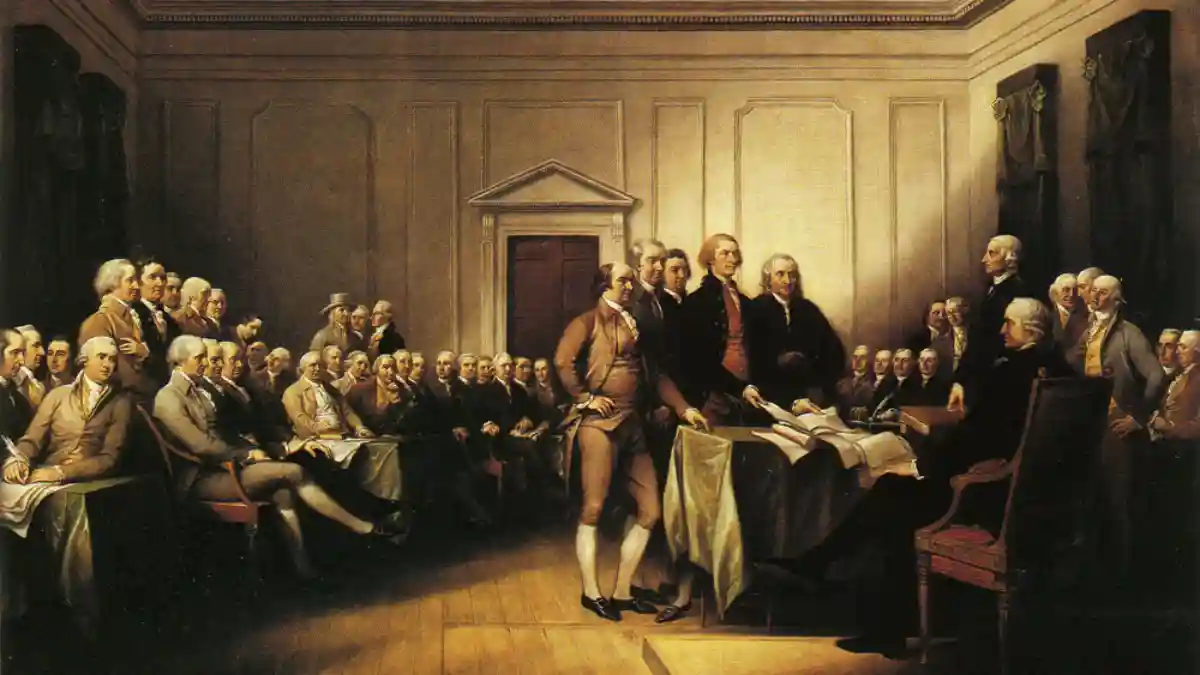
When the American founders drafted the Constitution, they did not leave this protection to chance. They embedded it directly in Article I, Section 9 with language that is both precise and deliberately narrow: "The Privilege of the Writ of Habeas Corpus shall not be suspended, unless when in Cases of Rebellion or Invasion the public Safety may require it."
Those fourteen words the Suspension Clause became the center of a major political and legal debate in 2025, and that debate has not gone away.
The 2025 Push Inside the White House
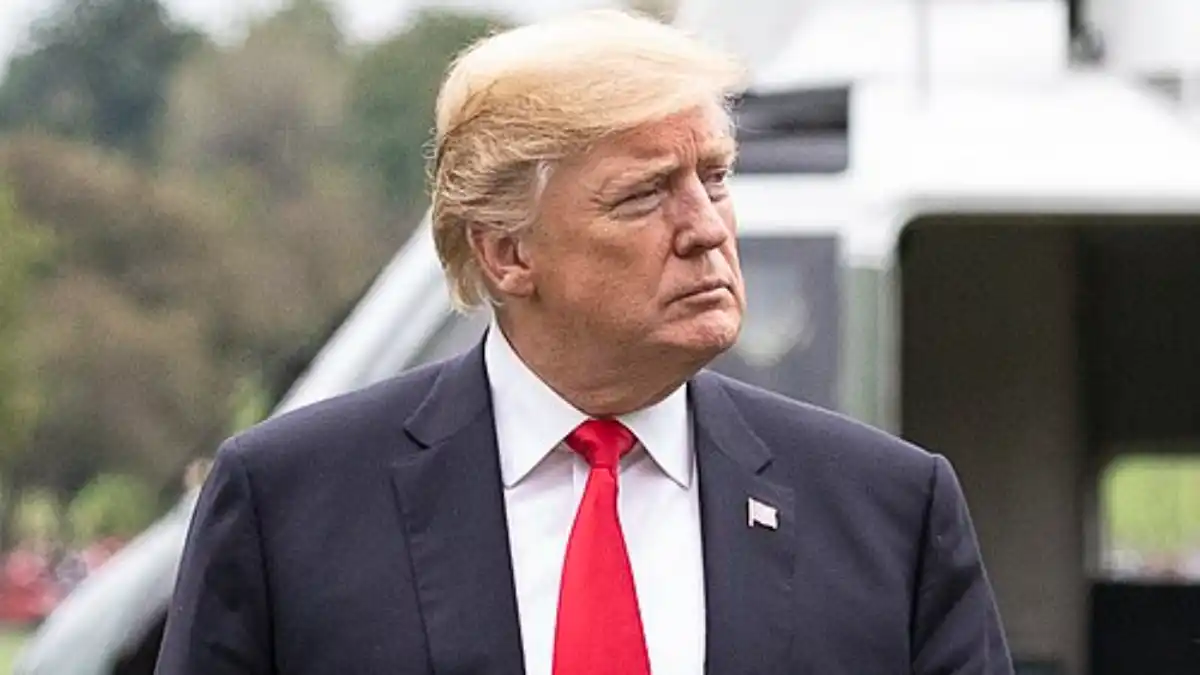
In May 2025, White House deputy chief of staff Stephen Miller told reporters outside the West Wing that the administration was actively looking at suspending the writ. His argument: that illegal immigration qualified as an "invasion" under the Suspension Clause, and that the move was necessary because federal judges were blocking deportation flights.
What was less visible at the time was a secret internal memo, now reported by The Hill based on the Haberman-Swan book, drafted by White House staff secretary Will Scharf. A conservative lawyer who helped build the legal arguments behind Trump's presidential immunity case at the Supreme Court, Scharf wrote to chief of staff Susie Wiles in late April 2025 warning that suspension would almost certainly fail in court.
How Many Times Has It Actually Been Suspended?
Four times in U.S. history each during war, armed rebellion, insurrection, or wartime emergency.
Period | Circumstances | Congressional Role |
|---|---|---|
Civil War (1861) | Lincoln suspended during active conflict | Congress ratified after the fact |
Reconstruction, South Carolina (1871) | KKK-related insurrection | Authorized by Congress |
Philippines Insurrection (1905) | Insurrection in two provinces | Congressional Act of 1902 Governor-General invoked |
Hawaii, post-Pearl Harbor (1941) | Attack on Pearl Harbor | Territorial Governor Poindexter approved by President Roosevelt |
Not once in American history has habeas corpus been suspended for immigration enforcement. And in the vast majority of those instances, Congress either authorized or ratified the suspension a critical legal distinction that scholars say the executive branch cannot simply sidestep.
What the Courts Have Said
The clearest modern statement on just how broadly habeas corpus applies came from the Supreme Court in 2008. In its landmark ruling in Boumediene v. Bush, the Court held 5-4 that even foreign nationals detained at Guantanamo Bay not on U.S. soil, not American citizens retained the constitutional right to file habeas petitions in federal court. The Military Commissions Act, which had stripped that right, was ruled an unconstitutional suspension of the writ.
If the Court extended the protection that far, the argument that immigration enforcement constitutes "rebellion or invasion" faces a steep legal climb.
CNN senior legal analyst Elie Honig noted publicly that "Congress has never passed a law authorizing deportations without any court involvement" and that the Suspension Clause is reserved for genuine national emergencies rather than policy friction. George Mason University law professor Ilya Somin, speaking to CNN, put it plainly: "The writ of habeas corpus has been suspended a number of times, but only in times of actual war or actual invasion, narrowly defined."
Why It Matters Well Beyond Immigration
It is tempting to frame the entire habeas corpus debate as an immigration story. That framing misses the deeper issue.
The writ applies to anyone held in U.S. custody: citizens, non-citizens, soldiers, civilians, political protesters, and criminal defendants alike. It is the mechanism that allows courts to function as a real check on executive power. Once governments establish precedent for setting it aside even for one group, under one political argument the legal architecture for broader future use shifts.
That is precisely why Scharf's internal warning, as described in Regime Change, carries weight beyond its immediate context. The resistance did not come from Democratic lawmakers or civil liberties groups. It came from a conservative lawyer inside a conservative administration, tracing the protection back to the founding of the country and warning that crossing that line would amount to a huge, self-inflicted legal distraction. That kind of internal friction rarely surfaces in real time.
It also explains why constitutional scholars across the political spectrum have consistently urged caution. The protection is not partisan. Its strength lies in its universality and its universality is exactly what makes it a target when enforcement runs into judicial resistance.
What to Watch For
No formal suspension of habeas corpus occurred during Trump's second term. But the internal deliberations now coming to light through Regime Change confirm that the question was treated as a live option, not a fringe idea. As deportation enforcement continues and court battles over detention authority remain unresolved, the legal argument is unlikely to simply disappear.
The Supreme Court has never definitively ruled on whether a president can unilaterally suspend the writ without Congressional approval. That gap matters. In a politically charged environment where the executive branch has repeatedly tested the outer limits of its authority, an unresolved constitutional question is not an academic footnote.
Eight hundred years is a long time for a legal protection to survive. That track record does not make it invincible. But it does tell you something important about what would actually be lost if it were ever set aside.
- habeas corpus
- immigration law
- U.S. Constitution
- Trump administration
- civil liberties
- Regime Change book